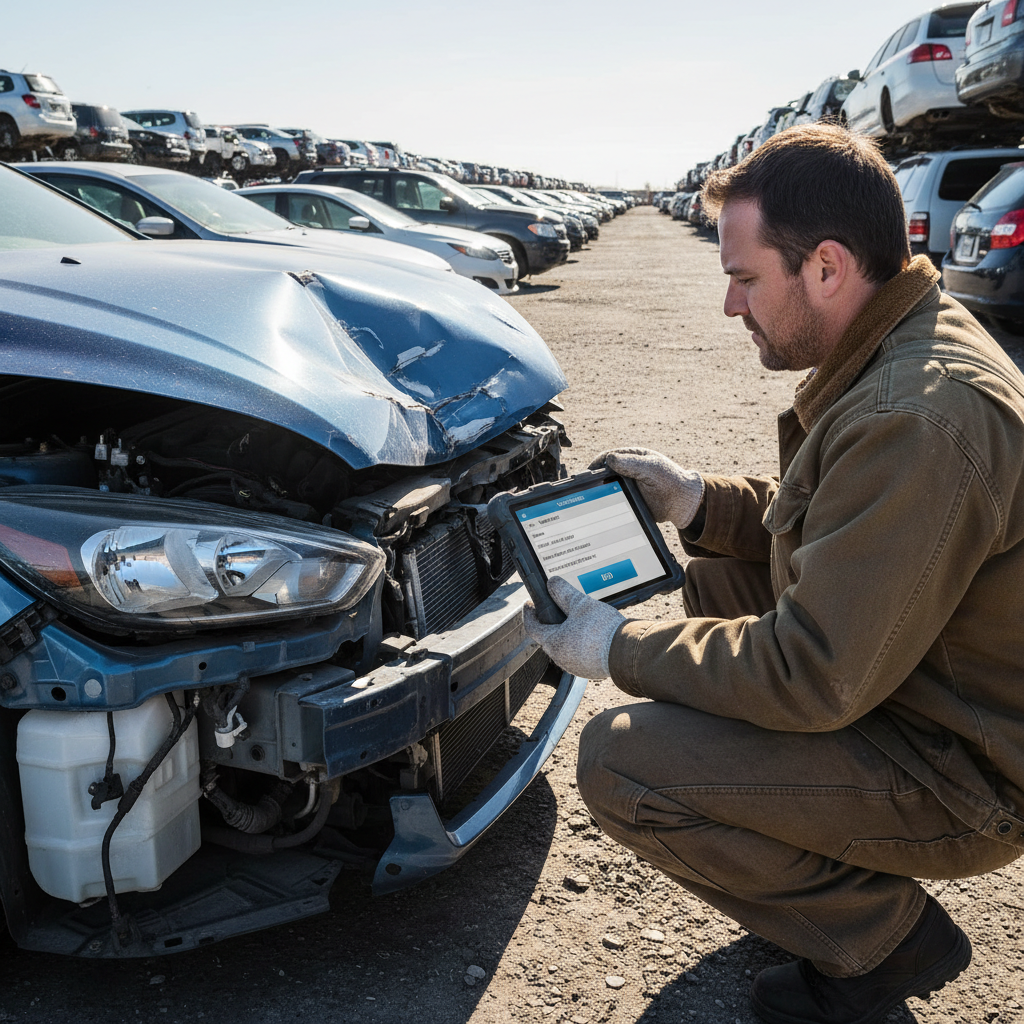
Winning at the auto auction isn’t about having the fastest clicking finger. It’s about the quiet, meticulous work you do hours or even days before the bidding starts. Skipping this homework is the fastest way to turn a potential goldmine into a financial black hole. You see a car with what looks like minor cosmetic damage, you get swept up in the auction frenzy, and you win the bid. The thrill is real—until the car arrives and you discover a bent frame, a history of being sold three times in the last six months, and a title brand that makes it nearly unsellable. Your profit margin evaporates, replaced by a pit in your stomach. Now you’re stuck with a lemon.
This is the difference between professional flippers who build a business and hobbyists who gamble. The pros operate from a playbook. They analyze every lot with a cold, calculated eye, armed with data. This guide is your playbook. We’ll show you how to deconstruct an auction listing, spot the red flags a mile away, and calculate a max bid that protects your profit, every single time.
Foundation First: It All Starts with the VIN and Lot Number
Before you even look at a single photo, your analysis begins with one piece of data: the Vehicle Identification Number (VIN) or the auction lot number. This string of characters is the key to unlocking the vehicle’s entire history and identity. Manually gathering this information is a painful, time-consuming process of cross-referencing multiple sites and databases.
This is where an intelligent platform changes the game. When you plug a VIN or lot number into a tool like AutoFlip Pro, it instantly gets to work. It’s designed to automatically fetch critical data points that form the foundation of your analysis, including:
- Vehicle Specifications: The exact year, make, model, and trim. No more guessing if it’s the base model or the fully-loaded version.
- VIN Decode: Crucial details like the engine type, transmission, and factory-installed features are pulled directly from the VIN.
- Sales History: This is a massive one. The tool scours auction databases for previous listings, showing you if the car has been bouncing from auction to auction—a major red flag.
- Lot Information: It grabs the auction location, sale document type (the title status), and other key details directly from the listing platform.
Without this foundational data, you’re flying blind. Having it organized for you in seconds lets you move on to the more nuanced parts of the analysis with confidence.
Become a Damage Detective: Reading Between the Lines
Once you have the vehicle’s baseline identity, it’s time to assess the damage. Auction photos are your primary evidence, but they only tell part of the story. You need to look at them with a forensic eye. Remember, auctions are experts at making damage look better than it is.
Structural vs. Cosmetic: The Million-Dollar Distinction
This is the most important judgment call you’ll make. Cosmetic damage (scratches, small dents, broken mirrors) is typically straightforward and relatively cheap to fix. Structural damage is a potential business-killer. Look for:
- Uneven Panel Gaps: Check the space between the hood and fenders, doors, and trunk. Inconsistent gaps suggest the frame has shifted.
- Crumpled Bumper Supports: If you can see behind the plastic bumper cover, look for any bending or kinking in the metal reinforcement bar. This indicates a significant impact. li>Wavy Roof or Quarter Panels: Look at the reflections in the paint. If they’re distorted or wavy, especially on the roof or near the rear pillars, it could signal frame or unibody damage.
- Mismatched Paint or Overspray: This is a sign of a previous, often cheap, repair. What else are they hiding?
Title Brands and Red Flags: Decode the History
The vehicle’s title status dictates its future value and your ability to sell it. Understanding the nuances of different salvage titles is your first line of defense. While a “Salvage” title is neutral, others are clear warnings:
- Junk/Parts Only: A definitive money pit. This vehicle can never be retitled for road use. Avoid unless you are specifically parting it out.
- Flood Damage: Can lead to a nightmare of recurring electrical gremlins and hidden rust. Even if it starts, the problems can surface months later.
- Theft/Recovery: Often less severe physically, but can sometimes come with paperwork headaches or hidden damage from the recovery process.
- Sales History: This is a critical risk factor. A vehicle that has been sold multiple times recently is a huge red flag. It means other pros bought it, found something terribly wrong, and dumped it back at auction.
Trying to weigh these factors in your head is stressful and prone to error. AutoFlip Pro’s Risk Level Calculation simplifies this by scoring each vehicle. It automatically flags major issues, like a history of multiple "Sold" entries, by deducting a massive 40 points. It also adjusts for title type and whether the engine starts, giving you a simple “Low,” “Medium,” or “High” risk rating to guide your decision.
Master the Market: Comps Are Your Compass
You can’t set a smart bid if you don’t know what the car is worth *after* it’s fixed. Generic book values from sites like Kelley Blue Book are useless for salvage vehicles. You need “comps”—comparable sales data for similar fixed-up cars in your specific market.
Finding accurate comps means looking for the same year, make, and model with similar mileage and trim levels that are currently for sale or recently sold *in your area*. The value of a 4x4 truck in Colorado is vastly different from the same truck in Florida. This is why having your analysis tool configured for your location is non-negotiable.
Manually searching Craigslist, Facebook Marketplace, and local dealer sites is a grind. A robust analysis platform automates this. For instance, AutoFlip Pro requires your zipcode during setup specifically to pull local comparable listings for its market value estimation. It gives you a “Clean Market Value” based on real-world data from your area, along with a confidence score so you know how much to trust the estimate.
The Final Number: Calculating Your Max Bid the Right Way
Getting emotional and bidding "one more time" is how you lose money. Your max bid should be a hard line, calculated with a simple, unemotional formula. It’s the final step that ties all your research together and is a crucial step in calculating your final car-flipping profit.
The formula is: Max Bid = Adjusted Market Value - Expenses - Profit
Let's break that down:
- Adjusted Market Value (AMV): Start with the Clean Market Value from your comps research, then subtract a percentage for the salvage title. A 20-30% discount is standard.
- Total Expenses: This is the sum of all costs to acquire, fix, and sell the car. This includes:
- Repair Costs: Your best estimate for parts and labor.
- Transport Cost: The cost to ship the vehicle from the auction to your location.
- Auction Fees: These can be 10% or more of the sale price.
- Additional Expenses: Any other costs you anticipate.
- Target Profit: The amount of money you want to make on the flip, usually calculated as a percentage of the AMV.
Doing this math for every single car is tedious. This is the exact workflow where an automated tool becomes indispensable. AutoFlip Pro’s Max Bid Calculator does this for you. It pulls the market value it already estimated, then subtracts your pre-set target profit margin, transport costs (calculated using your default destination), auction fees, and risk adjustments. You just plug in your estimated repair cost to get a data-driven max bid in seconds. You can run a free analysis to see how the max bid calculator works on any Copart or IAAI lot.
Before You Place That Bid: Your Final Checklist
You’ve gathered the data and run the numbers. Before you log into the auction, run through this final pre-bid checklist to ensure nothing was missed:
- VIN/Lot Number Analyzed: Have you run the numbers through your analysis tool to pull basic specs and history?
- Sales History Reviewed: Is this the first time this car is at auction, or is it being passed around like a hot potato?
- Damage Inspected: Have you scrutinized all photos for signs of hidden structural damage beyond the cosmetic issues?
- Title Brand Confirmed: Do you know the exact title brand and its implications for resale value and retitling?
- Market Comps Checked: Have you established a realistic clean market value based on *local* comparable sales?
- Max Bid Calculated: Do you have a firm, data-driven maximum bid that protects your profit margin?
Key Takeaways
- Never bid based on emotion or auction-day pressure. All profitable decisions are made during pre-bid analysis.
- A vehicle's sales history is a critical risk indicator. Multiple "Sold" entries for the same car is a major red flag that suggests a hidden, deal-breaking problem.
- Generic vehicle values are irrelevant. Your analysis must be based on local comparable sales (comps) for that specific make and model.
- Your max bid is not a guess; it's a formula. It must account for market value, title discount, repairs, transport, auction fees, and your target profit.
- Use an analysis platform to automate data gathering and calculation. This lets you analyze more cars with greater accuracy, whether you're bidding on Copart or IAAI.
FAQ
How does AutoFlip Pro calculate the maximum bid?
AutoFlip Pro uses an intelligent max bid calculator that takes into account the Clean Market Value, title discounts, estimated repair costs, transport costs (based on your default destination), auction fees, your target profit margin, and a risk adjustment to determine the optimal maximum bid price.
Can AutoFlip Pro help me identify risky vehicles?
Yes, AutoFlip Pro provides a risk level calculation for each vehicle based on multiple factors. Significant red flags like multiple "Sold" entries in the sales history will heavily impact the risk score, and title types like junk, flood, or theft/recovery also contribute to a higher risk assessment.
What data does AutoFlip Pro use for market value estimation?
AutoFlip Pro estimates market value based on comparable listings in your specified search radius and your local area (determined by your zipcode setting). It analyzes vehicle specifications, sales history, and other relevant market data to provide a Clean Market Value estimate along with a confidence level.
How does AutoFlip Pro help with ongoing auction tracking?
AutoFlip Pro offers a comprehensive dashboard with auction tracking features. You can view statistics, today's auctions, upcoming auctions, and manage your saved analyses in the Auctions Watchlist. It automatically updates auction statuses based on dates and sales history, and you can manually mark auctions as won or lost.
Is it possible to share my vehicle analyses with others?
Yes, from the analysis detail page in AutoFlip Pro, you can generate a shareable link that copies to your clipboard. This link provides a view-only summary of the vehicle and lot details, including key analysis numbers like market values, risk score, and maximum bid, allowing you to easily share your findings with partners or advisors.