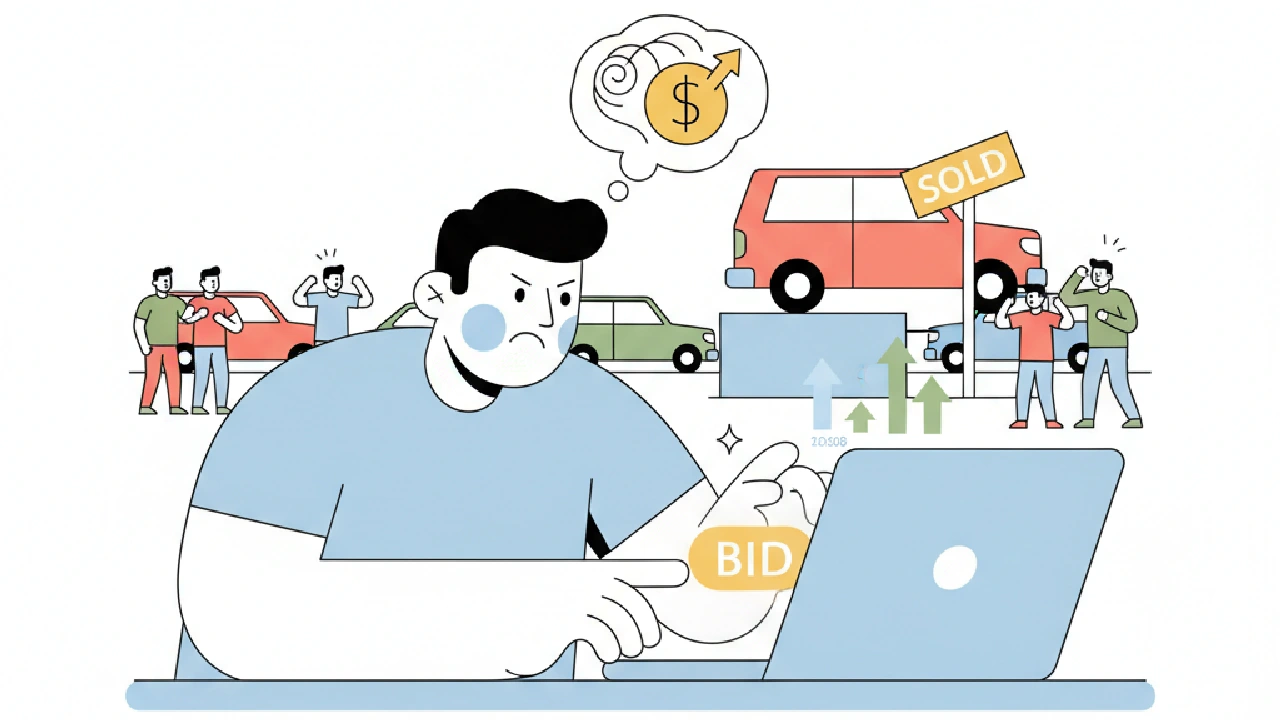
You’re looking to flip cars from Copart, right? Good. But before you jump in, understand this: the auction floor is a battlefield. One wrong move and you’re bleeding cash. I’ve seen it a hundred times, rookies getting swept up, paying too much, and ending up with a glorified paperweight. This isn't about "getting a deal"; it's about making money. And to do that, you need to avoid the classic Copart bidding mistakes that’ll sink your spread before you even tow the thing home.
Think of this as our pre-auction huddle. We’re going to cover the big traps, the kind that turn a potential profit into a guaranteed loss. No corporate jargon, just straight talk on how to keep your bids smart and your bank account healthier.
1. The Emotional Rollercoaster Bid
This is the number one killer. You see a car you "fall in love with" – maybe it’s a specific make, maybe it just looks better in the pictures. Your heart rate goes up, your logical brain shuts down. You push that bid button just one more time, then another. Suddenly, you’ve blown past your rational maximum, all for a vehicle that probably has more hidden problems than you care to admit. Emotional bidding is profit-killing bidding.
How to avoid it:
- Set a strict max bid BEFORE the auction starts. Base it on solid numbers: estimated repairs, market value for the *actual* condition, and your desired profit margin.
- Stick to your number. No exceptions. When the bidding goes above your max, walk away. There will always be another deal.
- Use tools: A good max bid calculator can help you stay disciplined.
2. Ignoring the Title Type
Oh, the dreaded "salvage" title. Or worse, "junk," "parts only," or flood damage. Many flippers see these and think "discount!" But what they often forget is the uphill battle for resale, the extra paperwork, and the potential for hidden issues. A clean title vehicle might cost more upfront, but it often sells faster and for a higher price, with fewer headaches.
How to avoid it:
- Know your titles. Understand the implications of every title type in your state (and the state where you plan to resell).
- Factor it into your max bid. A salvage title will severely impact resale value and should significantly reduce your maximum offer.
- Don't assume. Just because a car "runs and drives" with a salvage title doesn't mean it's a goldmine. The title itself is a major factor.
3. The "Eyeball Test" Repair Estimate
You’ve walked around the car, kicked the tires, maybe even peeked under the hood. "Looks like a new fender and a paint job," you think. "Easy $1,500." Fast forward to the shop, and that fender needs a whole new quarter panel, the frame is tweaked, and the paint job turns into a full respray. Your $1,500 repair just became $4,000, and your profit is gone.
How to avoid it:
- Get multiple professional estimates. If possible, take a mechanic with you for an inspection, or get detailed photo estimates from trusted repair shops.
- Pad your estimates. Always add at least 15-20% to your repair costs for unknowns. Something always comes up.
- Document everything. Before and after photos are your best friend, both for estimating repairs and for resale.
4. Forgetting Transport Costs
It’s easy to get caught up in the bid price and forget about the logistical nightmare of getting the car from the auction lot to your garage. Transport can eat a significant chunk out of your profit, especially for non-runners or vehicles far away. That $500 savings on the bid can easily be wiped out by a $700 tow bill.
How to avoid it:
- Calculate transport BEFORE you bid. Get quotes from reliable transporters for the exact distance.
- Consider the vehicle's condition. Non-runners cost more to transport.
- Factor in storage fees. Many auction yards have daily storage fees if you don't pick up quickly.
5. Neglecting Auction Fees and Buyer Premiums
Copart and other auctions aren't charities. They charge a heap of fees: buyer premiums, gate fees, internet bidding fees, and more. These can easily add hundreds, sometimes over a thousand dollars, to the final price. If you don't factor these in, your "winning bid" might actually be a losing deal.
How to avoid it:
- Read the fee schedule for every auction. They vary, so don't assume.
- Add all fees to your max bid calculation. Treat them as part of the vehicle
cost, not an afterthought.
6. Skipping the Sales History Check
You see a shiny car, low mileage, maybe some minor cosmetic damage. Looks like a prime flip candidate. But what if it’s been through the auction block three times in the last six months and failed to sell? Or worse, it sold previously for far less than you’re about to bid? This indicates a deeper problem, either with the vehicle itself, its title, or its marketability. History repeats itself, especially in salvage auctions.
How to avoid it:
- Always check the sales history. Most major auction platforms provide this. Look for multiple "sold" entries or repeated listings. This is a huge red flag.
- Understand why it didn't sell. If a car constantly reappears, there’s a reason. Don't assume you’re smarter than previous bidders.
- Adjust your risk. A car with a checkered sales past is a higher risk, and your max bid should reflect that. AutoFlip Pro factors sales history into its risk calculations, significantly lowering your risk score for vehicles with multiple "sold" entries. This helps identify major red flags you might otherwise miss.
7. Ignoring Your Target Profit Margin
This seems obvious, right? Yet, in the heat of the moment, many flippers get so caught up in "winning" the bid that they forget *why* they’re doing this: to make money. If your calculations show you need a minimum of $2,000 profit, and a car goes for a price that leaves you with only $500, it’s not a win; it’s a waste of your time and capital.
How to avoid it:
- Define your profit margin upfront. Know what percentage or dollar amount you need to make on each flip to justify the effort and risk.
- Integrate it into your max bid calculation. Your max bid should *always* account for your desired profit. Tools like the intelligent max bid calculator in AutoFlip Pro specifically include your target profit margin, ensuring every bid is profitable for you.
- Be disciplined. If you can’t hit your profit margin at the current bidding price, let it go. Your time is valuable, and there will be other opportunities.
Key takeaways
- Always determine your absolute maximum bid before the auction starts, based on thorough analysis, not emotion.
- Never overlook the type of title, as it significantly impacts resale value and potential headaches.
- Thoroughly estimate repair costs and factor in all hidden expenses like transport and auction fees.
- Leverage tools for reliable data on sales history, market value, and risk assessment to make informed decisions.
- Prioritize your target profit margin above "winning" the bid to ensure every flip is genuinely worthwhile.
FAQ
How can I accurately estimate market value for a salvage vehicle?
Accurately estimating market value requires detailed data specific to your local area. AutoFlip Pro uses comparable listings and vehicle specifications for its clean market value estimation and confidence scoring, helping you understand a car's true worth even with damage.
What are the biggest red flags to look for in a vehicle's history?
The biggest red flags are multiple "Sold" entries in the sales history, an "Active" listing combined with previous "Sold" entries, and severe title types like "Junk" or "Flood." AutoFlip Pro's risk level calculation weighs sales history as a very important (A-level) factor, assigning negative points for such issues.
How do I account for all the various auction fees?
Each auction platform has its own fee schedule, which can vary based on the vehicle's final sale price and the buyer's membership level. It is crucial to review these fees carefully. The AutoFlip Pro max bid calculator automatically accounts for auction fees as part of its comprehensive formula, helping you avoid surprises.