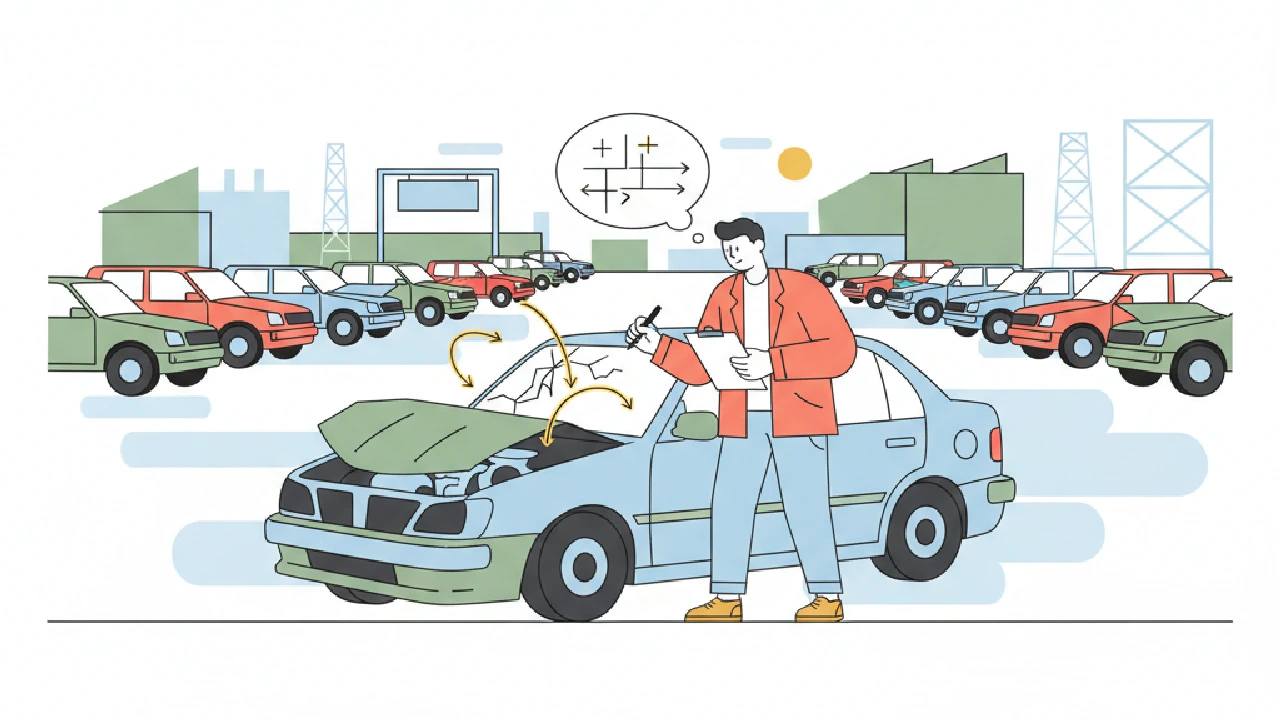
Let's talk real numbers for Copart and IAAI. You want to flip salvage cars, right? Then you need a rock-solid max bid formula. This isn't about guessing or hoping for the best. It's about crunching the numbers before the auction even starts. Think of it as your battle plan.
The core idea is simple: You figure out what a repaired car is worth, then you back out all your costs and your target profit. Whatever's left? That's your absolute max bid. Go a dollar over, and you're leaving money on the table or even taking a loss. We don't do that.
Start with the End in Mind: Repaired Market Value
This is where most beginners mess up. They look at a wrecked car and think about what it might currently be worth in its damaged state. Big mistake. You need to focus on the repaired resale value. What will this car sell for once it's fixed up, clean, and ready for a new owner? That's your North Star.
How do you find this? Look for identical vehicles — same year, make, model, trim, mileage (as close as possible) — that have a clean title. Check local dealerships, online marketplaces, and auction results for clean-title cars. Expand your search radius if you need to, but don't go too far. What a car sells for in Miami doesn't always apply to Seattle.
Get a solid average. This is your Approximate Retail Value (ARV) once repaired. This number sets the ceiling for your entire deal. If you can't get a good ARV, you can&t make an informed bid. Move on to the next lot.
Crunching the Costs: Repairs and Contingency
Here's where the rubber meets the road. Repair costs can kill a deal faster than anything. You need to be ruthless and realistic. This means:
-
Detailed Damage Assessment: Look at all the pictures. Read the damage report. Is it front-end, rear-end, side, flood, fire? Understand the extent. Don't just eyeball it. What panels are damaged? What structural components might be bent?
-
Parts Sourcing: Start pricing out major components. Headlights, bumpers, fenders, radiators, airbags. Check used parts suppliers, aftermarket options, and even new OEM if a used part isn’t available. Don't forget about small stuff like clips, brackets, and trim pieces. These add up.
-
Labor Estimates: If you're not doing the work yourself, you need solid labor quotes. Talk to your body shop or mechanic. Get a feel for their hourly rate and how long they expect the job to take. Be skeptical of lowball estimates; cheap work often means more problems later.
-
Contingency: This is non-negotiable. Always add a buffer for "unknowns." You will always find something unexpected once you start tearing into a salvage car. A good rule of thumb is to add at least 15-20% to your initial repair estimate for contingency. This protects your profit margin.
Example: You think the repairs are $3,000. Add $600 (20%) for contingency. Your realistic repair budget is now $3,600. Don't skip this step. Seriously.
Factor in the "Hidden" Fees and Transport
Auction fees and transport costs are often overlooked, but they eat into your spread fast. These aren't "potential" costs; they are guaranteed expenses that cut directly into your profit.
-
Buyer Fees: Copart and IAAI have tiered buyer fees. The more expensive the car, the higher the fee. You also have transaction fees, gate fees, and sometimes even internet bidding fees. Know exactly what you'll be charged based on your bid amount. These are published on their sites.
-
Broker Fees: If you're using a broker to bid (common for individuals without a dealer license), they charge a fee. This is usually a flat rate or a percentage. Factor it in.
-
Transport: How are you getting the car from the auction yard to your shop? If it's local, maybe you flatbed it yourself. If it's out of state, you need a transporter. Get quotes for delivery. Pickup charges at the auction site can also apply if you don't get it out in time.
-
Title and Registration: Don't forget the cost and time to get the salvage title, rebuilt title, and eventually register the vehicle. These vary by state but are real costs.
Total up all these non-repair costs. They can easily add $500-$1,500+ to a deal.
Your Non-Negotiable Profit Margin
Why are you doing this? To make money. So, what's your target profit? This isn't a suggestion; it's a requirement. If you can't hit your profit target, the deal isn't worth doing. Period.
For most flippers, a target profit of $1,000-$2,500 per vehicle is reasonable, depending on the value and effort involved. For higher-value cars or more extensive repairs, you might aim for more. Set your number and stick to it.
A good rule to live by: If the numbers don't work with your desired profit margin, you walk away. There will always be another deal.
The Max Bid Formula: Putting It All Together
Here's the straightforward breakdown:
Max Bid = (Repaired Resale Value) − (Repair Costs + Contingency) − (Auction Fees + Transport + Title Costs) − (Target Profit)
Let's run a quick example:
- Repaired Resale Value (ARV): $12,000
- Estimated Repairs: $3,500
- Contingency (20% of repairs): $700
- Auction Fees (based on $6,000 bid): $550 (example)
- Transport Cost: $300
- Title/Admin Fees: $100
- Target Profit: $1,500
Calculate your total expenses:
- Repairs + Contingency: $3,500 + $700 = $4,200
- Auction Fees + Transport + Title: $550 + $300 + $100 = $950
- Total Costs (excluding profit): $4,200 + $950 = $5,150
Now, calculate your max bid:
- $12,000 (ARV) − $5,150 (Total Costs) − $1,500 (Target Profit) = $5,350 (Your Max Bid)
This means your absolute ceiling for bidding on this specific car is $5,350. If the bidding goes higher, you back out. Simple as that. Don't get emotional. Stick to your numbers.
Title Risk: The Silent Killer
Beyond the numbers, always consider title risk. A "junk" or "parts only" title might mean you can never get it rebuilt and legally registered for the road. Other titles, like "flood" or "fire," can severely limit your buyer pool and final sale price, even after repairs.
Always verify the exact title type before you bid. Make sure your state allows you to obtain a rebuilt title for that specific type of salvage title. Some states are very strict. Misreading a title can turn a supposed "flip" into a permanent parts car, crushing your profit.
Where a salvage flip tool helps
Calculating all these elements accurately and quickly for every potential vehicle can be time-consuming and prone to error. A specialized tool like the AutoFlip Pro Max Bid Calculator automates many steps, including estimating clean market value, factoring in title discounts, and accounting for transport and auction fees directly into its calculations. This helps ensure your max bid is always based on solid data, preventing overbidding and protecting your profit margins.
Key Takeaways
- Always start your calculations with the target **repaired resale value**.
- **Overestimate repair costs** and always include a **contingency buffer**.
- **Account for all fees upfront**: auction, broker, transport, and title.
- **Commit to your target profit**; if you can't hit it, walk away.
- **Understand title types** and associated registration risks before bidding.
FAQ
What is the most important factor in the max bid formula for salvage cars?
The most important factor is accurately determining the **post-repair market value** (ARV). All other calculations stem from this initial estimate. If your ARV is off, your entire max bid calculation will be flawed.
Why do I need a contingency in my repair estimates?
Salvage vehicles often have hidden damage not visible in auction photos or descriptions. A **contingency allowance**, typically 15-20% of your estimated repair costs, helps absorb these unexpected expenses without eroding your profit margin.
How do auction fees impact my max bid?
Auction fees (buyer fees, transaction fees, gate fees, etc.) directly reduce your available budget for the vehicle itself. You must subtract them from your ARV, along with repairs and profit, to find your true max bid. These fees are fixed costs that you will always pay, regardless of your profit.
Should I bid on a car with a "parts only" title?
Generally, avoid bidding on cars with "parts only" or "junk" titles if your goal is to flip them as a drivable vehicle. These titles often cannot be converted to a street-legal title, severely limiting your ability to sell the car for a profit. Only consider these if you specifically need parts or plan to export the vehicle.