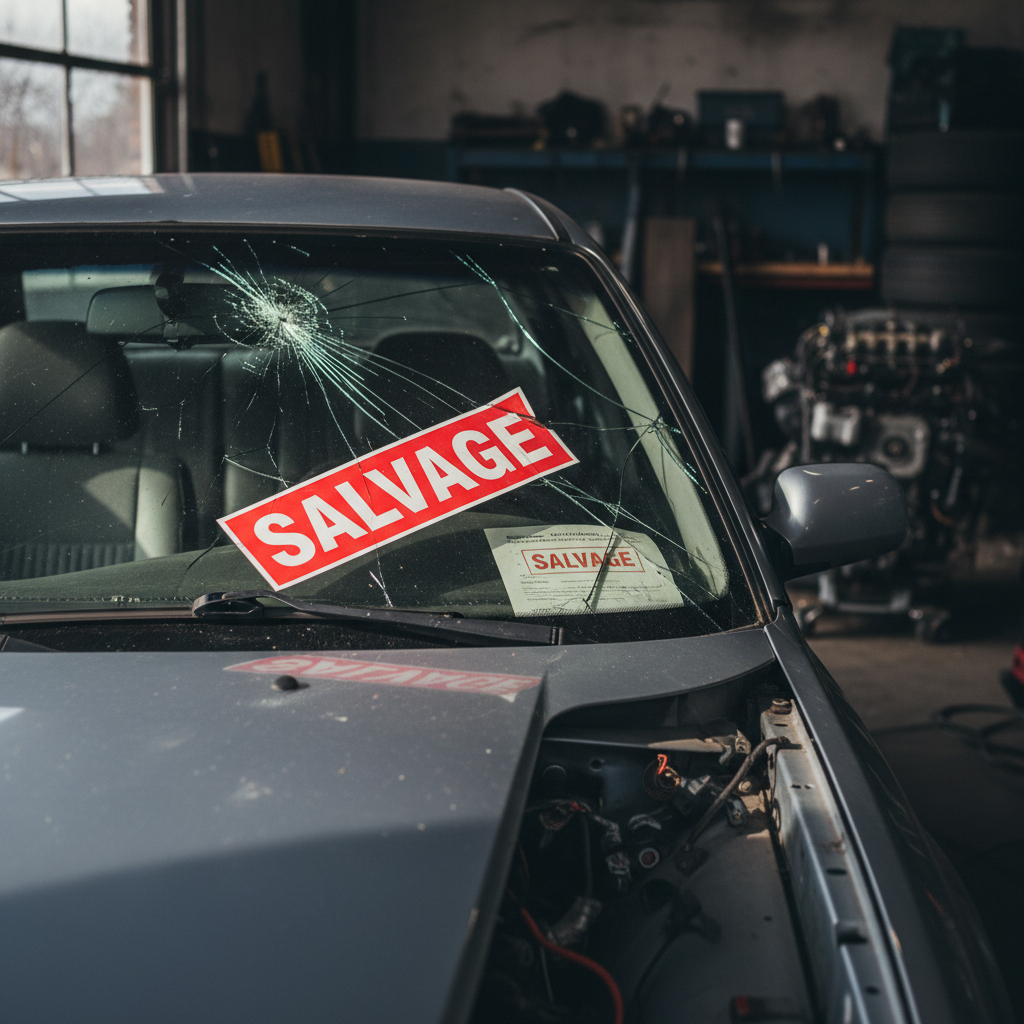
You’re in the game to make a profit, and nothing — absolutely nothing — guts a potential flip faster than a nasty title brand. We’re talking about salvage titles, flood damage, non-repairables… the whole damn menagerie of red flags. If you don't respect these, you're not making money; you're burning it.
It’s not just about the damage itself. It’s about the permanent marker left on that VIN. The market views these vehicles differently, and you need to as well. So, let’s dig into how these salvage title brands can destroy your spread and what we do to sidestep the landmines.
Beyond "Totaled": Understanding the Brand
First, get this straight: a “salvage title” isn’t a suggestion; it’s a declaration. It means an insurance company wrote off the car as a total loss. Why? Because the cost to fix it hit a certain percentage of its pre-damage value – usually somewhere between 50% and 75%. That decision sticks with the vehicle, permanently attached to the VIN. It’s not going anywhere, ever. This isn't some paperwork snag you can "fix." It's part of the car's DNA now.
Most folks think "salvage" and they picture a wreck. While that’s often true, the brand itself is just a financial decision. A car could have relatively minor, easily repairable damage but still get a salvage title if the parts are expensive or labor rates are high enough to push it over that threshold. The brand isn't about the severity of the damage; it's about the financial calculation. But trust us, the market doesn't care about the nuance. It sees "salvage" and discounts it heavily. AutoFlip Pro factors in potential title discounts as part of its max bid calculation to accurately assess a vehicle's true value.
The Value Hit: Why Your Profit Disappears
This is where the rubber meets the road for your bottom line. A salvage title absolutely crushes a car’s actual cash value. We've seen it reduce a vehicle's value by 20% to 40% compared to a clean-title identical model, even after it’s been rebuilt. If you happen to buy one that's still in an unrepaired salvage state, you're looking at a 40% to 60% hit right out of the gate. That’s a massive hole to dig out of if you’re trying to flip it for a profit.
Think about it: most buyers, especially retail ones, want a clean title. They’re wary of perceived issues, future maintenance, and resale headaches. Banks are even warier; good luck getting a loan on a branded title car. This pigeonholes your potential buyer pool to cash buyers or those specifically looking for projects. Smaller pool, lower demand, lower price. That’s simple economics killing your spread. To help you avoid overpaying and ensure you factor in these critical title impacts, AutoFlip Pro's intelligent max bid calculator automatically accounts for title discounts and market value confidence based on comparable listings. You can analyze a lot free to see this in action at autoflip.pro/try.
Case Study: The "Great Deal" That Wan
Case Study: The "Great Deal" That Wasn't
Let's talk about something we lived through. A beautiful late-model sedan at auction, barely a scratch on the photos. Looked like someone backed into a pole. Bid low to medium, won it, feeling like a genius. Then the paperwork came in: Flood Title. Immediately, our profit margin evaporated. The "minor cosmetic damage" suddenly came with a hidden history of water ingress, mold risk, and potential electrical nightmares. We ended up selling it at a significant loss just to get rid of the headache. The lesson? The title dictates the deal, not the visible damage.
This is precisely why AutoFlip Pro automatically retrieves and decodes VIN information, including crucial title status details, as part of its vehicle analysis process. It flags these critical details upfront, so you're never caught off guard after the auction. The system even incorporates specific risk adjustments for flood titles, alerting you instantly to potential profit killers.
The Various Brands: A Rogues' Gallery of Profit Killers
While "salvage" is the big one, it's not alone. Here are other title brands that can ruin your day:
Flood Title
We just touched on this. Extremely dangerous. Water damage can manifest months later, leading to electrical failures, rust, and foul odors. Always assume the worst with flood titles. AutoFlip Pro assigns a significant negative risk adjustment (-10 points) if a vehicle has a flood title, impacting its overall risk level calculation.
Junk/Parts Only Title
This is typically non-repairable and can never be legally registered for road use in most states. It's strictly for parts or scrap. If you buy one of these thinking you can get it back on the road, you're in for a very expensive surprise. AutoFlip Pro flags these with a substantial risk penalty (-15 points) and a warning, ensuring you don't accidentally bid on a non-flippable asset.
Theft Recovery Title
Often less severe than flood or salvage, but still carries a stigma. These vehicles were stolen and then recovered. The damage might be superficial (broken ignition, missing catalytic converter) or more extensive. The main issue is the perception and the potential for undisclosed damage or missing components. Our system accounts for this with a moderate risk adjustment (-5 points).
Rebuilt Title
This means a salvage vehicle has been repaired, inspected, and deemed roadworthy. While better than a raw salvage title, it still carries the "branded" history and will sell for less than a clean title car. The market still discounts heavily, though less than an unrepaired salvage. AutoFlip Pro's max bid calculator factors in comprehensive sales history and market comparables analyses to give you realistic pricing even on rebuilt titles.
How to Avoid the Title Trap
So, how do you protect your hard-earned cash from these profit-eating brands? Knowledge and vigilance.
First, always check the title status BEFORE you bid. This sounds obvious, but in the heat of an auction, it's easy to overlook. The auction listing should disclose it. If it doesn't, assume the worst or move on. AutoFlip Pro helps you with this by automatically retrieving and displaying title information as part of its vehicle analysis report.
Second, understand the implications of each brand type. A flood title is not the same as a theft recovery. Know what you're getting into. Our risk level calculation feature, providing scores from 0-100, is designed to help you quickly assess these distinctions, applying different point deductions for various title types.
Third, factor the title brand into your maximum bid. Never pay clean-title prices for a branded vehicle. Ever. This is a non-negotiable rule if you want to stay profitable. The intelligent max bid calculator within AutoFlip Pro is specifically designed for this, automatically adjusting your maximum profitable bid based on factors like title type, repair costs, and your target profit margin.
Ultimately, navigating branded titles successfully comes down to clear data, accurate valuations, and disciplined bidding. Don't let a "great deal" turn into a financial nightmare because you ignored the title status.
Key Takeaways
- Salvage, Flood, Junk, and Theft Recovery titles permanently devalue vehicles, often by 20-60%.
- Always verify the title status before bidding to avoid significant profit losses.
- Understand the specific risks associated with each title brand (e.g., electrical issues with flood, non-registrable with junk).
- Adjust your maximum bid downward significantly for branded titles; never pay clean-title prices.
- Leverage tools like AutoFlip Pro for automated VIN decoding, risk assessments, and intelligent max bid calculations to protect your profits.
FAQ
Q: What is a "salvage title" and why is it bad for flipping?
A: A salvage title indicates an insurance company declared the vehicle a total loss due to damage or theft. It's bad for flipping because it significantly reduces the car's market value (often 20-60%), limits your buyer pool, and makes financing difficult for future owners. AutoFlip Pro factors these title discounts into its max bid calculation to prevent overpaying.
Q: Can a car with a salvage title ever be legally driven again?
A: Yes, in most cases, after a salvage vehicle is repaired and passes a state inspection, it can be issued a "rebuilt" title and legally driven. However, it will always carry the branded history. Titles like "Junk/Parts Only" typically cannot be legally registered or driven.
Q: How does AutoFlip Pro help me avoid bad titles?
A: AutoFlip Pro automatically retrieves and decodes VIN information, including title status, during its vehicle analysis. It then uses this data in its risk level calculation to assign negative points for specific title brands (e.g., -10 for flood, -15 for junk) and adjusts the max bid recommendation accordingly.
Q: What's the difference between a "salvage" and a "rebuilt" title?
A: A "salvage" title is issued when a vehicle is deemed a total loss. A "rebuilt" title is issued after a salvage vehicle has been repaired, inspected, and certified as roadworthy. While a rebuilt title is an improvement, the car still carries the permanent "branded" history and will sell for less than a clean-title equivalent.
Q: Are all branded titles equally risky?
A: No, different branded titles carry different levels of risk. For example, a flood title generally carries higher, more unpredictable risks (electrical, mold) than a theft recovery title. AutoFlip Pro's risk level calculation weighs these factors differently, assigning varying point deductions to help you differentiate risk levels.