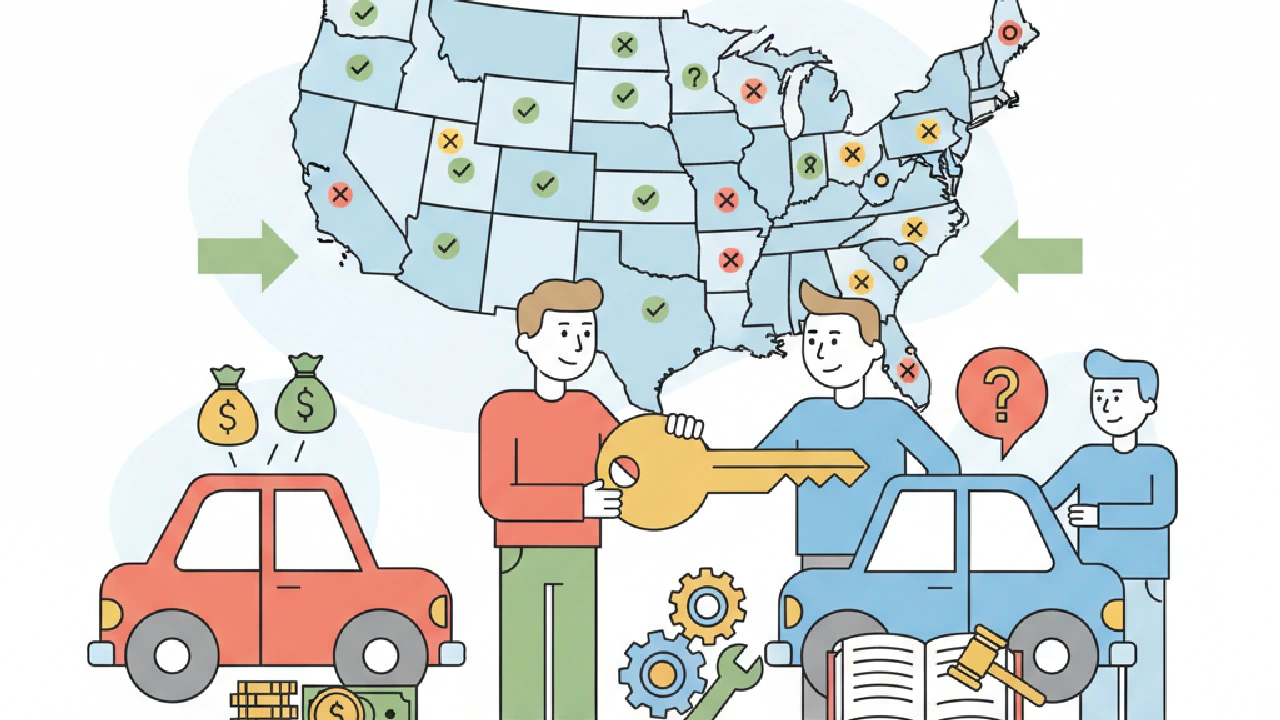
Is flipping cars illegal? Short answer up front: no federal law bans flipping cars. But state rules do. The single number that matters most is how many cars you sell in a set period. Many states limit private sellers to a small number of vehicles per year or per rolling window before the state expects you to have a dealer license.
Core idea — what to watch for
Flipping cars is legal so long as you follow state paperwork, title rules, and sales-volume thresholds. The common legal trap is volume: sell more than your state allows as a private seller and you suddenly need a dealer license. That’s the line that gets people shut down, fined, or forced into licensing and registration headaches.
For a quick profitability check, see the profitability outlook for flipping cars in 2026. If you want a repeatable process to follow at the lot, consult the operator playbook for flipping cars profitably.
1) The single rule that kills most flippers: volume limits
This is the clearest thing to lock down before you buy a car at auction. States set limits on how many vehicles a person can resell as a private party without a dealer license. In many states that limit is a small number — commonly three to five vehicles in a year or rolling window. If you cross that line you are operating as a dealer in the eyes of the DMV and tax authorities.
Practical moves:
- Call your state DMV or check their site for “occasional sale” or dealer-threshold language.
- Keep a running log of purchases and sales with dates to document your activity if questioned.
- If you plan to flip more than the allowed number, get the license first or set up the proper business structure and registration before you scale.
2) Title risk and paperwork — don't treat titles like paperwork you can fix later
Title issues are the daily killer. Salvage brands, odometer discrepancies, and titles held by finance companies can wreck a flip faster than a bad engine. Every state treats title brands differently. Some make rebuilding straightforward; others add long waiting periods or special inspections.
If you want a focused checklist on how salvaged titles are handled on auction day, read the auction-day salvage title flipping briefing. Also know which salvage title brands kill your flip spread so you can price in the worst-case rebuild and disclosure costs.
On auction day, do this:
- Read the lot notes and title status out loud before you bid.
- If a title is branded salvage, treat it as a full rebuild until proven otherwise.
- Flag titles that show liens or out-of-state registrations. Those take paperwork and time to clear.
3) Max-bid math — how to think about the number, without fake figures
Run through max-bid math before every auction. Don’t guess. Use a formula. Here’s the structure to use at the lot or on your phone:
- Start with your ARV (after-repair value) based on recent comps in your comp radius.
- Subtract expected repair costs. Be conservative — assume you’ll find one more surprise.
- Subtract auction buyer fees, transport to your shop, and title transfer costs for your state.
- Subtract your target profit (your minimum spread) and a buffer for hold time and unexpected costs.
For concrete tactics on setting a disciplined cap, see the setting a Copart max-bid strategy to avoid overpaying. That plus solid comps is how you protect your spread.
That result is your max bid. If the hammer goes above it, walk away. Bad bids are how flippers go from profitable to broke. I’d rather miss three deals than buy one that needs miracle money to finish.
Mini-case: the sales-limit trigger
Short real-world lesson I’ve seen: a hobby flipper sold cars casually during a busy season and exceeded their state’s small private-sale limit. They were told to obtain a dealer license and form an LLC to keep selling legally. The rule is simple: if your state lets you sell up to a certain small number, one sale past that — and you can be treated like a dealer.
How this affects auctions: if you’re at or above your state’s threshold, you can still buy. But you must either get licensed, sell under someone else’s dealer account, or limit purchases. Don’t assume you can retrofit a solution after the state calls.
4) State differences you must check — examples of where rules bite
States differ on four key points: allowed private-sale volume, title branding processes, time to transfer a title, and dealer registration requirements. That means a car that’s a safe flip in one state can be a legal headache in another.
Before you bid from out of state:
- Confirm the title transfer rules in the buyer’s and seller’s states.
- Check whether the rebuild process (for salvage titles) requires inspections or added fees.
- Understand whether a vehicle can be sold with a salvage brand in your target resale market.
Opinion: bidding across state lines without clearance on title rules is lazy and expensive. If you cross state lines, factor in the legal work or avoid cars with any title-brand questions.
5) Practical auction-day checklist
I keep this list on my phone and run it before every auction day. Short and actionable.
- Confirm your current count against your state’s private-sale limit (remember the small-number trigger).
- Set max bids using the ARV minus repair/fees/profit buffer formula above.
- Scan the title notes for brands, liens, or odometer flags. No blind bids on branded titles unless you can handle the rebuild process in that state.
- Estimate transport and holding time before sale. Longer holds reduce your safe max bid.
- If you’re unsure about a title or limit, don’t buy under your personal name—either use a licensed dealer account or pass.
Where a salvage flip tool helps
When you’re trying to avoid overpriced bids and missed title red flags, a focused analysis tool can speed decisions. AutoFlip Pro’s VIN/lot analysis, max bid calculator, and risk-level scoring map directly to the two biggest pain points: building a defensible max bid and spotting title or sales-history red flags before you commit.
- VIN or lot analysis pulls specs and sales history so you can spot prior “sold” entries and title brands before the hammer falls.
- The max bid calculator puts ARV, repair, transport, fees, and target profit into a single defensible number so you don’t guess under pressure.
Analyze a lot free before you bid.
Key takeaways
- Is flipping cars illegal? No at the federal level — but state rules can make it effectively illegal if you exceed small-volume thresholds without a dealer license.
- Track every sale. The quickest way to get reclassified as a dealer is sloppy records.
- Never bid blind on title brands. Salvage, rebuilt, and lien notes are the usual traps.
- Use ARV minus repairs/fees/profit = max bid. Walk when the hammer clears your max.
FAQ
Do I need a dealer license to flip cars?
Not automatically. You only need a dealer license if your state’s rules define you as a dealer — usually based on how many cars you sell in a set period. Check your state DMV for the exact threshold.
Can I sell a salvaged or rebuilt car to a private buyer?
Sometimes. It depends on state title branding rules and disclosure laws. Treat branded titles as higher risk and confirm the rebuild inspection and disclosure requirements before you buy.
What happens if I accidentally exceed my state's limit?
Expect administrative action: you may need to register as a dealer, pay fines, and correct tax filings. In practice, people I know were told to get a dealer license and form an LLC to continue. Don’t assume you can fix it after the fact without cost.
Can I use a dealer friend’s account to buy more cars?
You can, but it comes with legal exposure. If you’re flipping regularly, the safer route is to get licensed or set up the right business structure. Using someone else’s dealer account can draw scrutiny if patterns suggest you’re operating as a dealer.
Final checklist — action items before your next auction
- Confirm your state's private-sale limit and log your sales.
- Build a max-bid sheet: ARV, repairs, fees, transport, profit buffer.
- Scan title brands and liens before bidding. No surprises on the clock.
- If you plan to flip more than the limit, start the dealer-license or LLC paperwork now.
- When in doubt, pass. Bad titles and bad bids cost more than missed deals.
Bring this brief to the lot. If you want, I can review a specific state's rules or a car’s title notes before you bid. Real deals are created by process, not luck.