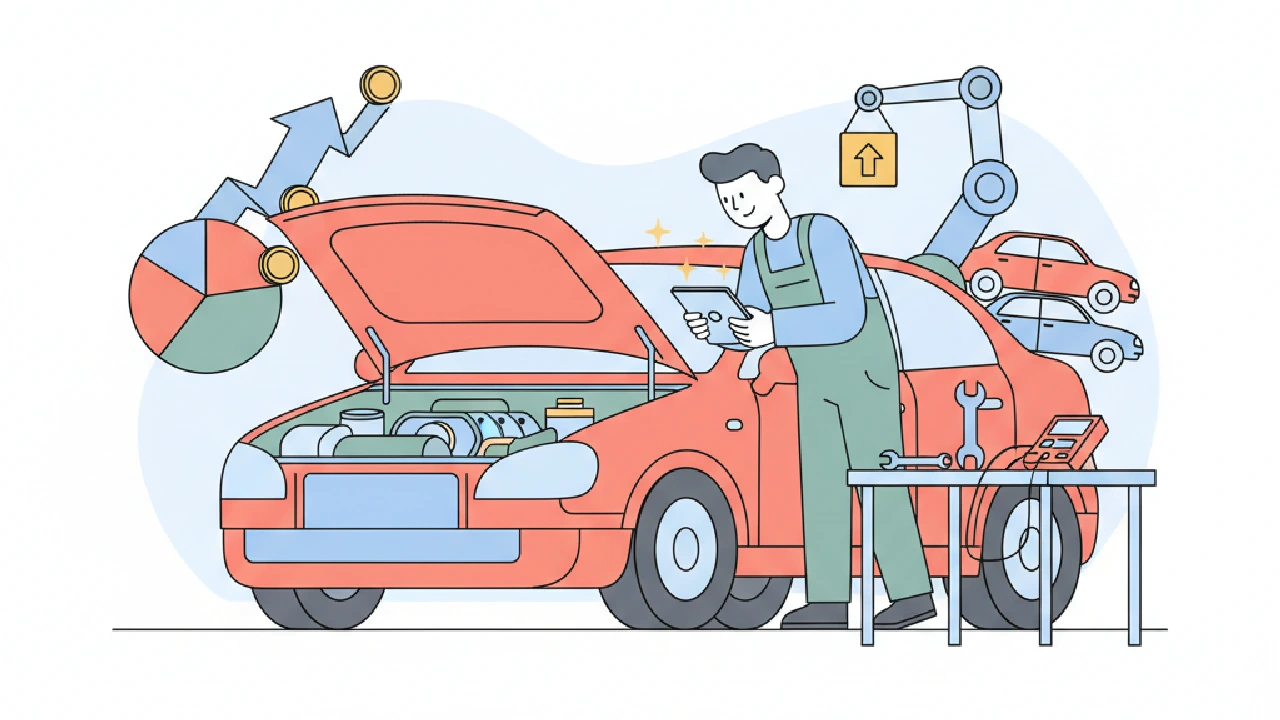
Flipping cars from salvage auctions like Copart or IAAI isn't for the faint of heart. It's a grind, but significant profit is available if you understand the game. This isn't about chasing every wrecked car; it's about implementing a clear, repeatable process – a true autoflip flip pipeline – that transforms salvage into substantial cash.
You need to find the right inventory, assess it accurately, and sell it efficiently. This demands strict math, sharp observational skills, and zero emotional bidding. We're talking about a system that begins with scanning thousands of listings and concludes with a solid profit in your pocket.
Find Your Edge: Sourcing Underpriced Inventory
The first step in any successful autoflip flip pipeline is locating the right vehicles. This requires consistent, automated searching. Manually browsing every listing on Copart or IAAI is a path to burnout and missed opportunities.
Savvy flippers leverage intelligent platforms to continuously scan listings. Imagine setting precise filters for brands, price ranges, years, mileage, and fuel types. Then, a system instantly alerts you when a matching listing hits the market. Services like AutoFlip Pro automate data retrieval from Copart and IAAI, ensuring you don't miss potential deals. This real-time advantage is critical over slower bidders.
Focus on cars that others overlook or underestimate. Seek common, high-demand models with damage that appears worse than it is. Avoid anything with major frame damage unless you're a structural repair expert with a dedicated shop. The objective is to buy below market price, allowing ample room for repairs and profit.
Example: Targeting a 'Sweet Spot' Deal
Let's say you're looking for a popular sedan, 3-5 years old, with minor body damage. Your ARV (Actual Retail Value) research, using a comparable radius of 50 miles, suggests a clean example sells for $15,000. You spot one on IAAI with a clear title and visible front fender damage. The current bid is $2,500. Your max bid calculation needs to be precise. If you know that fender, headlight, and paint work will cost you $1,500 (parts + labor), and transport is $300, plus auction fees around $400, your total acquisition and repair cost would be $2,500 (bid) + $1,500 (repair) + $300 (transport) + $400 (fees) = $4,700. If you can sell it for $12,000 after repairs, your spread is $7,300 before your time is factored in. That's a strong starting point. Adjust your max bid downwards to ensure a comfortable margin. AutoFlip Pro's intelligent max bid calculator automates this process, factoring in estimated repair costs, transport, auction fees, and your target profit margin.
The Inspection: Your Eyes on the Prize
Once you've identified a potential vehicle, the inspection is make-or-break. Never bid blind. This is where many amateur flippers lose money. The pictures can hide a lot, and the auction description is often minimal. You need to physically inspect the car, or pay someone reliable to do it for you. This step is a cornerstone of the salvage flip pipeline. While AutoFlip Pro provides a comprehensive risk score based on sales history, title type, and condition (runs/drives, engine starts), a physical inspection complements this analysis, confirming details like specific damage or overlooked issues.
Here’s what you absolutely must check:
- Service History: Ask for records. Missing history is a red flag.
- Timing Belt/Chain: If it's due or questionable, factor in the cost. This isn't a minor repair.
- Rust: Check frame rails, wheel wells, and under the carpet. Surface rust is one thing; structural rust is a deal-breaker.
- Tire Wear: Uneven wear points to alignment issues or suspension problems. Factor in new tires if needed.
- Electronics: Test everything. Windows, radio, AC, lights, dashboard warnings. A dead module can be a nightmare.
- Fluids: Check oil, coolant, transmission fluid. Milky oil means head gasket problems.
- OBD2 Scan: Bring a reader. Fault codes are your best friends for spotting hidden issues.
Perform this inspection in daylight. What looks like a scratch in dim light might be a deep gouge or crack. Compare the inspection findings with your ARV and repair estimates. If the real repair cost blows your margin, walk away. There will always be another deal.
Smart Repairs and Prep for Resale
The repair phase of your salvage flip pipeline is not about making the car showroom perfect. It's about making it safe, reliable, and presentable enough to command a fair market price. Resist the urge to over-repair. Every dollar spent on unnecessary repairs eats into your profit.
First, clean the car thoroughly. A detailed interior and exterior, even with minor body damage, instantly increases perceived value. Then, address only what is necessary:
- Safety First: Brakes, tires, lights, airbags (if deployed and repairable within budget).
- Mechanical Reliability: Engine, transmission, suspension issues that impact driving.
- Cosmetic "Must-Haves": Dents or scratches that make the car look unsafe or neglected. Prioritize visible damage.
Avoid expensive bodywork unless the vehicle's ARV can comfortably absorb the cost. If a car needs a full respray, it's probably not a good flip candidate unless you got it for dirt cheap and can do the work yourself or have a very cheap source. Focus on efficient, cost-effective repairs. For example, use quality aftermarket parts where appropriate, but don't cheap out on critical safety components.
For multi-car operations, tracking these repairs and parts across numerous vehicles can become chaotic. AutoFlip Pro's Portfolio feature offers an 8-stage flip pipeline, repair task management, and parts tracking, providing a clear overview from "In Transport" to "Sold." Its Parts Inventory and Vendors List further streamline ordering and stock management, helping prevent duplicate orders and linking repair spend directly to specific vehicles.
Once repairs are done, get an accurate Car-Pass in Belgium or RDW in the Netherlands for history verification. This builds trust with buyers.
Selling Smart: Presentation and Transparency
The final stage of the salvage flip pipeline is crucial: getting your money back, and then some. This means excellent presentation and full transparency. Your goal is to sell closer to market value by presenting a professional, trustworthy product.
A good listing includes:
- Sharp Photos: High-quality, well-lit photos from all angles – interior, exterior, engine bay, trunk. Highlight the car's best features. Don't hide minor imperfections; show them clearly.
- Clear Title: Ensure you have the correct, clear title in hand before listing. Salvage title issues scare buyers away and delay sales.
- Honest Description: Be upfront about the car's history, including the damage it sustained and the repairs performed. Include maintenance history. Buyers appreciate honesty and are more likely to trust you.
- Maintenance History: Provide all service records. This proves the car has been looked after.
Be ready to answer questions directly. If you tried to hide something, it will come out eventually, and your reputation will suffer. A reputation for honesty is worth more than a quick buck on one car. Price competitively, but don't undersell. Use your ARV research to justify your asking price.
Key Takeaways
- Always calculate max bid based on ARV, estimated repairs, fees, and transport. AutoFlip Pro's calculator automates this with high confidence.
- Physically inspect every vehicle; don't rely on auction photos or descriptions alone, but use AutoFlip Pro's risk score to guide your initial assessment.
- Repair only what's necessary for safety, reliability, and presentability.
- Use high-quality photos and a transparent description for resale.
- Maintain a clear title and provide all available service history.
FAQ
What is the most critical step in the autoflip flip pipeline?
The inspection. Catching hidden damage or mechanical issues before you buy is far more cost-effective than fixing them later. A missed detail here can wipe out your entire profit margin. AutoFlip Pro helps prioritize your physical inspections by providing a comprehensive risk score and flagging potential red flags like sales history or title type before you even step foot on the lot.
How do I estimate repair costs accurately?
Develop a network of trusted mechanics and body shops who provide fair, consistent pricing. Get multiple quotes for significant repairs. Use parts lookups for accurate part costs. Over time, you'll build a strong internal database of common repair expenses. AutoFlip Pro's free salvage repair estimator can provide a baseline, and the Pro plan's Portfolio and Parts Inventory features help track actual repair expenses against vehicles.
Should I always go for a clean title vehicle?
Generally, yes, especially when starting out. Clean titles are easier to sell and carry less risk. Rebuilt or salvage titles often limit your buyer pool and reduce the car's resale value significantly, even after repairs. Factor title type heavily into your max bid calculation. AutoFlip Pro explicitly includes title type in its risk score calculation, with significant point deductions for junk/parts only, flood, or theft titles.
What's a realistic profit margin for flipping cars?
This varies wildly by vehicle, damage, and your repair costs. Aim for at least 15-20% net profit after all expenses (purchase, fees, transport, repairs, cleaning) to make it worth your time and effort. Some deals might yield much more, others less. Don't be afraid to walk away if the numbers don't work.
How important is quick selling in this process?
Very. Every day a car sits, it costs you money in insurance, potential storage, and tied-up capital. The faster you can turn a car around (from purchase to sale), the more cars you can flip and the higher your annual profit potential. Efficient repair and compelling listings are key to quick sales. AutoFlip Pro's Portfolio helps manage your entire flip pipeline, tracking each vehicle through "In Transport," "In Repair," "Listed," and "Sold," optimizing for quicker turnarounds.