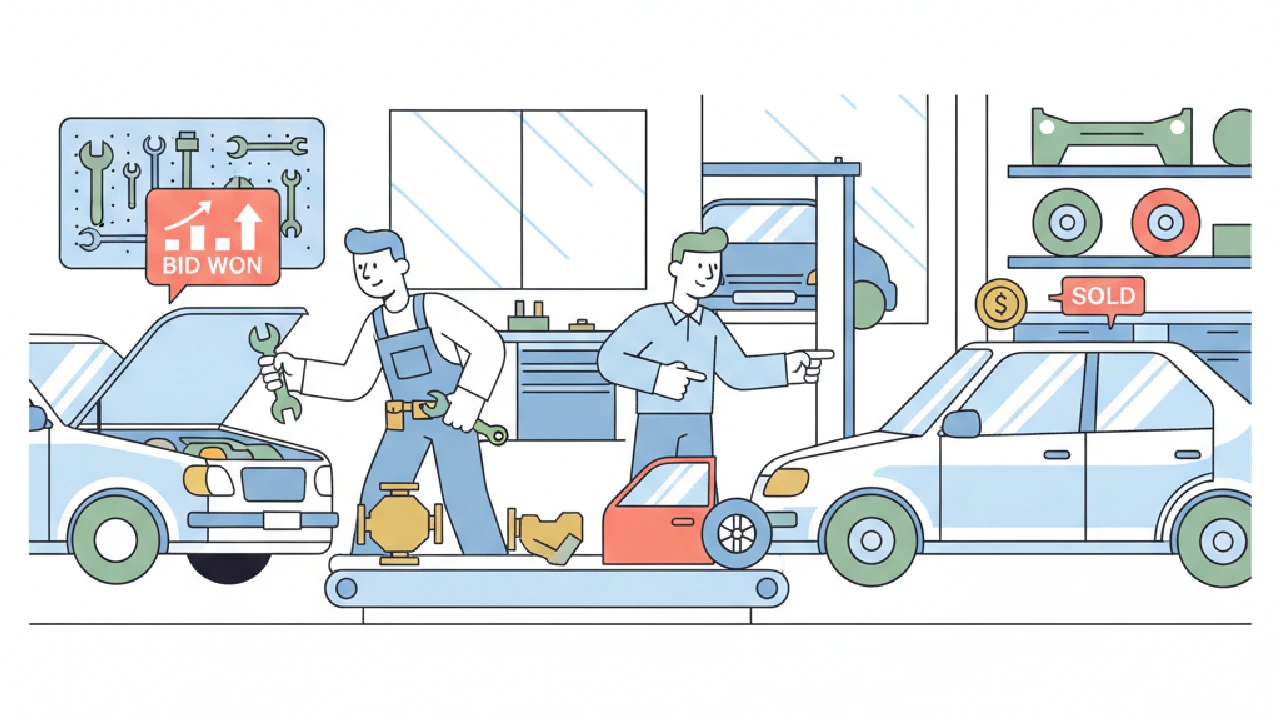
You’re here because you want to talk salvage flips, not some academic theory. We’re talking about real cars, real auctions, and real money. This isn’t a hobby for dreamers; it’s a business for those who can execute. I’m going to walk you through the entire salvage flip pipeline, from spotting the right vehicle to watching it drive off with a new owner. This is how we make money, plain and simple.
The Golden Rule: Know Your Exit Before You Bid
First thing’s first: before you even think about bidding, you need to know what that car is worth when it's fixed up and shiny. This isn't about gut feelings. This is about data. Your After-Repair Value (ARV) is everything. It’s the ceiling, the absolute maximum you can expect to sell it for.
How do you get it? Hit the local retail comps. Look at similar vehicles, same make, model, year, trim, mileage, and condition, that have *actually sold* in your area. Forget the blue book numbers for a second; those are guides. Your local market dictates your ARV. Once you have that solid ARV, every single cost comes off of it. Auction fees, transport, parts, labor, taxes, and a chunk for unexpected headaches. What’s left is your profit margin. If that number isn't fat enough for your risk, you walk. No emotion. Just numbers.
Many flippers get caught up in the excitement of a low bid. They see a car go cheap and think they got a deal. But if the ARV doesn't support the all-in cost plus your desired spread, you're just buying a problem. Don't be that guy. Your max bid isn't what you think you can fix it for; it's what the market dictates you can sell it for, minus all your costs and your cut.
Title Traps and Risk Management
This is where new guys get burned. The title. It’s not just paperwork; it’s your golden ticket or your lead anchor. You must understand the salvage title types explained before you even consider a bid. Can that salvage title be retitled in your state? What hoops do you have through? Each state has different rules, and ignoring them means you bought a paperweight.
Some titles are instant red flags. Flood damage? Airbag deployment? Structural damage? These aren't just expensive repairs; they scream "risk." Flood cars can have electrical gremlins that chase you for months. Structural damage means frame work, and that's a specialized game with big costs and potential liability. Airbag jobs are notorious for hidden sensor issues and re-programming nightmares. Unless you have a specialist shop and a rock-solid cost estimate for these specific issues, avoid them. Stick to predictable repairs.
For valuation, industry data suggests you should confirm the title type and whether the car can be legally retitled in your state because the title brand drives resale value and reconditioning risk. This isn't optional; it's foundational. A clear title, even a rebuilt one, is always better than a salvage title that can't be easily re-registered.
Repair Efficiency: Time is Money, Literally
Once you’ve won the bid, the clock starts ticking. Every day that car sits, it’s costing you money in holding costs, not to mention tying up capital. This is why repair efficiency is critical. Your profit depends on how quickly and accurately you can get that car ready for sale.
Limit your damage classes. If you're good at cosmetic repairs – bumpers, fenders, light body work – stick to that. Don't suddenly try to tackle an engine swap on a car you got for "cheap." That’s how projects spiral out of control. Quick triage is essential: get the car, assess the damage, order parts immediately. Have your go-to mechanics or body shops lined up. They need to understand that turnaround time is paramount.
Consider this example: You bid on a 2018 Toyota Camry with front-end damage. ARV is $18,000. Your max bid should account for:
- Auction fees: $500 (estimate)
- Transport: $300 (100-mile radius)
- Parts: $2,500 (bumper, headlight, fender, radiator)
- Labor: $2,000 (body shop)
- Title/re-registration fees: $200
- Unexpected buffer: $500
- Your target profit: $2,000
Total costs (excluding profit): $6,000. Your absolute max bid for salvage cars is $18,000 (ARV) - $6,000 (costs) - $2,000 (profit) = $10,000. If it goes higher, you walk. That's your disciplined max bid. Any less spent at auction is just more profit in your pocket, assuming your repair estimates are solid.
Where a salvage flip tool helps
Buying high-risk lots without seeing red flags until after the wire is a common problem. A tool that provides risk level calculation based on sales history, title type, and mechanical signals can help you avoid costly mistakes. This allows you to identify potential issues before you commit to a bid, ensuring you stick to predictable repairs and profitable flips.
Selling Fast: The Final Lap
You’ve got the car fixed, detailed, and ready. Now, you need to move it. Fast. Long holding times eat into your profit like a hungry dog. Transparency is key here. Buyers, especially for rebuilt title vehicles, want to know what they
Key takeaways
- Always determine your After-Repair Value (ARV) based on local market comparables before considering a bid, and calculate your maximum bid by subtracting all costs and your target profit from the ARV.
- Understand the various salvage title types and your state's titling regulations thoroughly, as certain titles can be major red flags and impact resale value and legality.
- Prioritize repair efficiency by focusing on damage classes you know well, ordering parts immediately, and having reliable repair contacts to minimize holding costs and maximize profit.
- Utilize tools that offer risk level calculation and sales history analysis to avoid high-risk vehicles and identify potential problems before bidding.
- Don't get emotionally attached to a low bid; if the numbers don't support your desired profit margin after all costs, be disciplined enough to walk away.
FAQ
How does AutoFlip Pro calculate the maximum bid?
AutoFlip Pro uses a comprehensive formula that starts with the estimated Clean Market Value and then subtracts factors like a Title Discount, Repair Cost, Transport Cost, Auction Fees, a Target Profit, Risk Adjustment, and Additional Expenses to determine your optimal maximum bid. This ensures all potential costs and desired profit margins are considered before you bid.
Can AutoFlip Pro help me identify risky vehicles before I bid?
Yes, AutoFlip Pro offers an intelligent risk level calculation feature that scores vehicles on a 0-100 scale. It considers critical factors such as sales history (e.g., multiple "Sold" entries are a major red flag), title type (e.g., junk/parts only or flood titles), and mechanical signals like whether the engine runs or starts. This helps you identify high-risk vehicles and avoid costly mistakes before you commit to a purchase.
What kind of vehicle data does AutoFlip Pro automatically retrieve?
When you enter a VIN or lot number, AutoFlip Pro automatically retrieves a wealth of information, including vehicle specifications (year, make, model, trim), listing images, sales history, detailed VIN decode information (over 150 specifications), lot information (location, sale document type), and auction verification details. This comprehensive data collection streamlines your analysis process.
How does AutoFlip Pro help manage my repair pipeline?
AutoFlip Pro includes a Portfolio feature with an 8-stage flip pipeline, allowing you to track vehicles from "In Transport" all the way to "Sold." Within each vehicle's profile, you can manage repair tasks (To Do, In Progress, Waiting Parts, Done) and parts orders (Not Ordered, Ordered, Shipped, Delivered), ensuring you stay organized and efficient throughout the repair process.