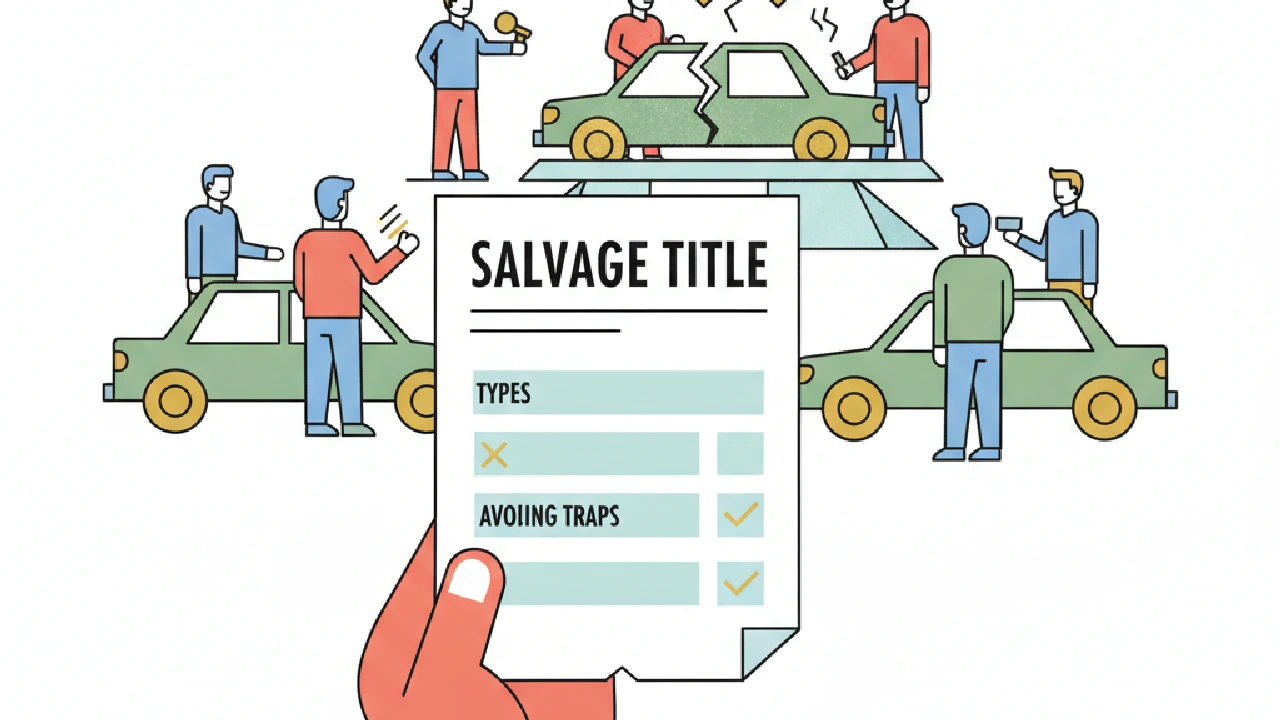
Auction day isn't for dreamers. It's for calculators and cold, hard facts. You're staring down a sea of wrecked metal, and every single one of those cars has a story – a title story. Mess it up, and that "deal" turns into a yard ornament or, worse, a financial sinkhole. We're talking about making money here, so pay attention to these salvage title types explained and how they impact your spread.
The core idea is simple: a salvage title means an insurer or state declared the vehicle a total loss. Usually, that's because repair costs smashed past a certain percentage of its actual value. In most states, you can't just drive a salvage car off the lot and register it. It needs to be fixed, inspected, and then retitled – often as rebuilt, reconstructed, or revived salvage. That journey from salvage to rebuilt is where you make or break your profit.
The "Clean" Lie and the "Junk" Truth
Here's the first thing: forget "clean title" cars at Copart or IAAI. If you see one, it's either a fluke or someone made a listing error. Our game is branded titles. But knowing which brand is which is critical.
- Clean Title: No major reported damage history. Like I said, rare in our world.
- Salvage Title: Your bread and butter. Total loss due to damage, theft payout, flood, fire, hail, or other events. This is where most of your flips from. Discover the financial impact of various salvage title brands that kill your flip spread.
- Rebuilt/Reconstructed/Restored Title: This means someone already did the work. A previously salvaged vehicle that got repaired and passed inspection. Sometimes these are good buys if the repair cost was low, but often the upside is squeezed. Understand how a rebuilt title vs salvage title impacts resale value. Find out where to get a rebuilt title inspection and the associated costs of a rebuilt title inspection.
- Junk/Non-Repairable Title: Stay away. This generally means the vehicle cannot be legally repaired or retitled for road use, ever. Parts only. If you're not a dedicated dismantler, this isn't your play.
Decoding the Damage: Specific Title Brands That Matter
Beyond the basic "salvage," there are specific brands that signal different types of damage or history. Ignoring these details is a fast track to losing money.
Flood Title: A Deep Dive into Water Damage
A flood title means the vehicle was submerged in water. This isn't just about a wet carpet; it signals potential electrical system corrosion, mold issues, and long-term mechanical breakdown risks that are often hidden. Even after professional remediation, the ghost of a flood can haunt a vehicle for its lifespan, making it difficult to resell and prone to unexpected repairs. States define "flood" differently, but the outcome is the same: buyers are wary.
Theft/Recovery Title: Less Damage, More Mystery
When a vehicle is stolen and then recovered, it often gets a theft or theft recovery title. The damage here isn't always collision-related; it could be from forced entry, tampered ignition systems, or stripped parts. Crucially, if the insurance company already paid out the previous owner, it becomes a total loss. The challenge with these is often verifying the completeness of the vehicle and uncovering any hidden damage or missing components that occurred during the theft.
Hail-Damaged Title: Cosmetic vs. Structural
Hail titles arise from severe weather events. While often cosmetic (dents, dings), large hailstones can sometimes impact structural components or windshield integrity. The key here is accurately assessing the repair cost. If the damage is purely external, it might be a straightforward PDR (paintless dent repair) job. If it affected panels requiring replacement and paint, or worse, compromised glass or load-bearing areas, the cost can escalate quickly, eating into your profit margin.
Sales History: The Ultimate Red Flag
One critical, often overlooked factor is a vehicle's past sales history. This isn't a title brand, but it works like one, signaling significant risk. If you see a vehicle that has been "Sold" multiple times at auction, especially with recent "Active" listings, consider it a serious red flag. This often means previous buyers attempted to flip it, ran into unforeseen problems, and are now offloading it. It could indicate hidden damage, undisclosed mechanical issues, or a difficult-to-resolve title problem. This history alone can be a bigger warning sign than some title brands.
Before You Bid… Check This:
- Your Zipcode & Destination: Without these configured, accurate market valuation and transport costs are impossible. Ensure your profile settings are complete to get the most precise calculations. AutoFlip Pro uses your specified zip code and default destination to factor into its Max Bid calculations, providing a more reliable estimate before you commit.
- Market Value: Always know the estimated clean market value of the vehicle in your area. This is your starting point for profitability.
- Risk Level: Understand the computed risk level. Vehicles with multiple "Sold" entries in their history or certain title types (like Junk or Flood) automatically trigger higher risk scores and corresponding warnings. The AutoFlip Pro Vehicle Analysis feature automatically calculates a risk score (Low, Medium, High) based on over 150 data points, including sales history and title type, starting from a baseline of 70 and adjusting points for specific factors like an insurance seller (+20 points) or a flood title (-10 points).
- Title Status: Verify the exact title type in the listing. Don't assume. Some titles dictate if the vehicle can ever be registered for road use again.
- Repair Costs: Have a solid estimate for repairs. Overlooking this is the quickest way to lose money.
- Transport Costs: Get a quote. Distance adds up quickly.
- Target Profit: Know your desired profit margin and work backward from there.
The Max Bid Equation: How Titles Impact Your Wallet
Your maximum bid isn't just based on what you *want* to pay; it's a calculated limit guided by the vehicle's actual market worth and associated costs. Here's how title types become a crucial variable in that equation:
The starting point for any calculation is the Clean Market Value. This is what the vehicle would be worth with a clean title and no damage. But almost immediately, the title type introduces a Title Discount. A vehicle with a salvage title will always be worth less than an identical one with a clean title, and specific brands like Flood or Junk will incur even steeper discounts. AutoFlip Pro's Max Bid Calculator incorporates this directly by applying a Title Discount percentage to the Clean Market Value. For example, a Junk title will have a far more aggressive discount than a standard Salvage title, directly reducing your Adjusted Market Value.
From this Adjusted Market Value, you subtract all other costs: estimated Repair Cost, Transport Cost (which includes distance to your Default Destination), Auction Fees (which are often a percentage of the bid), and your Target Profit. Finally, a Risk Adjustment is applied. Vehicles with high-risk title types or troublesome sales histories will incur a negative risk adjustment, further lowering your maximum bid. This structured approach helps ensure that you're not overpaying for a problematic asset. For any vehicle listed at Copart or IAAI, you can analyze vehicle data and get a projected max bid using AutoFlip Pro to see how these factors play out in real-time.
Key takeaways
- Understanding different salvage title types is crucial for profitable auction purchases, as the title dictates repair, inspection, and resale processes.
- A vehicle's sales history is a major red flag; multiple prior "Sold" entries indicate a potentially problematic car that has been repeatedly through auctions.
- Always factor in the title type when calculating your maximum bid, as certain titles (e.g., Junk, Flood) significantly devalue a vehicle.
- Utilize intelligent auction analysis platforms like AutoFlip Pro that provide automated risk assessments and market value estimations to avoid costly mistakes.
- Accurate financial calculations, including repair costs, transport, and target profit, are essential for setting effective bid prices.
FAQ
What does a "salvage title" really mean?
A salvage title means an insurance company or state has declared the vehicle a total loss. This typically happens when the cost of repairs exceeds a certain percentage of the car's market value due to damage from an accident, flood, fire, or theft. It doesn't necessarily mean the car is irreparable, but it will need repairs, inspections, and re-titling (often as "rebuilt" or "reconstructed") before it can be legally driven again.
How does a vehicle's sales history affect its value at auction?
A vehicle's sales history, particularly multiple "Sold" entries without subsequent registration, can significantly impact its perceived value and risk. It often signals that previous buyers encountered hidden problems or were unable to profit from the vehicle, leading them to re-auction it. This can drive down market value and make the vehicle a higher risk for future buyers.
What is a "Junk" or "Non-Repairable" title?
A Junk or Non-Repairable title signifies that a vehicle is deemed unsafe for the road and typically cannot be legally repaired and retitled for on-road use. These vehicles are generally suitable only for parts or scrap, making them high-risk purchases unless you intend to dismantle them and do not plan to register or drive the vehicle. For more detailed state-specific information, you can consult resources like the Wisconsin Department of Transportation on title brands.
How can I accurately calculate a maximum bid for a salvage vehicle?
Accurately calculating a maximum bid involves starting with the Clean Market Value, applying a significant Title Discount for the specific salvage brand, subtracting estimated repair costs, transport fees, auction fees, and your target profit margin, and then incorporating a risk adjustment. Tools like AutoFlip Pro's Max Bid Calculator automate this process, allowing you to get precise maximum bid projections based on comprehensive data and configurable settings.
Why are my zipcode and default destination important for vehicle analysis?
Your zipcode and default destination are crucial for accurate vehicle analysis because they allow the system to calculate local market comparable listings for the Clean Market Value and precise transport costs to your chosen location. Without these details in your settings, estimates for value and expenses will be less accurate, making it harder to determine a profitable max bid. Ensure your AutoFlip Pro analysis defaults are always up-to-date.