Short version: know where to get a rebuilt title inspection before you bid. "Where to get a rebuilt title inspection" matters more than the listing ad. If you can’t clear the inspection path, don’t bid — you’ll take title risk and face surprise costs.
Core idea — one line
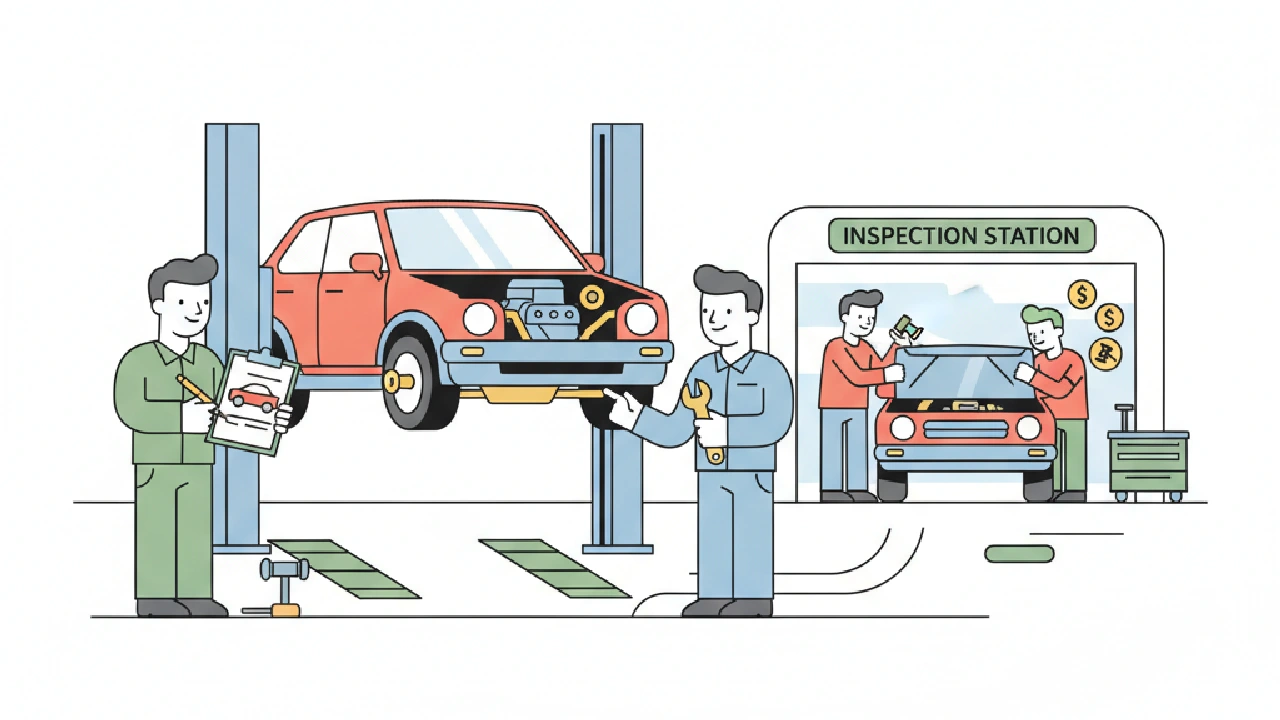
A rebuilt title inspection is completed at the state DMV, a state-authorized inspection facility, or by a licensed third-party inspector depending on the state. Confirm the titling-state path before auction day, gather required receipts, and plan transport only after inspection logistics are clear.
1) Where to get it — state paths that matter
Different states use different inspectors. That determines timing and paperwork. Learn the path for the vehicle’s titling state, not only where the car currently sits. For a quick lookup of common state paths, see our state-by-state rebuilt title inspection guide.
- State DMV route — Some states require the DMV or an official bureau to inspect. Example: North Carolina uses the NC License & Theft Bureau (DMV) for salvage inspections.
- State-authorized stations — Other states certify specific stations. Maryland has 1,600+ licensed stations; use the state lookup to find one near you.
- Licensed third-party inspectors — In a few places you can use licensed independent techs or shops. Alberta (Canada) lets you use a Licensed Inspection Facility with a licensed Technician and specific forms.
Practical note: confirm whether an inspection done in the car’s previous state will be accepted. Some states accept out-of-state salvage inspections; others require an in-state inspection.
2) Titles, paperwork and trap alerts
Title risk eats flips. Before you bid, verify three things: who holds the salvage certificate, whether the titling state accepts out-of-state inspections, and which exact forms are required for a rebuilt title. For background on what salvage titles mean, see the overview of what a salvage title means for buyers.
- Who holds the salvage certificate — If the seller isn’t on the salvage certificate, you’ll need to fix the chain of title before inspection or titling.
- State forms and uploads — Some states require specific forms signed at inspection. West Virginia uses DMV-SV-3 and may require DMV-SV-1 and others for the title packet. Get copies ahead of time.
- Timing traps — Georgia’s system can take about 24 hours to reflect a passed inspection; expect delays before the title office sees the result. Plan transport and titling timing accordingly.
3) Max-bid math and the inspection variable
Simple max-bid formula I use: max bid = clean ARV target - estimated repairs - buyer fees - transport - margin. Inspection adds two things: a hard cost (fee) and a risk multiplier (what if it fails, or flags VIN/parts issues?).
Don’t guess repair numbers. Plug your repair estimate and buyer fees into the formula, and add the state inspection cost as a separate line item. Where possible, use published state fees — and check our post on real costs and auction math for rebuilt title inspections to see how inspection fees change your max-bid math.
Concrete example: in California budget for the CHP inspection fee (published at $50). In Maryland, the dense network of 1,600+ licensed stations lowers travel-time risk but still requires scheduling and local confirmation.
Opinion: don’t chase a razor-thin spread on a salvage car unless you’ve confirmed inspection acceptance and you have repair receipts. If an inspection rejects a rebuilt because of undocumented part swaps, you’ll likely lose the spread and pay more to clear title.
4) Inspection day — what to bring and common fail points
Show up ready. The inspection itself is short; the audit is strict. Failures are usually paperwork-related, not the number of bolts you swapped.
- Must-haves: salvage title or certificate in your name, government ID, proof of insurance if required, and repair documentation for major parts.
- VIN and parts verification: expect the inspector to check VIN, major component bills of sale, and whether the vehicle is roadworthy. Vermont inspectors, for example, verify VINs and may request bills of sale for major parts. See our guide on what happens during a rebuilt title inspection and how to pass for detailed prep tips.
- Inspection form handling: in West Virginia the inspector completes DMV-SV-3. Know which form gets filed and whether you need copies for your title packet.
- Roadworthy standard: the vehicle often must be drivable. Don’t truck in a car that won’t move unless the state explicitly allows it.
Quick trap callout: receipts that don’t match VINs or part descriptions are red flags. If you bought parts from mixed donors and can’t show traced receipts, expect a tougher inspection.
5) Mini-case: three state differences that change the flip
Short, concrete comparisons you can use when deciding whether to chase a car across state lines.
- California: CHP or authorized agency does the rebuilt inspection. Published inspection fee is $50. If the car is titled in CA, factor the $50 and the CHP process before bidding.
- Maryland: a dense network — 1,600+ licensed stations — which makes scheduling easier and reduces downtime for local buys.
- Georgia: state-certified salvage inspectors at tag offices are used and the system can take about 24 hours to upload a passed-inspection result. Don’t expect same-day title updates immediately after inspection. See How to Pass Vehicle Inspection Rebuilt Title in Georgia for Georgia-specific gotchas.
Takeaway: the inspection path and simple state numbers (fee, station count, upload lag) directly change carrying time and cost. Use them as explicit line items in your max-bid math.
Where a salvage flip tool helps
Title risk often shows up in sales history and title flags before you bid. A tool that calculates a risk score from sales history, title type, runs/doesn’t-run signals, and engine-start info gives you an early red flag so you don’t buy a lot that will fail inspection. AutoFlip Pro’s Risk Level Calculation pulls those exact signals into a single score, letting you fold risk adjustment into your max-bid math and avoid hidden title traps.
- Practical outcome: spot multiple prior "sold" entries or a salvage/junk title pattern before you wire money.
Analyze a lot free before you bid.
Key takeaways
- Confirm where to get a rebuilt title inspection in the titling state — DMV, state-authorized station, or licensed third-party.
- Lock down who holds the salvage certificate and which state forms you’ll need before bidding.
- Use state inspection facts (fees, station density, upload lag) as explicit line items in your max-bid math.
- Bring title, ID, and repair receipts to the inspection — paperwork fails deals more often than mechanical issues.
FAQ
How do I find where to get a rebuilt title inspection?
Start with the state DMV for the vehicle’s titling state. They’ll tell you whether you must go to a DMV bureau, a state-authorized station, or can use a licensed third-party inspector.
Will an out-of-state salvage inspection count?
Sometimes. Some states accept an out-of-state salvage inspection; others require an in-state inspection. Confirm with the titling state before you buy.
What documents are absolutely required at inspection?
Bring the salvage certificate or title in your name, a government ID, repair receipts for major parts, and any state-specific forms the inspector lists. West Virginia, for example, uses DMV-SV-3 for inspector submissions and requires additional paperwork for the title packet.
How long after inspection will the title show as rebuilt?
That varies by state. Some systems reflect results quickly; others have an upload lag. Georgia’s process can take about 24 hours to update the state system after a passed inspection. Plan transport and sale timing around that delay.
Actionable checklist
- Phone the titling-state DMV today and confirm the inspection path for that title state.
- Verify who holds the salvage certificate and secure it before bidding.
- Assemble paperwork: title/salvage cert, photo ID, repair receipts, and any state forms (example: DMV-SV-3 in West Virginia).
- Schedule the inspection or verify station availability — Maryland has 1,600+ licensed stations, which helps scheduling locally.
- Include the inspection fee and expected upload lag (example: $50 CHP fee in California; 24-hour upload in Georgia) in your max-bid spreadsheet.
That’s the quick brief. If you want, send me the target VIN and the titling state and I’ll list the exact inspection office, forms, and the practical gotchas I’d watch on auction day.