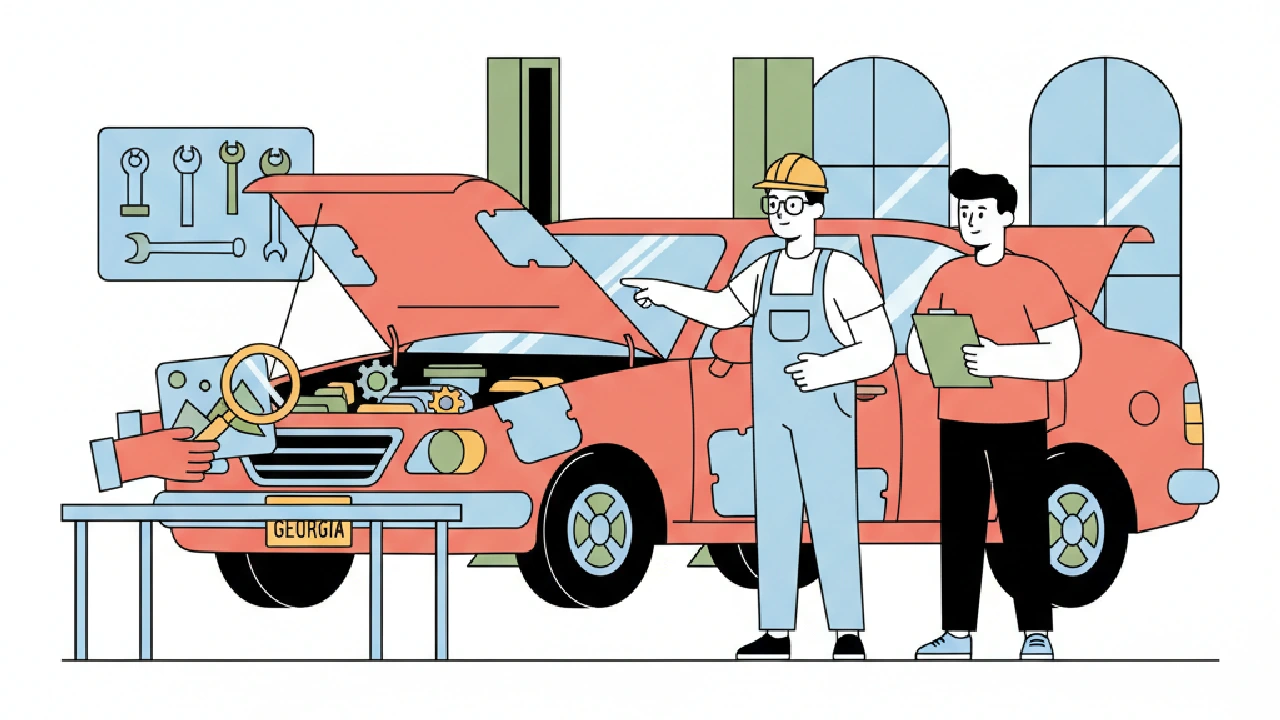
Short version first: if you want to know how to pass vehicle inspection rebuilt title in Georgia, get the paperwork in order, finish the repairs, and don’t paint before inspection. Bring photos, itemized parts receipts, and the right forms. Know the fees and the timing quirks so you can clear a title and flip the car without surprises.
The core idea, plain and simple
The rebuilt inspection in Georgia is not a conventional mechanic’s safety check. It’s a paper-and-verification gate that confirms a salvaged car was rebuilt legally and with traceable parts and labor. The state wants proof: before/after photos, receipts, work certification, and an inspection by a State Certified Salvage Inspector. If you skip the paperwork or paint the car too soon, the title transfer stalls and your flip timeline dies. For a short primer on what "rebuilt" means and how it changes the resale picture, see What Is a Rebuilt Title? Buyer’s Guide.
1) Paperwork and the certified inspector — don’t shortcut this
What the inspector expects:
- Vehicle repaired and ready for inspection before paint. Georgia explicitly requires the rebuilt inspection to happen before the vehicle is painted.
- Photographic documentation of the vehicle in its salvage condition and during/after repairs. Keep date-stamped files or a clear chain of photos.
- Itemized receipts for parts used in the rebuild and a completed labor and parts certification form.
- Completed Form T-22R Request for Inspection of a Rebuilt Motor Vehicle and, later, Form T-129 Labor and Parts Certification and the MV-1 Title/Tag Application where required.
Who can inspect: a State Certified Salvage Inspector. You can’t use your usual mechanic unless they are on the state-certified list. For a detailed walkthrough of the inspection process and practical tips to pass, see Rebuilt Title Inspection: What Happens and How to Pass. If you try to transfer a title without the certified inspector’s report, the tag office will reject the application and waste your time.
2) Timing and tag office logistics — the stuff that flips lose money on
Expect a short delay between passing the inspection and being able to finish the title transfer. The inspector uploads a report to the state system, and in practice you may need to wait until that upload clears — allow time before you book the county tag appointment. The state guidance notes there can be a delay around 24 hours; don’t plan a same-day tag office visit unless you have margin.
Also remember: if the car carries an out-of-state salvage or rebuilt brand, Georgia still requires the rebuilt inspection before issuing a Georgia rebuilt title. That kills the “drive it in with out-of-state rebuilt title” shortcut. If this is your first salvage flip, run the 12-step pre-salvage flip checklist so you don’t get tripped up on scheduling and paperwork.
3) Costs that matter — keep the obvious math visible
There are a few fixed or semi-fixed fees you must plan for before you bid or buy:
- Inspection fee: the state guidance indicates the inspection fee is up to $100; the exact cost is set by the inspector.
- Title fee: $18 at the tag office.
- Tag fee: $20 for a standard plate at the time of transfer.
- TAVT: the Title Ad Valorem Tax is due at transfer and is calculated on the vehicle’s value — budget for this when you price your flip.
Mini-case (concrete example tied to inspection fees and transfer fees):
Say you finish repairs and schedule the salvage inspection. You pay the inspector up to $100. Once the inspector uploads the report, you go to the county tag office and pay $18 for the title and $20 for the plate. That’s up to $138 out of pocket before TAVT and before any transport, buyer fees, or additional repairs are counted. Factor this baseline into your max-bid math so you don’t undercut your margin. Use a pre-bid repair estimate to fold inspection and transfer fees into your repairs line.
4) Max-bid math and title risk — how I brief a partner before auction day
I run a short checklist every time before I click the paddle (or type a bid). Don’t overcomplicate it — use a simple formula and be honest about title risk.
Max bid formula I use (keeps it simple):
- Max Bid = ARV (after-repair value) — Repairs — Baseline fees — Transport — Target spread.
What I mean by each line:
- ARV — realistic wholesale value in your comp radius. Don’t chase retail comps outside your market.
- Repairs — be conservative. Include what you see and a small contingency for the hidden stuff you’ll find when you teardown.
- Baseline fees — use the inspection and transfer numbers above (inspection up to $100, title $18, tag $20) plus any auction buyer fees and DOC fees the auction charges.
- Transport — get a real quote from your hauler network; bids fail if you forget transport.
- Target spread — the profit you need after selling costs; if that’s too low, don’t buy.
Title risk callouts I make to partners:
- If the title is branded “salvage” in Georgia or branded salvage/flood/water/fire/total-loss out of state, it must go through the rebuilt inspection to be retitled. That’s non-negotiable.
- If the seller can’t provide clean chain-of-title or the salvage title isn’t assignable, walk away or cut your bid hard for the legal chase.
- If you’re not a licensed rebuilder and the vehicle was sold as salvage to rebuild, check licensing rules: the state requires certain buyers rebuilding salvage vehicles to be licensed as rebuilders. Make the call before you buy.
If you’re unsure about cutoffs and legal exposure, check When to Walk Away Salvage Auction — Max Bid Math & Title Traps for practical thresholds and title-trap examples.
5) Common failure points and how to avoid them
These are the things that actually fail deals in my experience:
- Painted before inspection: the state requires the inspection before painting. If you see a freshly painted car at auction that was salvaged, expect the tag office to push back unless you still have the pre-repair photos and the inspector signs off.
- Missing receipts or sloppy parts documentation: the inspector and the tag clerk both look for clear itemized parts receipts. Store them in a single packet and bring copies to the inspector and the tag office.
- Relying on uncertified mechanics for the inspection: only State Certified Salvage Inspectors can issue the report for a rebuilt title. Don’t assume your regular shop qualifies.
- Timing your tag office visit on the same day as inspection: the upload can take time. Schedule the tag visit with at least a 24-hour cushion.
Mini-case: inspection-to-title timeline
Scenario: you repaired a flood-damaged compact, gathered photos and parts receipts, and scheduled a State Certified Salvage Inspector.
What happens: the inspector does the check, issues an inspector’s report, and uploads it. Practically, you should assume you’ll wait up to a day for that upload to clear. Then you take the inspector’s report, the salvage title (properly assigned), the T-129 labor/parts certification, the MV-1 application, and your ID/insurance to the county tag office to pay the title and tag fees and TAVT. That sequence is the only way to get a Georgia rebuilt title issued cleanly.
Where a salvage flip tool helps
AutoFlip Pro’s Risk Level Calculation highlights the title and sales-history signals that commonly blindside flippers (multiple prior "sold" entries, mixed title brands, runs-and-drives history, engine-start notes, and insurance-seller flags). Using that score before you bid helps you triage lots that need deeper paperwork checks or should be priced down for legal exposure.
- What it checks: sales history, title type, runs & drives, engine start notes, and insurance-seller signals.
- What you get: a clear risk rating so you can fold title risk into your max-bid math instead of discovering it after the wire.
Try a free analysis to flag title and sales-history risks before you bid: analyze a lot free before you bid.
Key takeaways
- Don’t buy salvage to flip without photos and parts receipts — paperwork is the build permit.
- Schedule the State Certified Salvage Inspector early and plan a 24-hour buffer before the tag office appointment.
- Factor inspection up to $100 plus title $18 and tag $20 into your max-bid math before TAVT and transport.
- Never assume an out-of-state rebuilt clears Georgia; expect the state rebuilt inspection anyway.
FAQ
Do I need a special inspector to pass a rebuilt title inspection in Georgia?
Yes. Georgia requires a State Certified Salvage Inspector to carry out the rebuilt inspection and produce the inspector’s report you’ll need at the tag office.
Can I paint the car before the inspection?
No. The rebuilt inspection must be done before the vehicle is painted, per state guidance. Paint now and you risk a rejected inspection and delays.
What fees should I count on when I finish the inspection and go to the tag office?
Budget for the inspection fee (the state indicates it is up to $100, exact cost set by the inspector), plus the title fee ($18) and tag fee ($20). TAVT is also due at the time of transfer and is calculated on the vehicle’s value.
Does Georgia accept out-of-state rebuilt titles without an inspection?
No. If a vehicle is branded salvage, flood, water, fire, or total loss out of state, Georgia still requires the rebuilt inspection to retitle it within the state.
What paperwork should I bring to the inspector and the tag office?
Bring the salvage title properly assigned, Form T-22R for the inspection scheduling, photographic documentation of the vehicle before and during repairs, itemized parts receipts, and be ready to complete Form T-129 and the MV-1 application when you go to the tag office.
Checklist — action items to run before you bid or accept a salvage vehicle:
- Confirm title brand and chain-of-title (is it salvage, out-of-state salvage, or rebuilt?).
- Do you or your buyer need a rebuilder license? Verify per state rules.
- Gather or demand pre-damage photos and note that you must keep photos through the rebuild.
- Estimate repairs conservatively and include inspection up to $100, title $18, tag $20, transport, buyer fees, and TAVT in your max-bid math — and use How to Analyze a Salvage Auction Lot Like a Pro Before You Bid for comp and lot-specific checks.
- Plan the inspection before paint and schedule the tag office with at least a 24-hour buffer after inspection.
- Use a State Certified Salvage Inspector and bring their report, T-129, MV-1, and the assigned salvage title to the county tag office.
If you want, I can walk a specific car with you — send the auction lot details, the visible damage, and what paperwork the seller provides. I’ll run the max-bid math with you and flag title traps.