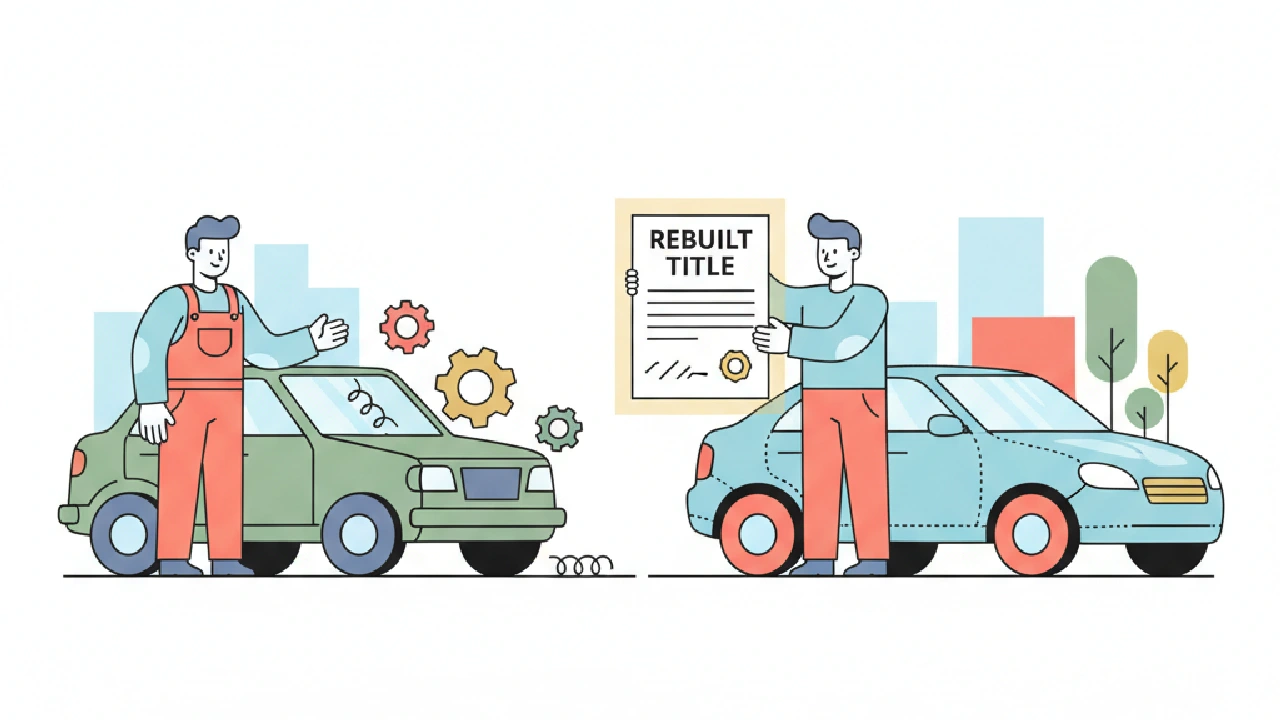
Quick answer — what is a rebuilt title? It means the car was declared a total loss, got a salvage title, was repaired, and then passed a state safety inspection so it can be registered and driven. This article shows you how to treat that title at auction — the math, the title traps, the repair risks, and how to set a max bid.
Core idea — why rebuilt titles exist and what that means for you
A rebuilt title is a permanent brand. The state and future buyers will always know the car was totaled. Legally the car is driveable. Practically, it usually sells below a comparable clean-title vehicle because buyers distrust the repair quality and lenders and insurers often pull back. Use that discount, but don’t assume the inspection cleared every problem.
1) Auction math: how to compute a real max bid
This is the section to lock before every auction day. You need a repeatable formula. Don’t guess. Don’t fall in love.
Start with the clean-market value you expect after resale (the ARV). Pull accurate comps to set that ARV and use a consistent method to estimate repairs — see how to pull salvage car comps for realistic pricing and apply pre-bid repair math to feed your formula. Convert that into an index of 100 for easy math. According to industry guidance, rebuilt-title vehicles typically trade at a 20–40% discount to clean-title equivalents. So on that 100 index, the rebuilt market value will be in the 60–80 range.
From there, run this bid formula every time:
Max bid = Rebuilt market value (index) − Repairs estimate − Buyer fees & transport − Target profit
Example (index math only):
- Clean ARV = 100
- Rebuilt market value = 60–80 (reflects the 20–40% hit)
- So you’re bidding off a 60–80 number, not off 100.
That’s it. Never bid off the clean-ARV. If you do, you’ll lose. Pick a realistic point in the 60–80 band based on the car, the market, and how painful the repairs look.
Notes on the variables
- Repairs estimate: get a conservative picture. Assume the inspection misses corrosion or frame issues unless you can confirm otherwise — review how to analyze a salvage auction lot before you bid for a checklist.
- Buyer fees & transport: these are guaranteed costs that eat margin. Treat them like repairs — real and unavoidable.
- Target profit: set a floor. If the spread is too thin after repairs and fees, walk.
2) Title risk: inspection scope and permanence
Two things to know about the rebuilt brand. For a focused comparison of brands and how they change resale, see how rebuilt and salvage titles differ for resale.
First, rebuilt titles are permanent. That brand follows the car for life. That matters for resale and financing. Don’t assume you can later “clear” it.
Second, the state inspection only certifies the vehicle meets minimum roadworthiness standards at that moment. It does not guarantee the repair quality, longevity of parts, or that the structure was restored to OEM specs. States vary. Some inspections are thorough. Some are cursory. Treat every rebuilt as if the inspection missed something, until you confirm otherwise.
Operational rule: if you can’t get verifiable receipts or a shop walk-through showing repairs and parts used, discount the car further or skip it.
3) Spread and comps: how to size your market and spot bad buys
Spread is the reason we go to salvage auctions. But rebuilt cars compress spreads because they’re driveable and thus attract retail buyers. That’s fine — you can still win — but you must pull tight comps.
How to do it right:
- Pull comps of actual sold rebuilt vehicles, not clean-title listings — use guidance for pulling salvage comps so your numbers reflect the rebuilt buyer pool.
- Use recent local sales where possible. Rebuilt demand is local. National averages lie.
- Watch the spread between a clean comp and a rebuilt comp. That spread should land in the 20–40% band. If a rebuilt comp is only 5–10% below clean, either the rebuilt was a high-quality, well-documented rebuild or the market is overheating — be cautious.
Red flags that collapse spreads and cause losses:
- No proof of structural repair. Structural fixes shrink resale pools — see examples of title brands that kill your flip spread.
- Flood history mixed in. Flood + rebuilt is a double-whammy for buyers and insurers.
- Poor or missing receipts. Cash-for-parts rebuilds rarely hold value.
4) Repair surprises I’ve seen (and how I price them)
Short list from years on the lot. These are the repairs that blow budgets and margins.
- Hidden frame damage or stretched rails that show up after teardown.
- Electrical gremlins tied to prior flood or impact. They come back slowly and cost more than the obvious bodywork.
- Mismatched driveline parts where the seller used cheap substitutes — causes drivability complaints and returns from buyers.
Price them like this: assume one of those will happen unless you verified repairs. That means move your bid down inside the rebuilt 60–80 band. If your standard knee-jerk adjustment is to shave X off bids when receipts are missing, codify it and stick to it. Emotion kills deals.
5) Logistics, resale, and insurance reality
Practical realities you must account for before you click bid:
- Insurance: rebuilt cars can be insured for liability and, in some cases, limited physical damage. Many lenders avoid rebuilt titles. Confirm your buyer — retail, cash buyer, or dealer — before you buy.
- Transport: rebuilt cars are driveable in many cases. If the car is not drivable, factor in tow and storage. These are real costs and they stack quickly.
- Resale channel: plan the exit. Private-party retail usually gets you the best price, but you’ll need time and warranty credibility. Dealer-to-dealer moves faster but compress margin.
Rule-of-thumb mindset: if your exit depends on someone else giving it a “clean” label later, you do not have an exit. Assume the rebuilt brand stays visible and price for it.
Mini-case — index math you can run in your head
Use only the market discount from industry data and run the rest as variables you control. This keeps you honest and prevents made-up-dollar fantasies.
- Clean ARV = 100 index points.
- Rebuilt market value = 60–80 index points (this uses the 20–40% valuation hit industry guidance provides).
- Say you choose the middle of that band for your market estimate: rebuilt market = 70 index points.
- Now apply your concrete deductions as percentages or fixed costs you track per car (repairs, fees, transport, profit). Work in index points, not emotional price targets.
Example outcome (index math only): if your rebuild deductions total 30 index points, buying above 40 index points leaves you with no spread. If your deductions total less, you have positive spread. Calculate before you bid.
Where a salvage flip tool helps
Buying rebuilt lots is risky because prior sales and title signals hide red flags until after the wire. Tools that calculate a risk score from sales history and title details can save you from those traps. AutoFlip Pro’s Risk Level Calculation looks at sales history, title type, runs & drives, engine starts, and insurance seller signals to highlight high-risk lots, and its max bid calculator puts market comps and repair math into a repeatable number.
- Outcome: spot lots with multiple prior "sold" entries or missing structural receipts before you bid.
- Outcome: generate a defensible max bid from local comps, repair costs, transport, fees, and profit targets.
Try the free analyzer to analyze a Copart lot free before you bid.
Key takeaways
- Always price rebuilt cars off the rebuilt-market value (expect a 20–40% discount to clean equivalents).
- Use the strict Max Bid formula: rebuilt market value − repairs − fees − transport − profit.
- Treat state inspection as baseline only. If receipts or shop verification are missing, increase your discount.
- Pull local rebuilt comps, not national clean comps. The buyer pool is different.
- If you can’t model repairs and fees in the index math, don’t bid.
FAQ
Is a rebuilt title the same as a salvage title?
No. Salvage means the vehicle was declared a total loss and has not been returned to roadworthy status. Rebuilt means it was repaired and passed a state inspection and is legal to register and drive. The rebuilt brand is permanent.
Will a rebuilt title ever become clean?
It will not. The rebuilt brand is a permanent disclosure on the title and on history reports. Assume it follows the car for life.
Can I get financing or full insurance for a rebuilt car?
Possibly, but many lenders and insurers limit options for rebuilt vehicles. Do not rely on lender or full-coverage insurance being available unless you confirmed with specific companies ahead of purchase.
How do I verify the quality of repairs?
Ask for itemized receipts, photos from teardown and reassembly, and shop contact info. If possible, arrange a shop walk or a pre-buy inspection from a trusted tech who will look for structural repairs, wiring, and corrosion issues.
When should I walk away?
Walk when you can’t model repairs and fees into a profitable bid, when receipts are missing and you can’t verify structural work, or when the rebuilt discount is smaller than the industry 20–40% band without strong documentation supporting that premium.
Actionable checklist (what to do before you bid)
- Pull a rebuilt-market comp, not a clean comp.
- Index the clean ARV to 100 and convert to rebuilt-market (apply 20–40% hit).
- List out repair unknowns and treat at least one major surprise as likely unless verified.
- Calculate Max Bid with the formula: rebuilt market − repairs − fees − transport − profit.
- If the final max bid is less than the current high bid, walk away — even if you want the car.
That’s the play. Keep the math tight. Assume the inspection missed things. Protect the spread. See you on auction day.