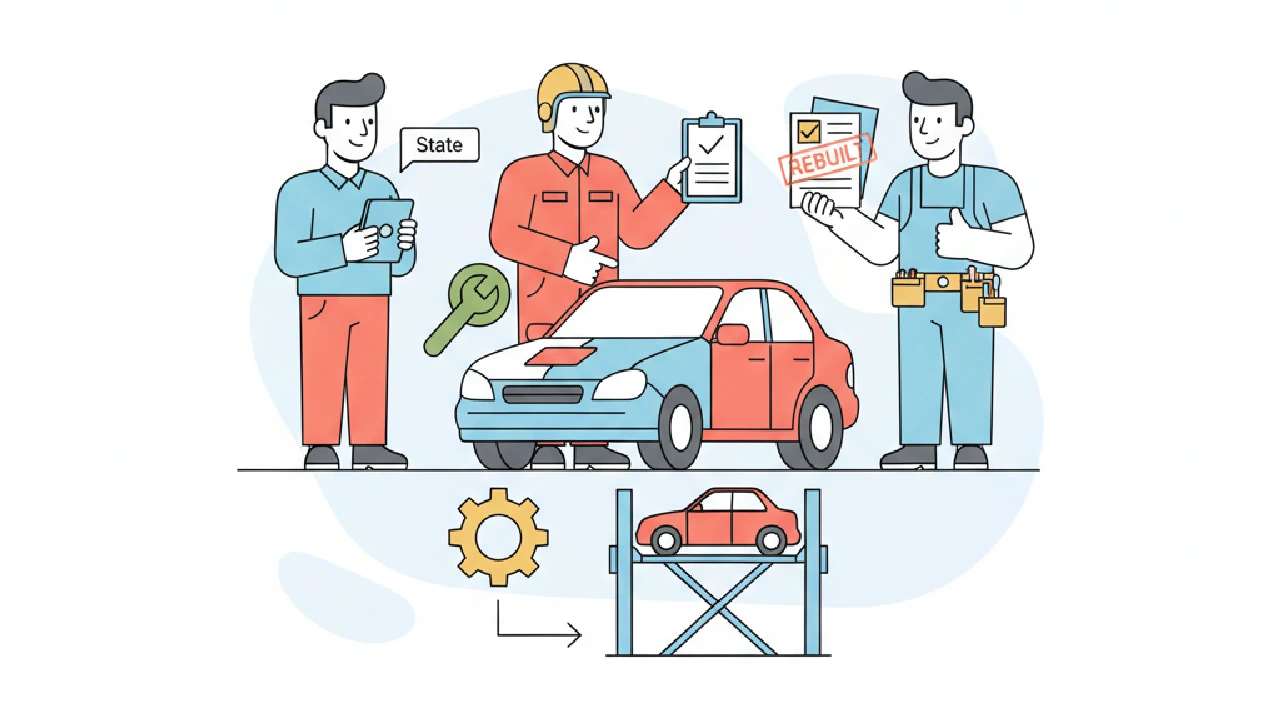
If you flip salvage cars at Copart or IAAI, one fact should be front and center: rebuilt title inspection by state changes the game. Some states require a thorough rebuilt inspection; others only require a VIN verification. Know which is which, and plan your max bid, paperwork, and transport around that reality.
Core idea — why state inspections matter to you
Inspections determine whether a salvage car becomes road-legal and how much time and cash you must put into a build before you can title and sell. States that demand a deep rebuilt inspection typically require documentation, receipts, and checks for stolen or mismatched parts. States that only want a VIN check let you move faster — but you may inherit unseen structural problems buyers will spot later. For a step-by-step walkthrough of what happens and how to pass a rebuilt inspection, see our guide on what happens during a rebuilt inspection and how to pass.
1) State checklist — who's strict, who's loose
Memorize the strict list. When a vehicle is going to or coming from one of these states, treat it like a different asset:
- California — needs a Vehicle Safety Systems Inspection (VSSI) at a DMV-licensed station plus a CHP inspection for VIN and assembly verification.
- Georgia — rebuilt inspections must be done by a State Certified Salvage Inspector for out-of-state rebuilt titles; see our guide on how to pass rebuilt title inspection in Georgia.
- New Jersey — comprehensive safety inspection plus VIN and repair documentation review by MVC staff.
- North Carolina — separate salvage inspection distinct from standard VIN checks.
- Nebraska — mandatory when registering out-of-state, rebuilt, or salvage titles to verify the main VIN tag.
- Tennessee — required when registering vehicles with salvage titles declared rebuilt.
- Washington — rebuilt inspections required for rebuilt vehicles or first-time out-of-state registration.
- Wisconsin — salvage vehicles must pass a Wisconsin salvage inspection by a certified state inspector to receive rebuilt salvage branding.
- Montana — required when titling vehicles with no title but needing VIN verification.
- Rhode Island — generally requires inspection for out-of-state vehicles.
Use that list as a filter. If you buy a car in a lenient state but will register it in a strict state, budget the time and paperwork as if you bought it in the strict state. If you're unsure about a single state's rules, consult state-specific notes such as whether Florida requires rebuilt inspection or whether Illinois requires inspection for a rebuilt title.
2) Title risk and portability — what to watch for
Not every rebuilt title is created equal. Some states apply a rebuilt brand after a basic VIN check; others require receipts, photos, and proof that donor parts match VINs. That creates portability risk: a car that passed a lenient state's paperwork check can still fail a strict state's rebuilt inspection.
Practical rules:
- If the car will live in a strict state, assume it will be inspected there. Confirm the exact inspection triggers before you bid.
- Ask the seller for the inspection report. If they don’t have a formal report, that’s a red flag.
- For imported or out-of-state rebuilt titles, check whether the destination state specifically lists out-of-state rebuilt titles as requiring inspection.
3) Max-bid math — a simple, defensible formula
Keep your bidding math simple and consistent. Use variables when fees aren't nailed down. Don't make up fees on the fly. Here's the formula I use every auction day:
Max Bid = ARV - (Buyer Fees + Transport + Repairs + Inspection/Title Costs + Floor Profit)
Where each term is:
- ARV: After-Repair Value you can realistically get at sale in your comp radius.
- Buyer Fees: Auction buyer fees, admin fees, and any marketplace levies.
- Transport: Tow to your shop plus any shuttles between states for inspection.
- Repairs: Conservative parts + labor budget to reach safe, legal road condition for your market.
- Inspection/Title Costs: State inspection fees and the time cost getting official rebuilt paperwork.
- Floor Profit: Your minimum profit threshold. If it won't clear your floor, walk.
I won't invent numbers for you. Plug realistic local fees into this formula before you bid. Use hard quotes where you can: transport carriers, local shops, and the state's inspection fee if available.
Mini-case (concrete reference numbers from state rules)
Example framework using only state-sourced numbers where available and variables elsewhere.
- Scenario: You're buying a car to title in Ohio and you confirmed the state's inspection requirement paperwork.
- Ohio inspection note: Ohio requires an inspection prepaid receipt purchased for $50.00 plus registrar’s fees (you'll still need to count registrar fees as a variable).
- Plug into the formula: Max Bid = ARV - (Buyer Fees + Transport + Repairs + $50 + Floor Profit).
That gives you a concrete line item you can count. If the car needs out-of-state inspection in a stricter state, swap $50 for that state's documented inspection steps (for example, California's VSSI plus CHP inspection) and treat those as time and paperwork costs rather than a single fee unless you have quoted amounts.
4) Documentation you must get before you bid
Paperwork kills deals when missing. Demand this before you commit:
- Title copy or salvage certificate in the seller’s name. If it’s an out-of-state rebuilt title, ask for the rebuilt inspection report.
- Repair receipts and photos. In strict states those are often required to rebrand a salvage title—if the seller can’t produce them, assume additional repair and verification costs.
- VIN history and any state inspection notes you can pull. If the car was rebuilt in a lenient state, build a secondary structural check into your bid.
If you need a quick primer on what a rebuilt title actually means, read our buyer’s guide to rebuilt titles.
If the seller punts on paperwork, I walk. Don’t guess on title documents.
5) Operational tips for auction day and after
- Filter searches by state brand. If the lot allows, prioritize cars already inspected under the destination state's program.
- Confirm comp radius. Your ARV must reflect where you sell — the same car can net very different prices in different metros.
- Phone a local inspector before bidding. Ask what they look for. If they list receipts, build that work into repairs or title-risk lines.
- For cars crossing a strict-border: plan a tow that can move the car directly to a certified inspection location to avoid double moves and extra fees.
Where a salvage flip tool helps
If you worry about buying a lot that will fail a strict state's checks, a risk-scoring feature helps you spot red flags before you wire money. AutoFlip Pro's Risk Level Calculation combines sales history, title type, runs & drives, engine start, and insurance-seller signals into a 0–100 score so you can compare lots quickly and factor title risk into your max bid. Try to analyze a Copart or IAAI lot free before you bid.
- It flags multiple "Sold" history entries (a big red flag for re-sales).
- It highlights risky title types (junk/parts, flood) so you can add a title-risk line to your math.
Key takeaways
- Match the car to the strictest state's rules you might register it in — plan for that inspection.
- Use the Max Bid formula and include state inspection costs as explicit line items.
- Get inspection reports and receipts before you bid. Missing paperwork equals price-discount risk, so either lower your bid or pass.
- Treat rebuilt titles from lenient states as structural unknowns — add a separate inspection or adjust your repairs budget.
FAQ
Do all states require a rebuilt inspection?
No. Inspections are state-specific. Only a subset of states mandate a rebuilt inspection or formal review before issuing a rebuilt title. Always check the destination state's rules before you buy.
What documents should the seller have to prove a proper rebuild?
At minimum: the salvage title or certificate in their name, repair receipts, and any inspection reports tied to a rebuilt title. In strict states you will often need photos and receipts that link donor VINs to replaced parts.
How do I handle a rebuilt title from a lenient state if I plan to register in a strict state?
Treat it as higher risk. Ask for the full inspection report. If none exists, build in a third-party structural inspection and slide that cost into your max bid. If the strict state requires re-inspection on registration, count that process and its time implications.
Can I rely on a rebuilt inspection report from the seller?
Only if it's official and verifiable. Ask for the original report or receipt. If you can't verify it through the issuing agency or it looks incomplete, assume you'll need to re-inspect.
What's the worst title trap on auction day?
Buying a car with an out-of-state rebuilt title that lacks inspection documentation and planning to register it in a strict state. You can get stuck with a car that won't title without costly rework or re-inspection.