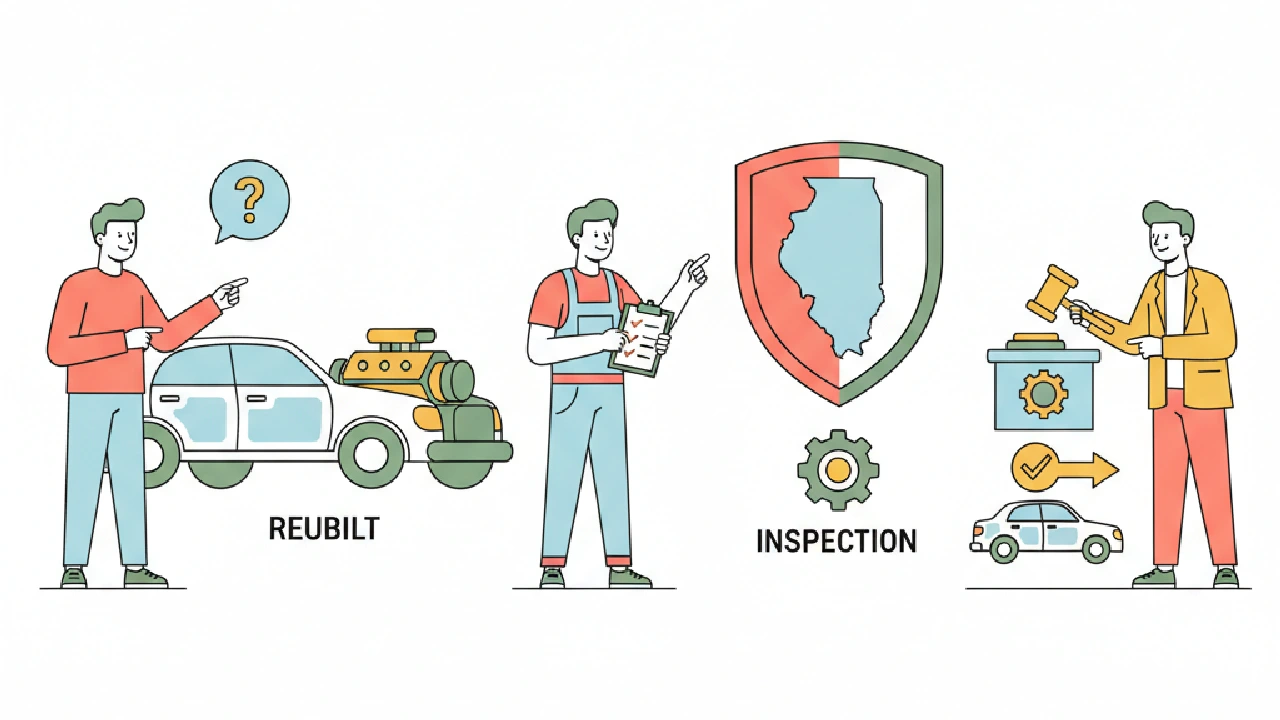
Short answer up front: does Illinois require inspection for rebuilt title? Yes. Illinois mandates a state safety inspection before a salvage vehicle can get a rebuilt title. Read this like a partner’s pre-auction briefing — I’ll cover which inspections happen, the paperwork that kills deals, how to do max-bid math without guessing, and a two-inspection mini-case you can use on auction day.
Core idea — what to expect
Illinois will not issue a rebuilt title until the vehicle proves roadworthy in a state-mandated safety inspection. Expect inspectors to check safety systems, VINs, and repair documentation. For certain vehicles you’ll face a second inspection by Secretary of State Police — specifically when the vehicle is "eight model years or newer." Keep receipts and photos. If you don’t pass inspection, you don’t register the car and you can’t legally drive it. If you need a quick primer on what a rebuilt title actually means for resale and inspection, see What Is a Rebuilt Title? Buyer’s Guide from the Yard.
1) The inspections: who, what, and when
Two inspection layers are common. First is the safety-lane style inspection by a certified inspector to confirm brakes, lights, tires, steering, and basic roadworthiness. Second is a Secretary of State Police inspection for vehicles that are "eight model years or newer" — that one focuses more on VIN checks, parts tracing, and anti-theft concerns. For a step-by-step look at the rebuilt-title inspection process and tips to pass, consult Rebuilt Title Inspection: What Happens and How to Pass.
Practical notes for auction work:
- Assume at least one inspection is required for every salvage-to-rebuilt path.
- If the vehicle is "eight model years or newer," plan for the extra Secretary of State Police inspection — that can add scheduling friction and stricter parts checks.
- Inspectors will want documentation on replaced essential parts. Collect photos and itemized receipts where possible.
2) Paperwork and title risk — what to check before you bid
Title traps are where you bleed money faster than repair surprises. Before you bid, verify these items on the listing and in the VIN record:
- Does the lot show an existing salvage certificate or an assigned salvage title? If paperwork is missing or mismatched, that’s a red flag.
- Is there visible VIN tampering or missing VIN plates? VIN issues often force a Secretary of State Police investigation.
- Are there any bills or invoices attached that show the source of major mechanical parts? Lack of parts paperwork increases the chance of a failed rebuilt inspection.
Also review common historical red flags that show up in auction records: Salvage Title History Red Flags: Auction Checklist. Bring copies (or clear photos) of anything the seller provides. Use the same pre-bid checks championed in How to Analyze a Salvage Auction Lot Like a Pro Before You Bid. The rebuilt-title application process references a specific form you should know: Form VSD 190. If you plan to rebuild and retitle in Illinois, organize receipts and repair photos around that application early.
3) Max-bid math, spread and repair planning — how to think like a pro
Don’t guess at repair costs. Use a disciplined formula and leave no surprises for inspection days. Here’s a compact max-bid method I use when flipping salvage lots:
Max bid = ARV - Estimated repairs - Buyer fees - Transport/logistics - Target profit
Notes on each line:
- ARV (after-repair value): get comps in a tight radius. Don’t use city-wide averages — use the same trim, mileage band, and 30–50 mile market where you plan to sell.
- Estimated repairs: itemize everything an inspector will check — brakes, lights, airbags, structural repairs, and parts that get flagged in VIN/parts checks. Add a buffer if parts paperwork is thin. Use the salvage auction repair estimate: Pre-bid repair math approach to structure those line items.
- Buyer fees and transport: use your actual fee schedule and carrier quotes. If you don’t have a quote, don’t bid — unknown transport kills margins fast.
- Target profit: be strict. If the spread is thin after realistic repair estimates and the inspection risk, pass.
Opinionated tip: if you can’t document essential parts used in structural or chassis repairs, assume the inspection will flag it. That should lower your max bid immediately.
Mini-case: two-inspection scenario and what it costs you in time (numbers from rule text)
Situation: You’re looking at a salvage car that will require the normal safety inspection and, because it’s eight model years or newer, a Secretary of State Police inspection as well. That means two separate touchpoints with the state process.
What this changes on auction day:
- Paperwork: collect parts receipts and repair photos for the rebuilt application (Form VSD 190 will be used when you apply).
- Time: plan for an extra scheduling step and possible hold if the Secretary of State Police want to inspect VINs or parts in person.
- Risk: without adequate parts documentation the second inspection is the common failure point — treat missing receipts like a mechanical defect and cut your max bid accordingly.
This mini-case doesn’t need dollar numbers to make the point: two inspections multiply friction. Adjust your bid to compensate for added time, possible rework, and stricter parts proof.
4) Repair surprises that routinely break deals
These aren’t glamorous, but they kill flips more than smashed bumpers:
- Hidden structural issues under aftermarket bodywork. Listing photos rarely show critical welds or frame alignment. If you can’t confirm, treat it as a write-down.
- Missing essential-part invoices. Inspectors and Secretary of State Police expect provenance on replaced engines, transmissions, airbags, and chassis components.
- Electrical gremlins tied to SRS/airbag systems. They can pass a visual check but fail on diagnostics or at the safety lane. Budget diagnostic time before you drive to inspection stations.
Practical move: when you win the lot, get the vehicle to a competent shop immediately and get a documented parts list and diagnostic readout. That reduces surprises at the safety lane and the Secretary of State Police check.
Where a salvage flip tool helps
If you want one quick defense against unseen title or sales-history red flags, AutoFlip Pro’s Risk Level Calculation scores vehicles using sales history, title type, runs & drives, engine start, and insurance-seller signals so you can spot lots that commonly fail rebuilt inspections. Its Intelligent max bid calculator then converts market value, repair estimates, transport, and your profit margin into a suggested max bid — helpful when inspection risk changes the spread.
- Risk score: surfaces prior "sold" history and title-type warnings that often predict inspection failures.
- Max bid calc: forces disciplined math so inspection friction gets priced before you bid.
Try a free lot analysis to see a risk score and suggested max bid: analyze a lot free before you bid.
Key takeaways
- Yes — Illinois requires a state-mandated safety inspection before issuing a rebuilt title; plan inspections into the timeline.
- If the car is "eight model years or newer," expect a Secretary of State Police inspection in addition to the safety lane.
- Bring itemized parts receipts, repair photos, and organize paperwork around Form VSD 190 before you apply for a rebuilt title.
- Use strict max-bid math: ARV minus repairs, fees, transport, and your profit target. If paperwork is thin, lower your bid.
FAQ
Do I always need two inspections for a rebuilt title in Illinois?
No. You will always need the state-mandated safety inspection. You will need a Secretary of State Police inspection when the vehicle falls into the category described as "eight model years or newer." That second inspection focuses on VIN and parts verification.
What paperwork do inspectors want for a rebuilt title?
Inspectors expect clear repair documentation and invoices for essential parts. Organize repair photos and itemized receipts up front. When you apply for a rebuilt title in Illinois, you will use Form VSD 190 as part of the process.
How should I change my bidding strategy for inspection risk?
Adjust your max bid downward to account for added inspection time, potential rework, and parts documentation risk. If receipts are missing for major parts or VINs look questionable, treat that like a mechanical defect and cut your bid or pass.
Can I rebuild and title an out-of-state salvage vehicle in Illinois?
Yes, but expect stricter VIN verification. Out-of-state vehicles being titled in Illinois often require additional VIN checks to prevent fraud. If you’re moving a car into Illinois for rebuilt title, plan for extra scrutiny.
What’s the fastest way to reduce inspection-related surprises?
Before you bid: get clear photos of damage, ask for any available parts invoices, and check the VIN carefully. After purchase: document every repair with photos and invoices and queue the vehicle for a diagnostic and safety-lane check as soon as possible.
Final word: treat inspection rules like part of the repair cost. The state will not rush the rebuilt title. If you price that time and paperwork into your max bid, you’ll stop buying deals that fail at the inspection station.