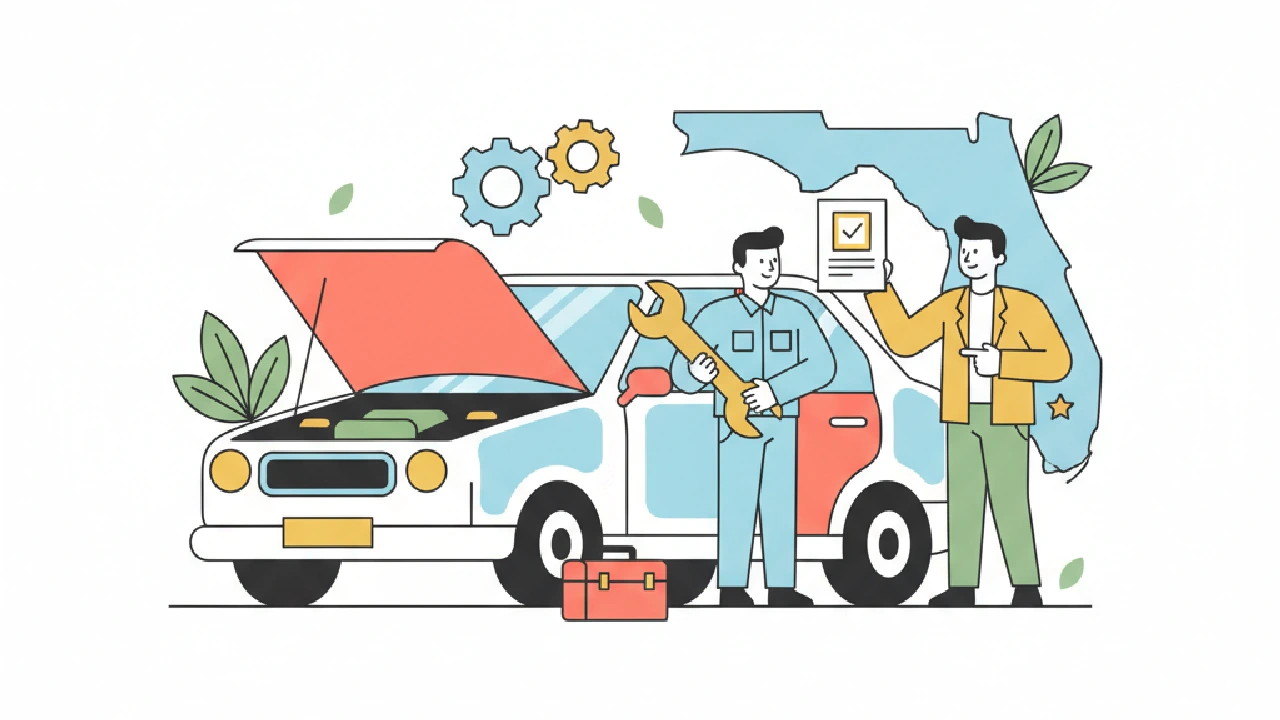
Short answer up front: yes — Florida requires a state-mandated post-repair inspection before a salvage vehicle can get a rebuilt title and be registered. If you're heading into Copart or IAAI to bid on a salvage, you must fold that inspection reality into your max-bid, repair plan, and title-risk assessment.
Core idea — what to build into every salvage flip
If the car was branded salvage or junk it can only return to public roads after a rebuilt inspection and paperwork check. That inspection is a gating item: no pass = no registration. Treat the inspection like a hard cost and a secondary appraisal — it verifies repairs, documentation, and roadworthiness. For background on what that branding means and how it affects resale and registration strategy, see the buyer’s guide to rebuilt titles.
1) Inspection basics and the paperwork they’ll want
Inspectors focus on two things: the vehicle must be roadworthy, and the state must be able to verify repairs were done legally. Bring clean paperwork and organize it before you leave the shop. Photograph everything during the repair process, keep an itemized parts list and receipts, and keep the salvage title and any source-transfer documents together.
Do not assume a shop invoice that lumps "parts & labor" will pass. The inspection process specifically requires photographic documentation of repairs and itemized parts receipts. If you can’t show the part-to-vehicle trace, expect pushback or a failed inspection. For a step-by-step walkthrough of what happens during the post-repair check and how to pass it, consult how to pass a rebuilt title inspection.
2) Title risk and the 80% salvage threshold
Know the trigger. Florida classifies a vehicle as salvage when damage equals 80% or more of its value. That means some cars with heavy damage will already be on the rebuilt path before you buy. That 80% threshold creates two auction realities:
- If a car is already salvage-branded, you will need the rebuilt inspection after repairs to register it.
- If a car is near the threshold, it can be re-titled depending on the insurance carrier’s calculation. Ask vendors how they calculated the total-loss. Never assume a title will come clean automatically.
Opinion: don’t buy salvage in FL and hope the title clears later. Plan for inspection costs and documentation needs from day one. If you need a deeper read on how rebuild vs salvage affects resale, that article breaks down what actually changes your exit value.
3) Max-bid math — how to set a clean ceiling without guessing dollar numbers
I keep this tight and repeatable. Use variables so you never rely on guesswork at the lane.
- ARV = your target after-repair retail value in your comp radius.
- MIN-MARGIN = the minimum profit you want on the flip (your absolute bottom line).
- REPAIRS = your realistic repair cost estimate based on photos and known inspections.
- INSPECTION+PAPER = the inspection cost and any paperwork fees. Treat the inspection as a must-have line item.
- OTHER = transport, auction fees, buyer fees, and titling costs.
Max-bid formula I use (plug numbers you actually verify):
MAX-BID = ARV - (MIN-MARGIN + REPAIRS + INSPECTION+PAPER + OTHER)
Why this works: you force the inspection into the equation rather than discovering it after you lose your margin. If you can’t estimate REPAIRS and INSPECTION reliably, skip the bid. For guidance on building realistic repair estimates from auction photos, see the pre-bid repair estimate guide.
Mini-case (use the 80% threshold as the anchor)
Scenario: you find a salvage SUV with heavy structural damage. The carrier wrote it salvage under the 80% rule. That means rebuilt inspection will be mandatory after repairs. You don’t have to reveal dollar numbers here — instead, run the earlier formula with your ARV and repair quotes from a trusted local body shop and include inspection and paperwork as a fixed line.
Action steps in this mini-case:
- Confirm salvage branding on the title before bidding.
- Estimate REPAIRS with a shop that understands rebuilt inspections and will document repairs with photos and itemized receipts.
- Set MAX-BID using the formula. If MAX-BID is lower than the current lane price, walk away. Bad bids on salvage kill margins fast.
Don’t let the 80% threshold be a surprise after you’ve already won the lot.
4) Inspection traps and common failure points
Be blunt: most failed inspections are documentation failures, not mechanical ones. The rebuild inspector checks that repairs are traceable and that the vehicle is roadworthy. Here are things that trip people up:
- Umbrella invoices: one-line invoices that don’t list replaced parts and VINs. Fails inspection paperwork checks.
- Missing photos: no before/during/after photos tied to the VIN and specific repair steps. That’s red flag one.
- Non-approved inspectors or facilities: Florida allows private rebuilt inspection providers through an approved program. Use one of the approved providers or the DMV regional process. If the inspector isn’t authorized, the inspection won’t count.
- Title chain gaps: if you buy from someone who can’t give you the salvage title or proper transfer docs, the rebuilt inspection and titling process stalls.
Opinion: pay for quality documentation. It’s cheap insurance versus a failed inspection and a car you can’t register.
5) Repairs, scope, and what to expect at the inspection
Fix the safety items first. The inspection is about roadworthiness. Make sure steering, suspension, brakes, airbags (properly handled), lights, and structure are correct and documented.
How to present the car for inspection:
- Clean engine bay and frame areas you repaired so the inspector can see welds and parts easily.
- Have the repair packet in order: photographic documentation, itemized parts receipts, installer/shop contact info, and the salvage title.
- If you replaced a major structural component, include where the part came from and the invoice tied to the VIN.
Don’t hand the inspector a pile of loose papers. Use a labeled packet with a control sheet that lists the receipts and photos in order.
Auction-day playbook — what to check before you bid
- Confirm title brand before you bid. If it’s salvage or junk, assume rebuilt inspection will be required later.
- Ask for the VIN and any reported total-loss calculations if available. This helps identify the 80% trigger risk.
- Estimate repairs in the lane and plug into the MAX-BID formula. If you can’t get a credible repair estimate, keep walking.
- Check nearest approved rebuilt inspection providers and their RT turnaround. If you need the car registered fast, proximity matters.
- Plan transport that allows the car to go straight to your preferred shop for documentation and repairs. Avoid extra handoffs that create title-chain gaps.
Where a salvage flip tool helps
Use a tool that highlights title red flags early — the Risk Level Calculation flags sales-history issues, runs/does-not-run notes, and title type so you don’t buy a lot with hidden risk. When you need quick numbers, the Max Bid Calculator combines market value, repair costs, transport, fees, and your profit margin so the rebuilt inspection is already in the math.
- Spot repeat "sold" histories or insurance-seller signals before you bid.
- Include inspection and paperwork costs in a repeatable max-bid calculation.
Analyze a Copart or IAAI lot free before you bid.
Key takeaways
- Yes — Florida requires a post-repair rebuilt inspection before registration. Treat it as a hard cost.
- Document everything: photos and itemized parts receipts are required for inspection approval.
- Use a strict MAX-BID formula that includes inspection and paperwork costs so inspection reality doesn’t blow your margin.
- Failure on inspection is usually paperwork, not parts. Invest in traceable receipts and clear photos.
FAQ
Does Florida require inspection for rebuilt title every time?
Yes. Any vehicle branded salvage or junk must pass a state-mandated post-repair inspection before the state will issue a rebuilt title and allow registration.
What paperwork do I need for the rebuilt inspection?
Bring the salvage title, photographic documentation of repairs, and itemized parts receipts. Organized paperwork speeds the inspection and reduces the chance of a fail for missing documentation.
Will the inspection check for safety and structure?
Yes. The inspection confirms the vehicle is roadworthy after repair. Inspectors look at safety systems and structural repairs with an emphasis on traceability.
How should I build inspection risk into my bid?
Include inspection and paperwork costs as fixed line items in your max-bid formula. If you can’t estimate repair and inspection costs accurately, pass on the lot.
Actionable checklist — auction-day
For first-timers, follow the 12-step checklist for your first salvage flip before you wire any funds.
- Confirm title brand and VIN before bidding.
- Get a quick repair estimate from your shop or trusted estimator.
- Plug ARV, REPAIRS, INSPECTION, and OTHER costs into your MAX-BID formula.
- If you win, move the car directly to your shop that will provide photos and itemized receipts during repair.
- Book a rebuilt inspection with an authorized provider once repairs are complete and your packet is assembled.
That’s the checklist to run before you bid. Keep it simple. Paperwork wins more inspections than perfect welds do. Play the documentation game before you play the hammer-and-wrench game.