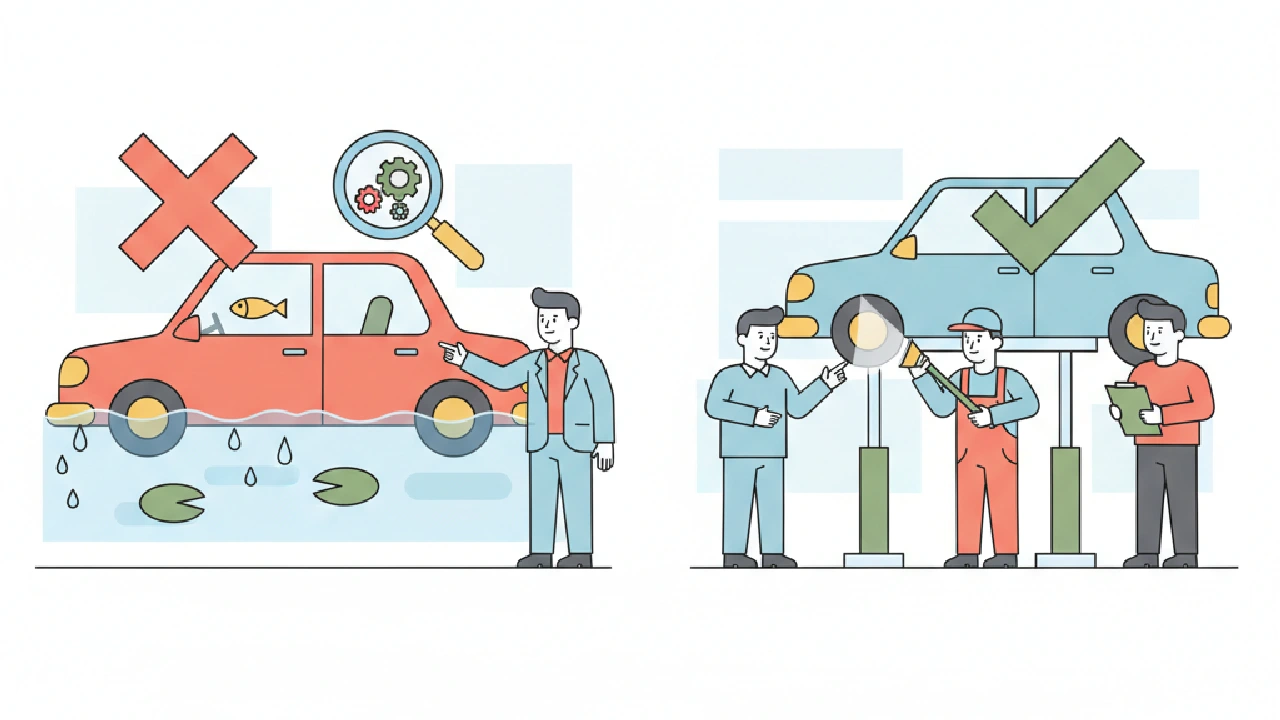
Quick and blunt: if you want to flip salvage cars and avoid a money pit, learn how to identify and avoid flood damaged cars before you commit your bid. Start with title checks, then do an aggressive physical sweep. If anything smells off, walk away. This guide tells you exactly what to check at Copart/IAAI lanes and online lots, and how to set a conservative max bid so you don’t get burned.
Title and history: the first gate
Always treat the VIN report as your first line of defense. Run the VIN through NMVTIS and NICB VINCheck. If either report shows a flood or salvage brand, do not chase the vehicle unless you have a very specific plan for parts or a wholesale exit. For common auction history pitfalls, consult the salvage title history red flags: auction checklist.
Why this matters: flood-flagged cars frequently have hidden electrical and corrosion issues that show up later. Titles and history will often reveal total-loss or flood notations. If a car has a salvage title or explicit flood notation, either walk or price for the worst-case scenario and keep the risk off your books.
The inspection sweep that finds the hidden stuff
At the yard, work top-to-bottom and look where water and silt hide. Be fast. Be methodical. Focus on these distinct checks — each one catches stuff the others miss. Use an auction photo checklist to spot flood damage when evaluating listings or photos before you go to the lot.
- Smell test first: Close doors, leave them shut a minute. A musty or mildew smell = red flag. Over-sprayed air freshener or strong scents are often a mask.
- Trunk & spare well: Pull the trunk mat and check under the spare tire for silt, mud, or water lines. Sellers clean carpets — they rarely get the spare well fully clean.
- Seat belts and upholstery: Pull seat belts all the way out. Dirt or staining on the webbing means it was soaked. Check for mismatched or brand-new carpeting in an older interior.
- Hidden rust: Inspect seat rails, pedal bolts, under-dash brackets, screws, and inside trunk latches. Rust in these normally sheltered spots is a flood signature.
- Sediment & debris: Look in glove boxes, under seats, inside the kick panels, and around wiring harnesses for sand, silt, or plant matter.
- Lights & lenses: Fogging or water beads inside headlight or taillight housings are easy catches. Also check interior lamps and instrument cluster for moisture.
- Engine bay cues: Check air filter housing and crevices for muck. While you can’t run everything at the lot, glance for leaves, mud, or deposits where water would carry debris.
Do not be impressed by shiny carpets or a cleaned dash. Flood cars get cosmetically fixed up fast. Your job is to find the spots they skip.
Electrical & function checks that reveal trouble
Water kills electronics slowly. At auction, do what you can to surface early warning signs. If you need a deeper assessment of repair potential before bidding, reference the is flood damage repairable checklist to judge whether the car is worth a retail flip or only parts work.
- Power cycle tests: If the lot allows, turn the key to the first position and watch the dash lights. Check windows, locks, dome lights, and radio. Anything that doesn’t behave consistently is a future headache.
- Lights & HVAC: Test dome lights, headlights, and defroster if possible. HVAC motors and blower noises that sound rough often mean corrosion in the housing or moisture in connectors.
- Instrument cluster: Look for fogging, unlit gauges, or flicker. Intermittent electronics are worse than dead ones — they’re unpredictable and expensive to diagnose.
- Under-hood wiring: Look for brittle or discolored insulation on wiring harnesses. Corroded connectors hide in harness junctions and cause intermittent faults later.
Bottom line: if electricals are sketchy at the lot, assume they get worse once you own it.
Auction math and your max-bid rule (no hero bids)
Don’t wing bids. Your max bid must come from a repeatable formula. Use comps for ARV, estimate repair scope from your inspection, add buyer fees and transport, then factor your target profit. If the car was in a flood zone or the VIN history is noisy, widen your repair allowance and shrink your max bid. For step-by-step lot valuation, see how to analyze a salvage auction lot before you bid.
Practical method (use variables instead of guesses): Make a simple equation: Max Bid = ARV minus Repair Estimate minus Auction Fees minus Transport minus Your Desired Profit. Run realistic repair scenarios — minimal, likely, and worst case. If any scenario kills your margin, don’t bid. To build your repair figures, refer to the salvage auction repair estimate: pre-bid repair math approach.
Opinion: auctions make people emotional. Don’t be that guy bidding into heat because the lot crowd cheers. Set your max in advance and stick to it. If you get outbid, let it go. A bad flood car ruins more deals than a missed win ever will.
Avoidance tactics and when to walk
Some cars are worth passing. Be specific about your walk triggers and enforce them.
- Walk if the VIN history shows flood or salvage brands — full stop unless your plan is parts or salvage-only flips.
- Walk if you find hidden rust in multiple structural spots. Surface rust is fixable; structural corrosion is not worth guessing on at auction.
- Walk on intermittent electronics. These are expensive and unpredictable.
- Prefer local titles. Cars with recent shifts between flooded-state registrations or out-of-area titles need deeper vetting. If you can’t confirm origin, don’t bid.
Opinion: be impatient. The lowest friction wins — clean title, clean history, clean inspection. Anything else is a project-level bet, not a regular flip.
Mini-case: how I think through a questionable flood claimant
Here’s a real-style walkthrough without made-up dollar amounts. You find a mid-age SUV with a clean-looking interior but a vague history note and a smell you don’t like. Step one: run NMVTIS and NICB VINCheck. If the VIN returns a flood or salvage brand, you file it under parts-only unless you have a wholesale buyer.
If the history is unclear, do a focused lot inspection: spare-well, seat belts, seat rails, cabin smell, headlight fogging. If two or more checks fail, treat repair scope as heavy — expand your repair estimate and reduce your max bid accordingly. If the repair estimate plus fees eats your profit target, walk.
That’s it. No bravado. If the numbers don’t work on paper after conservative estimates, don’t buy. You’ll see a dozen more lots next week.
Service checks and red flags to outsource
Not everything can be nailed in a five-minute yard inspection. Outsource these when the car is marginal and the price is tempting.
- Compression and leak-down tests — for suspected water-in-cylinder, get a mechanic to confirm before you bid heavy.
- Detailed electrical diagnosis — intermittent faults need bench testing under power to trace corroded connectors.
- Frame and subframe inspections — if you suspect structural corrosion, a lift inspection will save you major headaches.
Where a salvage flip tool helps
If you want a quick cross-check before you bid, a salvage auction tool can surface the biggest red flags from VIN and sales history. AutoFlip Pro, for example, calculates a Risk Level from sales history, title type, runs & drives, engine start, and insurance-seller signals so you don’t miss multiple prior “sold” entries or clear flood/salvage brands. That risk score can be a fast second opinion when your on-lot checks feel borderline.
- Flags multiple prior "sold" entries and title brands that indicate flood or salvage.
- Provides a simple risk number so you can be more conservative with your max bid.
Analyze a lot free before you bid
Key takeaways
- Run NMVTIS and NICB VINCheck first. If either flags flood or salvage, treat as parts-only unless you have a plan.
- Do the smell test, spare-well, seat-belt pull, and hidden-rust checks at the lot—those spots tell the real story.
- Set a strict max bid using ARV minus repairs, fees, transport, and your profit target. No emotional bids.
- Walk on intermittent electronics or multiple structural rust points. Don’t negotiate with ambiguity.
- Outsource compression, electrical bench, and frame checks when a car looks marginal but may still be profitable.
Checklist — what to do before you click bid
- Run NMVTIS and NICB VINCheck.
- Quick on-lot sweep: smell, trunk/spare well, seat belts, seat rails, lights.
- Try basic power checks: dash lights, windows, dome lights.
- Estimate repairs with conservative scenarios (minimal/likely/worst) and plug into your max-bid equation.
- Decide walk triggers in advance and enforce them.
- If marginal, arrange a pre-bid mechanic check or plan a parts-only exit.
FAQ
How reliable are vehicle history reports for flood damage?
History reports are a solid first filter but not perfect. Use NMVTIS and NICB VINCheck to detect flood or salvage brands. If they flag a problem, treat the car as high risk. If they’re clean, still do a physical inspection—reports miss things.
Can cleaning and detailing hide flood damage?
Yes. Cosmetic cleaning is common. Detailers can make carpets and dash look new. That’s why you check hidden spots: spare well, seat-belt webbing, seat rails, and wiring junctions. Those are hard to fix well and reveal the true story.
Is it ever worth buying a flood-affected car?
Yes, but only with a specific, realistic plan. Parts-only flips or wholesale sales to salvage buyers can work. Do not buy flood cars as regular retail flips unless you can prove the electrical and structural issues are fully resolved and the margins still hold.
What are the worst surprises after buying a flood car?
Intermittent electrical failures, corroded connectors, and structural rust that wasn’t obvious at the lot. These show up over months and are costly to trace and fix. That’s why conservative estimates and walk rules exist.
Do transport companies refuse flood cars?
Some carriers will haul them but expect more paperwork or higher scrutiny. If transport is uncertain, factor that into your max bid and have a backup hauler or plan to arrange local pickup.
Final note: auctions reward discipline. Learn the checks above, set a hard max bid, and enforce your walk rules. Flood-damaged cars look tempting when they’re priced low. Most of the time, the right play is to pass and keep your bankroll for a clean unit.