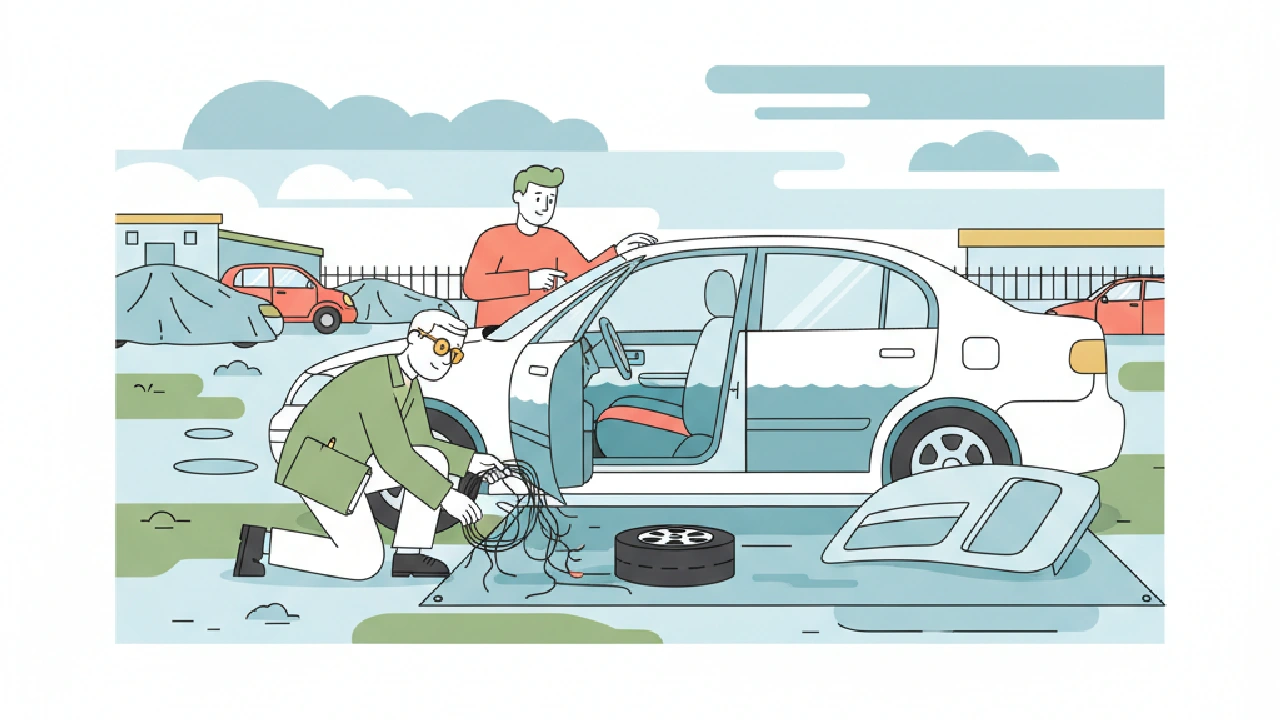
Is flood damage car repairable? Short answer up front: sometimes — but only in narrow, predictable situations. Read this quick pre-auction briefing before you raise your hand on Copart or IAAI. It focuses on the fast checks and the tight math that keep flood buys from becoming junk piles.
Core idea
Decide with three facts: how high the water reached, what type of water it was, and how fast the vehicle was dried and serviced. If the water stayed below the door sills, the exposure was freshwater, and the car was dried and serviced within 48 hours, repair may be possible. If the water reached the dashboard or engine, walk away. Use tight math — your max bid must cover repairs, buyer fees, transport, and still leave your target spread.
1) Lot triage: what to look for in 90 seconds
When you get a vehicle on the lot, move fast. You only need a few clues to pass or keep hunting.
- Water line: look for staining on the seat bases, headliner, glove box and under the dash. Water below the door sills (Level 1) is the only situation where repair is plausibly economical. Water at or above the dashboard (Level 3) is a red flag; most of those cars are beyond repair. For a quick visual guide, see our auction photo checklist for spotting flood damage.
- Smell and mold: heavy must or visible mold means the interior was soaked for a while. That usually multiplies labor costs and warranty risk.
- Electrical clues: fogged cluster lenses, popped trim panels where harnesses run, or corroded connectors under the kick panels. Electrical systems are the expensive wildcard.
- Saltwater signs: corrosion on exposed metal like door hinges, floor pan pitting, or a rusty engine bay despite low mileage. Saltwater ages a car fast — avoid it unless you have reliable parts sources or a buyer who accepts flood-branded cars.
- High-value exceptions: some high-end classics or rare models can still pencil after heavy water if you have parts access or a buyer who accepts a flood title. That’s a specialized play; don’t treat it like a normal salvage flip.
2) Max-bid math: a tight formula you can use
Every auction buy should come from the same short equation. Think of it like this:
Max bid = ARV - (Estimated repairs + Buyer fees + Transport + Target spread)
Don’t guess. Break each line down.
- ARV (after-repair value): pull local comps for the exact trim and options (see how to pull salvage car comps to set ARV). Use only completed sales, not asking prices.
- Estimated repairs: be conservative on electrical and interior work. If water reached the dash or engine, estimate a total-loss outcome instead of low repair figures. Use a salvage auction repair estimate to model worst-case costs.
- Buyer fees and transport: these are real costs. Add them before you factor in profit. If you can’t find exact buyer fees for the lane, assume you’ll pay more than the advertised rate — leave margin for surprise.
- Target spread: your minimum profit. If repairs will approach or exceed the point where they take 60–70% of the vehicle’s market value, stop bidding. That 60–70% range is a common rule where repair costs turn a car into a write-off.
Opinion: I don’t bid on any flood car where the repair estimate is an unknown. If you can’t open panels or check for corrosion, don’t chase a phantom discount.
Mini-case: apply the formula with repair thresholds
Mini-case (template, no made-up dollar numbers): a sedan shows a water line on the seat bases but the dash looks dry. Owner paperwork or notes indicate freshwater exposure and quick recovery. You pull comps and set ARV. Your shop estimates repairs that would equal roughly half the vehicle’s market value. Because this repair estimate sits well under the 60–70% threshold, the car is a candidate — but only if buyer fees, transport, and your target spread still fit into the math. If buyer fees and transport push total costs toward that 60–70% zone, walk.
3) Title risk and what "flood" actually means
Titles are where buyers get burned. There are three traps to watch:
- Repairable vs non-repairable branding: some jurisdictions or auction tags make a vehicle "parts only" or non-repairable. If the title is non-repairable for your state, you can’t return it to road use. Know your state rules before you bid.
- Insurance history: many flood cars come with an insurance total-loss. That doesn’t always mean the car is worthless, but it often means the insurer saw the same repair math you should be doing. Treat those lots with extra skepticism.
- Hidden paperwork issues: a clean title that later shows flood damage on a vehicle history report is a bid trap. Verify history and title branding before you commit. Read our guide to salvage title history red flags so you know what to watch for.
Opinion: I’d rather lose a cheap deal than inherit a title mess. You can always buy another car; you can’t change a state’s salvage rules after the sale.
4) Repair surprises and how to scope them fast
What kills margins on flood cars is not the obvious water or soaked carpets — it’s the hidden stuff you can’t see from the lane.
- Electronics: ECUs, airbag modules, ABS and body control modules can fail later. Replacing or reprogramming modules is expensive and time-consuming.
- Hydrolock and mechanical damage: if water was in the intake and the engine hydrolocked, the motor may be toast. Once hydrolock happened, replacement is usually the only path.
- Mold remediation and interior replacement: removing mold and replacing wiring harnesses or interior trim takes shop hours and drives warranty risk to buyers. That eats your spread.
- Corrosion that appears later: even freshwater can cause connectors to corrode months after a repair. That’s the reliability tax you pay as the seller if you flip the car as repaired.
Practical move: if you must bid, price in a reserve for late-failure returns and be transparent to your buyer about the flood history. That saves legal headaches and helps you place a higher value on honesty in repeat business.
How to inspect when you can get hands-on
- Pull floor mats and carpet corners. Look for silt lines and trapped debris in seams.
- Remove kick panels and try to see harnesses for corrosion.
- Check fluid reservoirs and dipsticks for water contamination (milkiness in oil indicates serious ingestion).
- Try the electronics: power windows, seat motors, mirror heaters. Partial failures are a bad sign.
Where a salvage flip tool helps
Buyers often miss title or sales-history red flags until after the sale. AutoFlip Pro’s Risk Level Calculation flags those signals (sales history, title type, runs & drives, engine starts, and insurance-seller indicators) so you see high-risk lots before you bid. Use that score as a quick second opinion when your lane check is inconclusive — you can analyze a lot free before you bid.
Key takeaways
- Only consider flood cars where water stayed below the door sills and the vehicle was dried and serviced within 48 hours.
- Use Max bid = ARV - (Repairs + Buyer fees + Transport + Target spread). Walk if repairs approach 60–70% of market value.
- Don’t trust a "clean" title without confirming history and local salvage rules — title traps destroy margins.
- Price in late-failure risk for electronics and corrosion; those are the real profit killers.
FAQ
Is flood damage car repairable in general?
Sometimes. Minor freshwater exposure below the door sills and drying/servicing within 48 hours can be repairable. Water at the dashboard or engine is usually a write-off.
Can I flip a flood car without a full teardown?
Not safely. Flood cars hide problems. If you can’t do a full interior teardown and electrical check, you’re gambling. I advise a teardown before you bid on anything with interior water signs.
When should I automatically pass?
Pass when the waterline is at or above the dash, when saltwater exposure is apparent, or when repair estimates push you into the 60–70% of market value zone. Also pass on lots with unclear title branding in your state.
What’s the biggest surprise buyers miss?
Electronics and corrosion that surface weeks or months after repair. That destroys resale value and can lead to expensive warranty claims or returns from retail buyers.
Actionable pre-auction checklist
- Pull comps for that exact model and set ARV before you arrive.
- Walk the car: note waterline, smell, and visible corrosion in under 90 seconds. Use our how to analyze a salvage auction lot before you bid guide for a step-by-step lane walkthrough.
- If water reached the dash or engine, mark it DO NOT BID.
- Run the Max-bid math. Walk if repairs approach 60–70% of market value.
- Confirm title branding and state rules before you commit.
- If you buy, do an immediate teardown and full electrical inspection within 48 hours.
Keep your auction bids clean. Flood cars can be profitable if you only touch the right ones. If you’re gambling on the rest, factor that gamble into your max bid — and don’t be the buyer who learned the hard way.