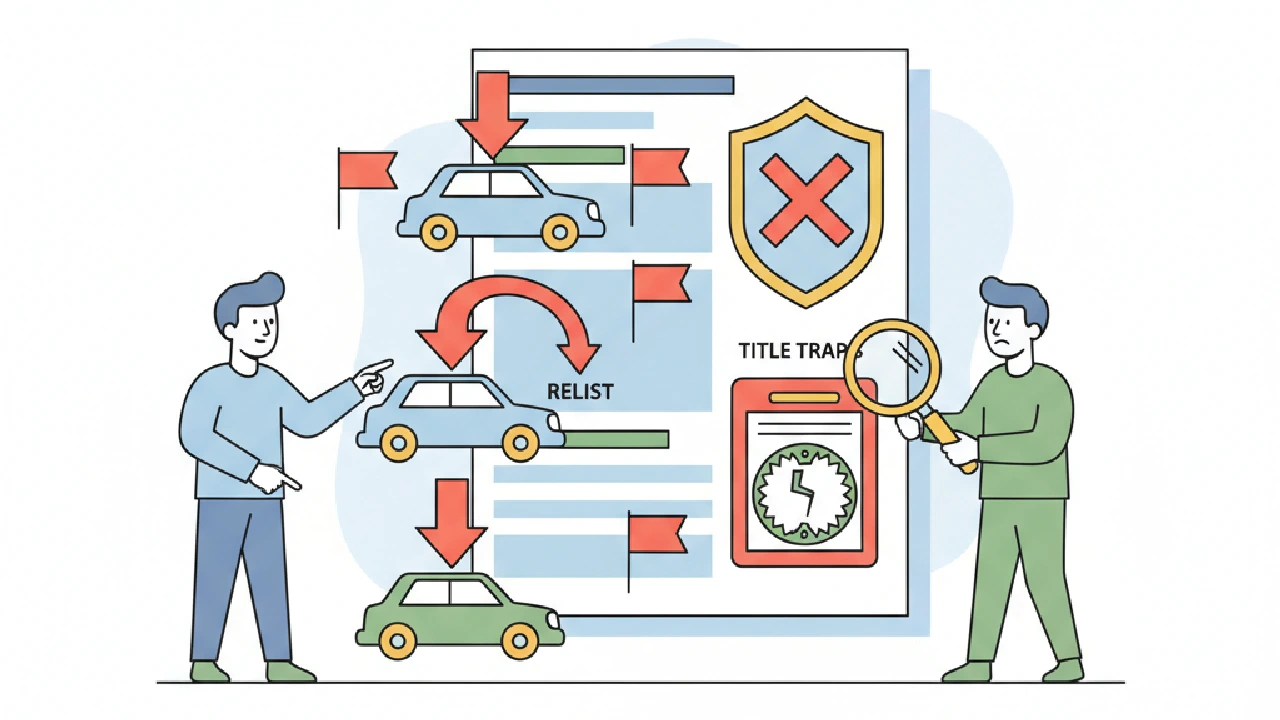
Profit in salvage flipping hinges on buying right. That means spotting problems before you bid, not after. One of the biggest traps in the auction game is a murky sales history. A vehicle that keeps popping up for sale, or one with a convoluted ownership trail, is a red flag you can’t ignore. This isn’t about minor details; it’s about hidden damage, title issues, and sellers trying to offload problems onto you. AutoFlip Pro flags these sales history relists and title traps to protect your bid and your spread.
A car with multiple “Sold” entries, especially if followed by a current “Active” auction, signals potential trouble. It could mean the previous buyer discovered a major issue and dumped it, or it points to a “curbstoner” operation. Either way, it’s a risk that eats into your potential profit.
The Hidden Dangers of Relisted Vehicles
A vehicle’s sales history can tell you a lot — often more than the auction listing. When a car gets relisted multiple times, it’s rarely for a good reason. It suggests previous buyers found problems that made the deal unviable for them. This might be anything from severe mechanical issues not apparent in photos to title complications that prevent a clean resale. Every “Sold” entry followed by another “Active” listing should trigger a deeper dive into that lot’s past.
According to industry sources, a vehicle’s sales history is a major risk signal because it can indicate a curbstoner-style seller, title washing, or a concealed damage history. These issues directly impact your ability to re-title the vehicle, repair it profitably, and ultimately sell it without legal headaches. Ignoring this history means you might inherit someone else’s unsolvable problem.
Unpacking Title Traps and “Washed” Histories
Title risk is a silent killer in the salvage business. A “clean” title report from a standard provider isn’t always the full story. Title washing — the process of moving a vehicle across state lines to remove a branded title — is real. This can convert a salvage, flood, or rebuilt title into something that looks clean on paper but hides its true history and value depreciation. Tools that analyze sales history often flag inconsistencies that suggest a vehicle’s title might not be as straightforward as it appears.
For example, if a vehicle spent time in a flood-prone state and then suddenly appears with a clean title in a different state, that’s a signal. Similarly, if the seller name doesn’t match the title or VIN details don’t align, treat it as a high-risk listing. A clean history report is not proof of a clean car, so the safest approach is to verify the VIN, mileage continuity, title status, and repair evidence independently.
The Repair Burden of Unknown History
Hidden damage is often the reason a vehicle becomes a relist. Previous buyers might have uncovered structural damage, extensive electrical problems, or complex mechanical failures that made their repair estimates balloon past profitability. When you bid on a vehicle with a spotty sales history, you’re effectively bidding blind on potential repair costs.
Standard history reports can miss cash repairs, out-of-network body work, or owner-to-owner incidents. This means a pristine report can still miss serious damage. If you can’t definitively confirm the extent of previous damage or repairs, your max-bid math needs a substantial buffer. Better yet, skip the lot. Thin margins can push flippers to cut corners; one calculator source notes under 10% ROI is thin and risky, 10–25% is solid, and above 25% is strong. Don’t let unknown repair costs push you into that “thin and risky” category.
Before You Bid: Check This for Every Lot
- Sales History: Are there multiple “Sold” entries followed by the current “Active” status? This is a major red flag indicating potential underlying issues.
- Title Origin: Does the title history align with the vehicle’s geographical past? Be wary of vehicles moving from flood-prone areas to states with laxer title laws.
- Seller Information: Does the seller match the registered owner, or is it a third-party reseller without clear provenance?
- Visual Cues: Even with limited photos, look for mismatched paint, inconsistent panel gaps, or signs of rushed repairs that could hide deeper damage.
- VIN Decode: Use a reliable VIN decoder to verify specifications and ensure they match the listing. Inconsistencies can signal a problem.
- Market Comparables: How does the vehicle’s listed price or anticipated value compare to similar vehicles in your area? Unusually low prices can mask significant problems.
How AutoFlip Pro Identifies Relist Risks
AutoFlip Pro integrates a sophisticated risk level calculation into its vehicle analysis process. One of the primary factors weighted as “Very Important” (A-Level) is the sales history analysis. The system specifically looks for multiple “Sold” entries followed by a current “Active” status. When this pattern is detected, it triggers a significant deduction of 40 points from the vehicle’s initial risk score of 70. This immediate and substantial reduction places such vehicles squarely in the “High Risk” category, providing a clear warning before you even consider bidding.
This automated flagging is crucial because manually sifting through auction sales histories for every potential lot is time-consuming and prone to oversight. AutoFlip Pro streamlines this by embedding the check directly into the free public lot analyzer, giving you instant insights into a vehicle’s true risk profile without requiring an account.
Beyond Relists: Other Risk Factors AutoFlip Pro Tracks
While relistings are a major red flag, AutoFlip Pro’s risk score goes deeper. It incorporates other critical factors into its calculation, helping you make more informed decisions:
- Insurance Seller: A verified insurance company selling the vehicle adds 20 points, indicating a more transparent origin.
- Runs & Drives / Engine Starts: Essential mechanical indicators. A vehicle that “runs and drives” adds 15 points, and “engine starts” adds 10 points. Conversely, their absence deducts points.
- Title Type: While “Salvage” is neutral, AutoFlip Pro flags problematic titles like “Junk/Parts Only” (-15 points) or “Flood” (-10 points), giving you warnings about their potential impact on resale value and repairability.
By combining these factors, the platform provides a comprehensive risk assessment that helps you avoid common pitfalls. This means you’re not just reacting to a relist, but also considering the full spectrum of potential issues that could derail your flip. You can sign up for AutoFlip Pro to save these analyses to your watchlist and track them through the entire auction process.
Key Takeaways
- Always scrutinize a vehicle’s full sales history for multiple relists before bidding.
- Don’t rely solely on a “clean” title report; investigate for signs of title washing.
- Assume higher, unseen repair costs for vehicles with ambiguous pasts.
- Use tools like AutoFlip Pro to automatically flag sales history and other critical risks.
- Protect your max bid by knowing when to walk away from questionable lots.
FAQ
What does it mean if a car has been relisted multiple times at auction?
Multiple relistings often indicate that previous buyers found significant issues — mechanical, structural, or title-related — that made the vehicle unprofitable or impossible to register/sell. It suggests the vehicle carries a higher risk than its listing might initially suggest.
How can I identify “title washing”?
Title washing involves moving a vehicle across state lines to remove a branded title. Look for inconsistencies in a vehicle’s history, such as a car previously registered in a flood-prone state appearing with a clean title in another state. Always verify the VIN and title documentation thoroughly.
Why are sales history and title crucial for calculating max bid?
A problematic sales history or a questionable title directly impacts a vehicle’s true market value, potential repair costs, and ease of resale. Ignoring these factors can lead to inaccurate max bid calculations, leaving you with a money pit instead of a profitable flip. Tools like AutoFlip Pro incorporate these risks into their max bid calculations.
What are some common “red flags” beyond relisting?
Beyond relisting, red flags include non-insurance sellers for salvage vehicles, vague descriptions of damage, missing VIN plates, or vehicles that do not “run and drive” or “start.” These factors can significantly increase your risk and repair burden.
Can I analyze a lot for sales history risks without creating an account?
Yes, you can use the free public lot analyzer to get a full analysis, risk score, and max bid for a Copart or IAAI lot, including automated sales history analysis, without needing an account.