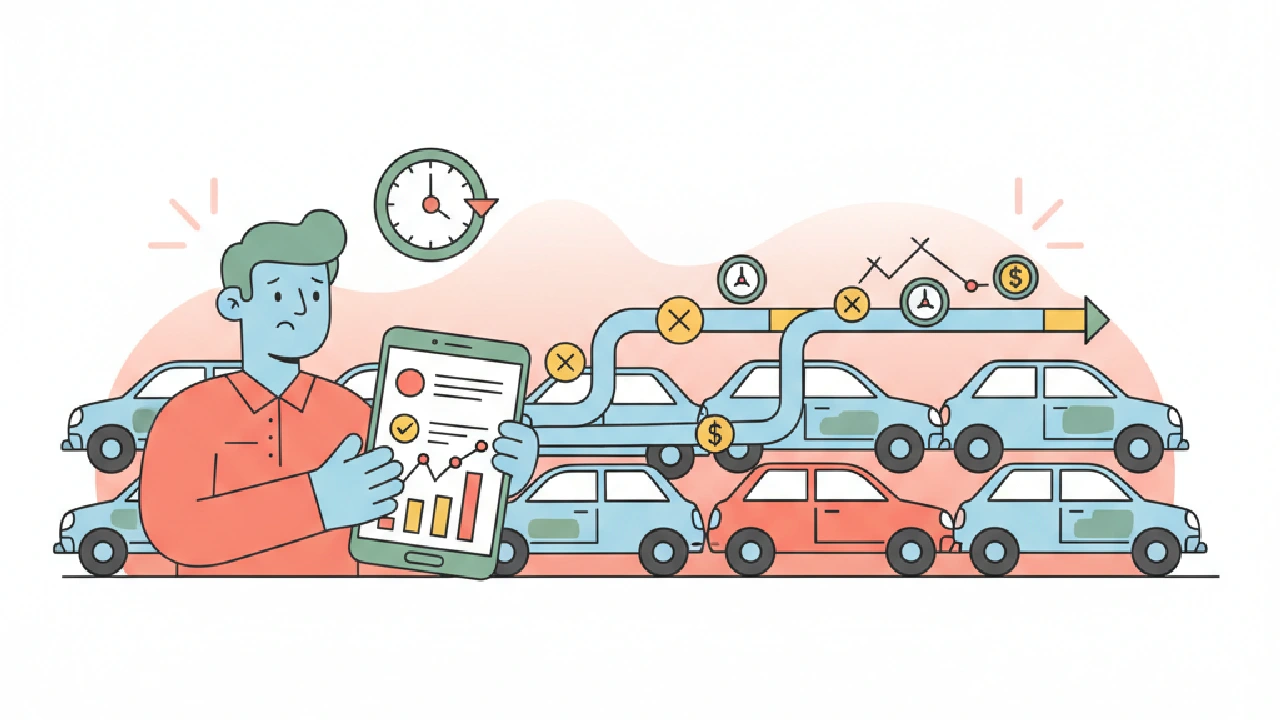
how much is copart storage fee is the first thing I ask before I press a paddle. Storage rules decide whether a flip is a profit or a loss. Know the timeline. Know the daily rates. Plan pickup—or you’ll pay for the auction house’s parking lot, literally.
Core idea in one line
Copart storage fees usually start after a short free window and run between $25–$75 per day, so the clock—more than your repair estimate—often kills your spread. If you want a deeper dive on fee modeling and how to build fees into your spread, see Why Are Copart Fees So High (and How to Model Around Them).
1) The timeline: free window, start date, and late fee traps
Short version: you don’t get unlimited time. Copart gives a short free period after sale or when payment clears. That free window is typically 3–5 business days. After that, daily storage kicks in.
There’s a separate late-payment penalty you cannot ignore. If payment isn’t made by the deadline, a $50 late fee can apply. That fee is a hard stop—you can’t roll it into the invoice like a transport charge. It adds to storage and to your headache if the unit is relisted.
Every yard has its own start rules and counting method. Some count calendar days; some count business days. That difference matters if auction day falls before a weekend or holiday. When you study a lot’s specifics, use How to Analyze a Copart or IAAI Lot Before You Bid: Your Auction Day Briefing to check yard rules and sale-type differences before you commit.
2) Daily rates and yard escalation — why location changes the game
Daily storage isn't fixed across yards. Expect rates in the typical range of $25–$75 per day. A coastal or metro yard will charge more than a rural lot. Heavy vehicles or RVs often sit in a different pricing band.
Some yards escalate rates in steps as the days pass. One yard example (older schedule) shows small fees the first week, then rising to a steady daily amount. That pattern is common: cheap early days, then a steady drain once the free window lapses.
Fact to use: industry examples show a two-week hold can add a substantial bill. On a vehicle stored for two weeks, storage alone can add $200–$500. Treat that range as a real contingency when you bid.
3) Max bid math — where storage fits into your spread
Keep this formula in your head when you set the final bid:
- Max Bid = ARV (what you can sell for) − Buyer fees − Repairs − Transport − Storage Allowance − Target Profit
Storage Allowance is where rookies fail. Don’t assume pickup day is immediate. If you plan for a worst-case two-week pickup delay, use the real-world storage contingency: $200–$500. That’s what two weeks can cost according to industry reports.
For a focused walkthrough on setting bids to avoid overpaying and keeping storage from killing your spread, consult Setting Your Copart Max Bid Without Overpaying. And because repairs tie directly into your bid math, use the salvage auction repair estimate: Pre-bid repair math method to fold realistic repair numbers into ARV calculations.
Example (storage-focused): estimate ARV and repairs separately, then add a storage allowance of $200–$500 to the repair line, not as an afterthought. If your target profit is slim, that allowance will often tell you not to bid.
4) Title risk, late payment, and relist costs — the hidden margin eaters
Title plays are where storage multiplies damage. If title processing drags or the lot flags a paperwork problem, your car can sit longer and you keep paying per-day fees. That $50 late fee can also get slapped on if you miss payment windows—so late fees stack with storage.
Relists and cancellation penalties exist too. If the buyer cancels or can’t pick up, units sometimes hit relist fees and re-notice charges. Those add to the tab and extend time on the lot, which means more daily charges. Don’t treat relist risk like a theoretical—have a plan for paperwork problems before you win.
5) Transport, pickup logistics, and who pays what when
Transport timing matters as much as cost. Arrange a hauler before you win when you can. If your transporter can’t make the free window, factor the storage range into your invoice to the hauler or bump the pickup date in your plan.
Some buyers schedule same-day or next-day pickups and accept a higher transport bill to avoid storage. That’s a trade-off I use when spread is tight. Paying more for transport today can be cheaper than paying storage for days.
On weekend sales and holidays, check whether the yard counts those days in the free window. Some yards exclude weekends for certain sale types. Know which rule applies before you bid.
Mini-case: quick storage-focused bid decision
Listen to this like I’m sitting beside you at the auction line.
- You find a clean-body sedan. Repairs look light on inspection. ARV looks good to you.
- You can’t get a hauler to the yard inside the free window.
- Use the industry storage contingency: assume storage will add $200–$500 if it sits two weeks.
Decision logic: If that $200–$500 kills your profit line, don’t bid. If you can make the numbers work by paying a bit more for transport to avoid storage, do that. If neither option preserves your target spread, walk.
How I run the yard-check before I bid
Simple checklist I run in my head before I press bid:
- Confirm the yard’s free window: 3–5 business days is typical. Know whether they count business or calendar days.
- Confirm daily rate band: is it nearer $25 or nearer $75? Ask the yard or check the lot location page.
- Ask whether that lot escalates fees or has a stepped schedule.
- Confirm title timing and whether there are known delays on this unit.
Where a salvage flip tool helps
If you struggle to fold storage, title history, and comps into a single winning max bid, AutoFlip Pro can help: its VIN/lot analysis pulls listing and sales history, the max bid calculator folds market value, repair, transport, and storage into the bid math, and risk scoring highlights title or repeated-sales red flags. Use it to validate whether that $200–$500 storage contingency kills the spread before you press the paddle. Try a free lot analysis with AutoFlip Pro: analyze a Copart lot free before you bid.
Key takeaways
- Always assume storage can and will eat margin faster than repairs.
- Use the two-week storage contingency of $200–$500 when you can’t guarantee pickup in the free window.
- Confirm whether the yard uses 3–5 business days of free storage and whether weekends are counted.
- Pay for faster transport if that cost is lower than the storage drag on your profit.
FAQ
How soon do Copart storage fees start?
Typically after a short free window. That free window is usually 3–5 business days after sale or payment clearance. Exact start rules vary by yard and by sale type.
How much are Copart storage fees per day?
Daily rates commonly fall between $25–$75 per day, depending on yard location and vehicle size. Some yards use stepped escalation in the first week, then a steady daily fee.
Is there a late payment fee I should worry about?
Yes. There is a noted $50 late-payment fee if you miss the payment deadline. That fee stacks with daily storage and can trigger additional penalties or relist actions.
How bad is leaving a car for two weeks?
Industry examples show a two-week hold commonly adds $200–$500 in storage costs alone. That number should be included in your max-bid math if pickup isn’t guaranteed inside the free window.
Any final pick-up tips?
Book transport before you bid when possible. If you can’t, build the storage contingency into your bid. If the math doesn’t work after that, don’t win the car—storage will punish you faster than most repair surprises.
Actionable checklist — what to do before auction day
- Call the yard and confirm free window rules (business vs calendar days).
- Ask the lot location for the expected daily storage range (is it closer to $25 or $75?).
- Line up a hauler with a backup pickup date inside the free window.
- Build a storage allowance of $200–$500 into your bid if pickup could slip to two weeks.
- If title or paperwork could delay release, don’t bid unless margin covers extra days.
- For step-by-step operational flow after a win, see How to Flip Salvage Cars Step by Step.
Storage isn’t an afterthought. It’s an operating cost that needs the same respect as parts and paint. Treat it that way and you’ll stop losing deals to a parking lot.