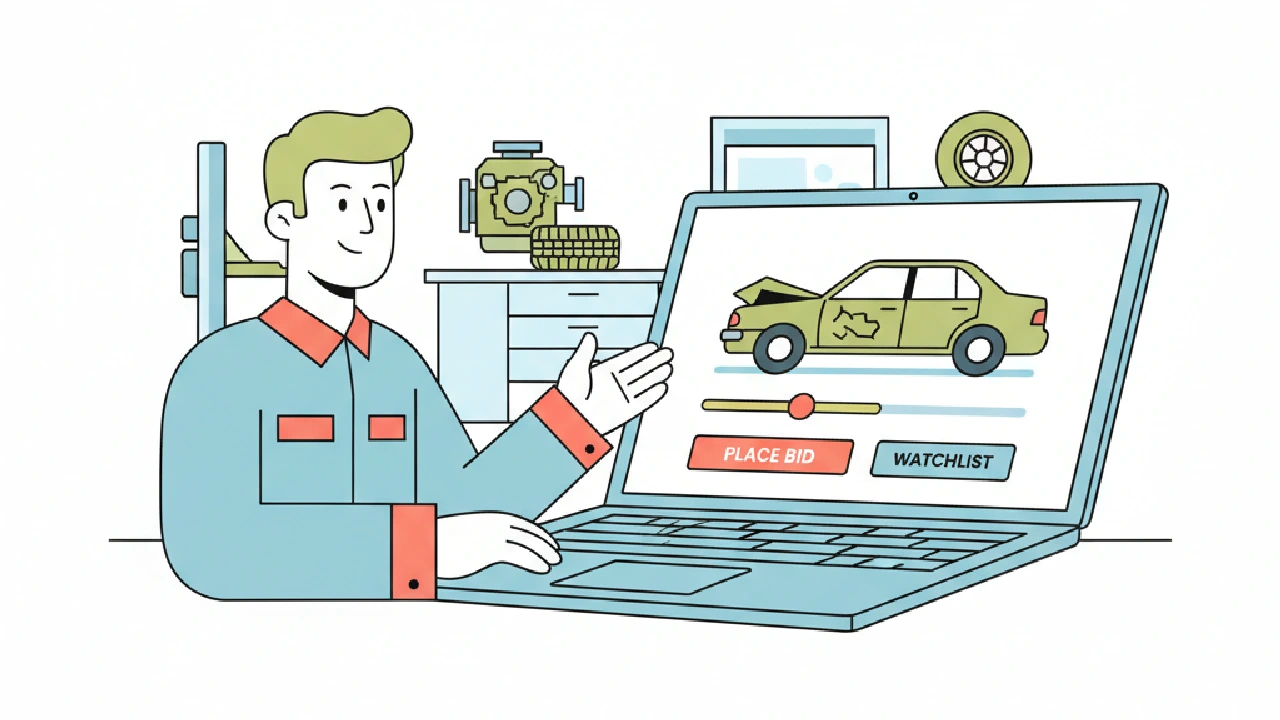
Here’s a short, workmanlike iaai bidding strategy you can use when you only have nights and a weekend to hunt. Read it like I’m briefing you before auction day. No fluff. Clear rules you can follow at the keyboard.
Core idea
Buy only when your max bid and exit plan are locked before you click. Work the listing, not the timer. If the numbers don’t add up on the screenshot, don’t touch the lot. Your primary job as a part-time flipper is discipline: research fast, calculate a conservative max bid without overpaying, then walk away if bidding gets emotional.
Max-bid math: the non-negotiable formula
Start every vehicle with a single calculation. Don’t guess. Use a simple equation and stick to it at the auction: Max Bid = ARV - Repairs - Buyer Fees - Transport - Desired Profit. That’s it.
Why this works: it removes emotion. If you set the Max Bid beforehand, you never pay to learn a lesson at the closing bell.
How to run it fast:
- ARV: realistic resale value in your market after repairs. Base this on current comps, not wishful thinking. Consider using salvage car comps to set ARV when you need fast, reliable comparables.
- Repairs: conservative estimate that includes parts, shop labor, and a buffer for surprises.
- Buyer Fees: include the platform fee and any miscellaneous auction charges you know apply.
- Transport: how much to get the car to your shop or to the rebuilder.
- Desired Profit: the minimum return that makes the deal worth your time.
Mini-case (formula-driven, no made-up prices):
- Let ARV = A
- Let Repairs = R
- Let Buyer Fees = F
- Let Transport = T
- Let Desired Profit = P
Then Max Bid = A - R - F - T - P. Run this for every car. If your high bid equals or exceeds Max Bid, you’re out. If you win under Max Bid, you follow your exit plan and move on.
If you want to automate the arithmetic, AutoFlip Pro’s Max Bid Calculator combines market-value estimates with your repair, transport, fee, and profit inputs and returns a suggested ceiling. That can save time when you’ve got a short list of lots to run before the auction day — but always eyeball the comps and adjust the repair buffer for photo uncertainty.
Title risk: read state rules before you bid
Titles kill deals. Some states add paperwork or long waits to get a rebuilt title. Others allow a quick repair inspection and tag. You must know where the car will be titled after repair and how that affects resale; see a briefing on salvage title rules that affect resale before auction day.
Practical checks before you bid:
- Confirm the listed title status on the lot sheet and assume it could be accurate or wrong.
- If the title status is unclear, treat the vehicle as higher risk and widen your repair buffer.
- Decide in advance if you will touch vehicles with salvage titles, flood flags, or missing documents. If you won’t, don’t bid.
Opinion: Don’t be the buyer who figures out title law mid-auction. If you need to call the state DMV or an inspector to confirm salvage/rebuilt rules, do it before the lot opens. Bidding blind on title status is how part-timers burn cash.
Spread and comps: how to set a safe market radius
The spread is the margin between your buy price and ARV after repairs. For a part-time flipper, keep the spread conservative. Use tight comps inside a reasonable radius around your resale market. If you only sell locally, local comps matter more than national lists.
How to comp fast:
- Pick the make, model, trim, and year, then build a short list of recent similar sales in your market area.
- Ignore rare trims and unusual options unless you plan to hold for a specific buyer.
- Adjust ARV downward for market speed. If you need a fast flip, assume a lower achievable price.
Opinion: Exporters and volume buyers will chase clear-title cars hard. If a car looks like a quick clear-title flip, expect heavy competition and smaller spreads. That’s fine when your Max Bid math still works — but don’t try to out-hustle them on a car with cosmetic damage only. If you want help picking targets, review the best cars to flip: salvage edition for practical ideas.
Repair estimation and common traps
Photos lie and damage travels. What looks like a bumper break can hide mounting rail damage. What looks like a fender scrape can hide frame issues. Treat photo-based estimates as the floor, not the ceiling.
Practical steps to avoid repair surprises:
- Use multiple photo angles and the condition report. If anything is missing, mark the job as higher risk.
- When in doubt, add a fixed buffer to your Repairs variable in the Max-Bid formula.
- Know the parts market for the model. Some vehicles have cheap aftermarket panels. Others have rare parts that add hours on the clock.
Opinion: Don’t assume an easy panel swap unless you have verified parts availability. Parts delays kill turn time and eat profit.
How to run auctions as a part-timer
You don’t have the luxury of full-time market watching. Use a shortlist, not a scattergun. The day before the auction pick a small slate of vehicles you want to follow closely. Load their images, condition reports, and your Max Bid calculations in one place. Also, make sure to analyze a Copart or IAAI lot before you bid so you don’t miss key details during the rush.
Bid tactics that work for part-timers:
- Use pre-bids if the platform supports them. Pre-bids save time and represent your number to the market without emotional bidding.
- If you must bid live, place your ceiling and let proxy handle the increments. Don’t sit in the last second and snipe unless you are prepared to accept the price.
- If bidding runs hot and surpasses your Max Bid, walk away. You can always find another deal next week.
Opinion: A saved loss beats an emotional win that turns into a money pit.
Mini-case: workflow on a single lot (formula application)
Workflow example using the formulaic approach so you can follow the steps quickly:
- Scan the listing and note ARV as A based on local comps.
- Estimate Repairs as R using parts lists and shop quotes or a conservative buffer.
- List Buyer Fees as F and Transport as T from your last purchases or typical charges in your region.
- Set Desired Profit as P — the minimum return that makes time and risk worth it.
- Calculate Max Bid = A - R - F - T - P. If your pre-bid is below Max Bid, load it. If your max is below the current opening bid, skip the lot.
This keeps every decision binary and fast. You’ll stop trying to justify a buy and start controlling outcomes.
Feature bridge: speed the workflow with analysis and tracking
If you want to reduce manual steps, AutoFlip Pro can help with two parts of this playbook: its VIN/lot analysis pulls specs, photos, and sales history automatically and its Max Bid Calculator applies market-value estimates against your repair, transport, fee, and profit inputs. The platform’s risk level calculation highlights title or sales-history red flags, and saving an analysis to the Auctions Watchlist keeps your shortlist visible on auction day. Try a free lot analysis to see the numbers faster: analyze a Copart or IAAI lot free before you bid.
Key takeaways
- Always calculate a Max Bid before you bid and stick to it.
- Confirm title status and know your state rules before you bid.
- Use tight, local comps and a conservative spread for quick flips.
- Assume photo estimates understate repair needs and add a buffer.
- Pre-bids and proxy bidding are your friends—avoid emotional last-second bidding.
FAQ
How strict should a part-timer be with max bids?
Very strict. If you make exceptions you stop being a flipper and start gambling. Your Max Bid is a guardrail. Respect it every time.
What if the title on the listing is wrong?
Treat it as a higher-risk deal. If title clarity is important to you, skip lots with unclear or missing title details. Fixing title problems after purchase is costly in time and money.
Should I always use pre-bids?
Yes for part-timers. Pre-bids let you set numbers and move on. Use live bidding only when you need to contest a lot at the close and you are within your Max Bid.
How do I handle hidden damage discovered after purchase?
Have a plan. Either absorb the extra cost into your repair budget if it keeps you within your minimum profit, or if it blows your spread, cut losses and sell the car as-is to a buyer who handles repairs. Don’t pour unlimited money into a surprise fix.
Actionable checklist for auction day
- Pick a short list of target lots the day before.
- Run the Max Bid formula for each lot and save the number where you can see it during bidding.
- Double-check title status and market comps within your resale area.
- Set pre-bids or place your max into proxy before the lot closes.
- If the price exceeds your Max Bid, walk away. Log what happened and move to the next target.
That’s the playbook. Keep the math simple. Keep the bids disciplined. You'll save time and avoid the biggest traps part-time flippers fall into.