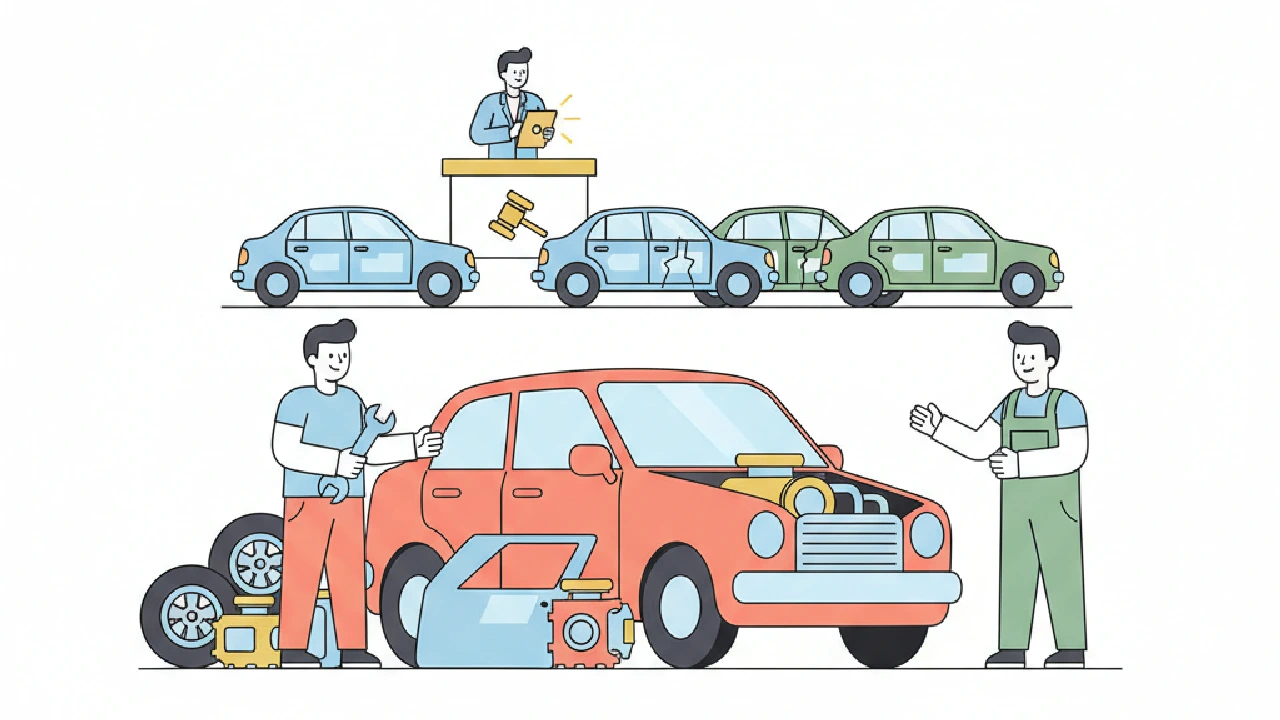
If you buy at auction, flip at market. That’s the core idea. This guide on the best cars to flip is a pre-auction briefing: quick, blunt, and built for Copart/IAAI operators who want repeatable flips. The models matter, but the math, titles, and repair control decide profit.
Core idea, simple
Find cars with steady demand in your market, buy them below local market value, and only pay up to a clear maximum that preserves margin after fees, repairs, and transport. Focus on low-complexity repairs and clear title paths. Identify salvage title brands that kill your flip spread so you can price risk correctly.
1. Max-bid math: the only rule that matters
Do this before you click "bid": stop guessing and run the numbers out loud. Use a simple formula and stick to it. Learn how to analyze a salvage auction lot like a pro before you bid to collect the inputs you need on the lot.
Formula (practical):
Max bid = ARV - (Buyer fees + Repair estimate + Transport + Reconditioning + Target profit)
Definitions:
- ARV — After Repair Value: what a clean, comparable car sells for in your local market.
- Buyer fees — all auction and buyer charges you expect to pay once you win.
- Repair estimate — a conservative shop quote for everything obvious and a buffer for surprises.
- Transport — tow from auction yard to shop or storage.
- Reconditioning — detailing, photos, minor parts, and inspection costs before sale.
- Target profit — your fixed minimum margin for the deal to make sense.
How to get ARV: pull local comps inside a tight radius. Walk the classifieds and dealer lots, not national listings. You want what a private buyer in your county will pay. Use salvage car comps to bid like a pro when setting ARV for your Max bid math.
Why conservative repair estimates matter: auctions misrepresent damage. Treat the listed damage as a baseline. Add a contingency line in your Repair estimate. If you can’t get a shop to eyeball it, increase contingency.
If you prefer an automated check, AutoFlip Pro’s Intelligent Max Bid Calculator uses a Clean Market Value estimate, your repair and transport inputs, and your target profit to calculate a disciplined Max Bid. That helps eliminate arithmetic errors when you’re under time pressure at the lot.
2. Title risk: know the paper and walk away fast
Title problems kill flips. Salvage lots come with weird title flags. Ask these three title questions every time: Get a salvage title flipping briefing for auction day so you know which DMV paths are feasible.
- Is this a salvage branded title, a clean title with damage, or a rebuilt/reconstructed? Each state treats these differently and resale paths change.
- Are there salvage liens or outstanding fees tagged to the VIN? Those can stop registration and cost you time and money.
- Will the car qualify for a rebuilt title (or is it non-repairable in this state)? If you can’t register it for resale, it’s a parts car, not a flip.
If you’re not 100% sure, don’t bid. On auction day, your time is valuable; make pass/fold decisions quickly and decisively. Flag any title that needs DMV paperwork or emissions work and price it like a parts sale unless you have a proven path.
3. Spread and comps: how to pick the right market radius
Spread is the difference between your ARV and the purchase price. To measure it, pull comps inside a defined radius and standardize them.
Rules for comps:
- Radius: pick a practical radius where you can deliver or where buyers live. For most flippers that means your county and adjacent counties, not the whole state.
- Match trim and miles: choose comps with similar options and mileage. If you can’t, adjust ARV down for higher miles or fewer options.
- Use sold prices, not listing prices. Listings lie; sales show actual demand.
Don’t chase national premiums. A truck that sells for a high number 500 miles away isn’t your local ARV. Base your bid on what local buyers will pay after you list and advertise.
4. Repairs and common surprises: know the cheap wins and the budget killers
Cheap wins (do these first): lights, tires, brakes, battery, fluids, simple sensors, and cleaning. These deliver outsized buyer confidence for little cash.
Budget killers you must price separately:
- Structural/frame damage — expensive and often invisible until teardown.
- Airbag deployment — expect lengthy parts and diagnostic costs and title implications.
- Major electrical faults and BCM issues — diagnosis time equals cash lost.
- Hybrid/inverter or battery pack failures — specialty repairs and resale buyer pool shrink dramatically. If you’re dealing with EV-specific systems, read what to check on a wrecked Tesla before you bid for the common gotchas.
Always ask the shop two numbers: a best-case and a worst-case. Use the worst-case for your Max bid math unless you have extra margin to leverage.
5. Auction strategy and fee control
Fee shock is real. Auctions bundle buyer fees, processing fees, and per-lot charges. Don’t rely on a single number floated in the listing. Build buyer fees into your formula and accept them as part of your cost of goods sold.
How to save on fees and transport:
- Consolidate wins on the same yard to reduce haul costs.
- Negotiate a flat tow rate with your carrier if you have repeat volume.
- Use virtual inspections before bidding when available. If the car checks out live, you reduce surprises.
Bid timing: don’t get emotional on final lots. Walk away when price hits your Max bid. You’ll see the same or similar cars again. For Copart-specific bid setting, review a guide on how to set your Copart max bid without overpaying.
Mini-case: the variable-based worked example
Run the math with variables you control. This is a concrete way to avoid guesswork without inventing market numbers.
Parameters (you set these using local comps and shop quotes):
- ARV = your local average sale price for clean comps
- F = estimated buyer fees (auction + admin)
- R = conservative repair estimate (worst-case shop quote)
- T = transport and yard fees
- C = reconditioning and listing costs
- M = minimum target margin (your profit floor)
Plug into the formula:
Max bid = ARV - (F + R + T + C + M)
Example procedure you can run at the lot:
- Pull three local sold comps and calculate ARV.
- Get a shop ballpark and set R as the higher of the shop ballpark or your in-house estimate.
- Set M to a fixed dollar or a percent you won't go below on any deal.
- Calculate Max bid. If the live bid exceeds Max bid, fold immediately.
Why this works: it forces discipline. Without it you chase emotions and overpay on obvious wins that turn into break-even headaches.
If you’re comparing tools, consider that AutoFlip Pro combines automatic VIN/lot retrieval (Analyze Vehicle), Clean Market Value estimation, Risk Level Calculation from sales history and title signals, and the Intelligent Max Bid Calculator — the combination helps you spot title red flags, lock a local ARV, and produce a Max Bid number quickly. Try the free analyzer to analyze a Copart lot free before you bid: analyze a Copart lot free before you bid.
Key takeaways
- Always run Max bid math using local ARV and a conservative repair buffer.
- Walk away from title uncertainty unless you have a clear DMV path.
- Prioritize simple repairs that buy buyer confidence — fixable cosmetics and safety items first.
- Use a tight comp radius; local sold prices beat national hype.
- Control fees and transport with repeat vendors and consolidation.
FAQ
Which salvage vehicles should I target?
Target popular, mechanically simple models with a large local buyer pool. Examples commonly mentioned by operators include certain Civics, Camrys, 4Runners, Mustangs, and common full‑size pickups. The exact models depend on your market; use comps to confirm demand.
How do I estimate repairs without lifting the hood?
Use photo/video inspections, ask for VIN-specific service records when available, and get a trusted shop to give a worst-case estimate based on images. If you can’t get reliable eyes, increase your contingency or skip the lot.
What title flags are immediate deal killers?
Non-repairable or junk brandings that prevent registration, undisclosed salvage liens, and titles that require lengthy out-of-state paperwork are deal killers for flips. If you can’t register and resell within your normal turnaround, treat it as a parts buy.
Should I ever bid above my Max bid?
No. Emotions cost money. If you win above your Max bid, you turned a calculated purchase into a gamble. Walk away from the car or accept the loss only if you have a separate parts/resale plan that covers the downside.
Actionable checklist (use before every auction)
- Pull three local sold comps and set ARV.
- Get a worst-case repair estimate or set a conservative contingency.
- Confirm title brand and DMV path — mark any additional paperwork into your cost.
- Calculate Max bid with buyer fees, transport, reconditioning, and target margin.
- If live bidding exceeds Max bid, fold — record why and move on.
That’s the briefing. Stick to the numbers, avoid title traps, and treat the auction like a factory input. The best cars to flip are the ones you can buy cleanly, repair cheaply, and resell inside your local market window.