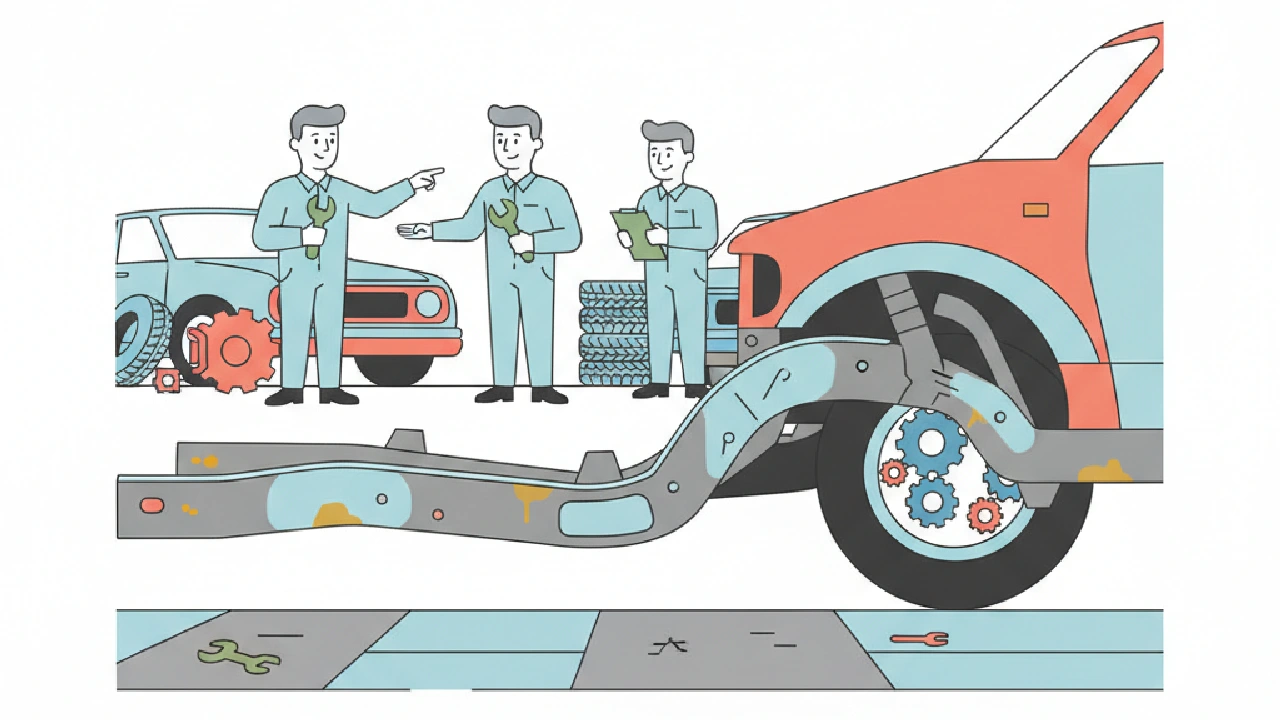
This is a short, hard-nosed briefing on reading frame damage Copart photos. If the lot shows the damage code "Frame Damage," the photos are your best evidence. Learn what to look for, how to pencil a max bid, how to manage title risk, and what to avoid when the undercarriage shots are missing.
1) Core idea — don't trust a caption, read the structure
Copart flags lots with the primary damage code "Frame Damage." But the code alone doesn't tell you the extent. The photos in the archived gallery — especially undercarriage and side-profile shots — are the real data. Look for bent rails, crushed pillars, twisted rocker panels, or broken suspension mounts. If the lot lacks those views, treat the listing as incomplete: either request more photos or walk away. For a systematic approach to spot missing views and decode lot notes, see our how to analyze a Copart or IAAI lot before you bid guide.
2) Photo indicators that mean 'walk' vs 'investigate'
Make a fast split between two states: must-avoid, and possible flip. Use this rule of thumb when scanning images.
Must-avoid markers
- Bent frame rails visible from the side or underneath.
- Crushed A-, B-, or C-pillars that change door gaps or roofline.
- Suspension hangers or control-arm mounts that look torn, offset, or sheared.
- Rocker panels pinched inward against the door skin.
- Evidence of previous major repairs that look misaligned (mismatched welds, odd gussets, or twisted seams).
Investigate further
- Minor sagging in the front that could be bent crossmembers but may be repairable.
- Surface rust on frame rails where structure looks intact.
- Missing undercarriage shots — request them. If the seller refuses or delays, do not bid blind.
Why this split? Frame repairs cost time and shop hours, and they eat your spread. If the photos show clear structural distortion, the lot becomes a rebuild job with title risk and safety headaches.
3) Max-bid math you can actually use (fill-in-the-blanks)
I won't give blanket numbers because local ARV, buyer fees, and transport vary. Instead, use this working formula at the top of your bid sheet before auction day. Plug in your numbers and walk away if it doesn't work.
Variables to collect before you bid:
- ARV = realistic after-repair value in your comps radius (your final selling price).
- R = estimated repairs (parts, paint, body labor, structural labour). For a disciplined pre-bid repair process see our salvage auction repair estimate: Pre-bid repair math.
- F = buyer fees and auction charges (what Copart/IAAI will actually bill you). Model these using guidance on how Copart fees affect your bid.
- T = transport and lot pickup costs to get the car to your shop.
- M = minimum profit margin you require to make the deal worth it.
Max bid = ARV − (R + F + T + M)
Mini-case (use your numbers):
Fill these in for a real lot before you type a bid.
ARV = [your comp price], R = [your repair estimate], F = [auction fees you expect], T = [haul to shop], M = [your margin]. Then compute max bid.
This is intentionally simple. If the lot shows frame deformation in photos, increase R significantly or set max bid to zero. If undercarriage images are missing, assume R is unknown and do not bid unless you can get the full gallery. For practical tips on locking a no-regret ceiling, see setting your Copart max bid without overpaying.
4) Title risk and paperwork traps — what the photos won't tell you
Photos show structure, not titles. Copart will label a lot as "Frame Damage" in the primary damage code. That tells you there was structural compromise. But title branding, salvage/total rules, and state-specific rebuilder requirements live in the lot details page and the state's DMV rules — not the pictures. Two practical rules:
- If the photos show structural damage, double-check the lot's title type. Some salvage vehicles come with clean or salvage titles; the rebuild process and paperwork differ. Watch for salvage title history red flags that will kill your resale timeline.
- Don't assume a repaired frame restores the title to 'clean' status in every state. If the lot's gallery shows major frame intervention, assume the rebuilt title process will be part of your timeline and cost.
Simple test: if the photos show bent rails or crushed pillars, plan for title paperwork delays and a longer holding time before resale.
5) Practical photo workflow before auction day
Do this in the listed order for every "Frame Damage" lot you plan to touch.
- Open the archived gallery and scroll every image. Look intentionally for undercarriage, wheel hubs, pillar gaps, and suspension mounts.
- Search the lot notes for "Frame Damage" and read secondary damage codes. If the secondary code is front-end or side-impact, assume structural involvement extends beyond cosmetics.
- If undercarriage shots are missing, use the lot's VIN to pull full galleries via third-party tools or request photos from the yard — check the Copart Sacramento yard contact and hours for an example yard contact page you can use to request images.
- Do a comp pull within your standard radius and set ARV. Use only comps with similar title history and post-repair condition.
- Fill the max-bid formula and lock in your number. When auction time hits, stick to your math — no emotion bids on frame lots.
Opinion: lots with "Frame Damage" and incomplete photos are bait. Too many buyers get burned by a few decent exterior shots and no structural views. Don't be that buyer.
Concrete example of the workflow (no made-up money)
Here's a real procedural example you can copy. These steps use the photos and lot code — not invented dollar figures:
- Find a Copart lot flagged with the primary damage code "Frame Damage."
- Open the archived photo gallery and confirm there are shots that show rails, pillars, or undercarriage. If you see bent rails or crushed pillars in those shots, mark the lot as "structural" and move to paperwork checks.
- Pull title info from the lot page. If the lot page shows salvage or non-repairable status, stop and re-evaluate whether you want rebuild work and the associated title process.
- Request any missing photos. If the yard or third-party tools supply undercarriage images, re-run your repair estimate. If not supplied, cancel the bid plan.
- Apply the max-bid formula using your ARV, repair estimate, fees, transport, and margin. If the formula returns zero or negative, walk.
This keeps you from guessing from a single front bumper shot and ending up with a car that needs frame-straightening and title headaches.
Where a salvage flip tool helps
When photos are thin and title history matters, a tool that runs VIN or lot analysis, risk scoring, and a max bid calculation can stop you from bidding blind. AutoFlip Pro's VIN/lot analysis, risk scoring, and max bid calculator combine comps, repair estimates, and fees into a single defensible ceiling so you avoid emotional overbids. Try a free lot analysis with AutoFlip Pro: analyze a Copart or IAAI lot free before you bid.
- Flags prior "sold" entries in sales history that raise risk.
- Converts market comps and repair estimates into a concrete max bid to protect your spread.
Key takeaways
- Always treat "Frame Damage" as a structural flag — verify with undercarriage and pillar photos before bidding.
- Use the max-bid formula (ARV − (R + F + T + M)) and never eyeball a bid on frame lots.
- If undercarriage shots are missing, request them or skip the lot — missing views equal unknown risk.
- Photos don't remove title risk; expect longer hold times and paperwork if photos show major structure work.
FAQ
Can Copart photos be trusted to show all frame damage?
Photos are helpful but not exhaustive. Copart's archived gallery often includes undercarriage and structural shots that confirm bent rails or crushed pillars, but galleries vary. If a lot lacks key views, don't assume the damage is minor.
What if there are no undercarriage photos?
Request them from the yard or use tools that pull full galleries by VIN. If you can't get undercarriage shots before the sale, treat the lot as unknown risk and avoid bidding. Example yard contact pages (like the Copart Sacramento yard contact and hours) can help you find who to reach out to for photos.
How do I handle a lot marked "Frame Damage" that looks fixable in photos?
Run the max-bid math with conservative repair estimates for structural work. If the photos show repaired panels with odd welds or misalignments, increase your repair estimate or skip the lot. Structural fixes reduce your spread fast.
Do photos tell you about title branding?
No. Photos show condition, not title rules. Always check the lot's title type on the listing and know your state's rebuilder rules before you buy.
Should I inspect in person?
If the expected profit depends on subtle structure work that photos can't confirm, yes. In-person inspections reveal weld quality, frame rails behind splash shields, and suspension mount condition that photos miss.
Actionable checklist — print this and bring it to auction day
- Confirm primary damage code is "Frame Damage."
- Scan full photo gallery — get undercarriage, pillars, and suspension shots.
- Pull title type from lot page and note any salvage branding.
- Run ARV and comps within your radius; set ARV in your sheet.
- Estimate repairs conservatively for structural work and fill R in the formula.
- Plug in F, T, and M; compute max bid and stick to it.
- If any key photos are missing, request them — otherwise walk.
Done right, photos are your advantage. Done wrong, they cost you a tow, a shop bill you didn't plan for, and a long title headache. Read the structure first — then bid.