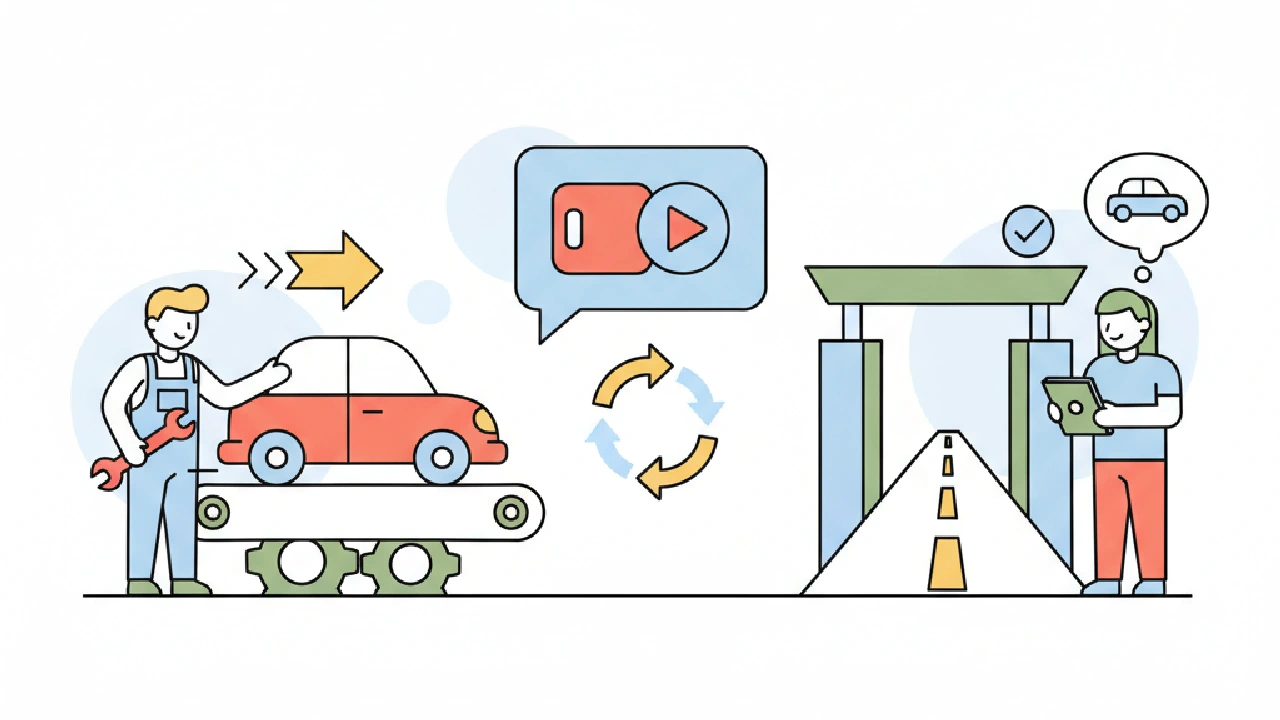
Short answer up front: what does run and drive mean on Copart? It means the vehicle started under its own power, went into gear, and moved forward during intake at the yard. It does not mean the car is roadworthy or that anything beyond that initial check is guaranteed. Treat it like a single datapoint, not a green light.
1) What Run and Drive actually documents
Copart’s run-and-drive designation is a snapshot from intake. An inspector confirmed the engine started, the transmission engaged, and the car moved forward at the yard. That’s it — no retesting, no warranty, and no guarantee the same will happen at pickup or after transport.
Why this matters on auction day: buyers hear "run and drive" and assume the car is functional. That mistake is how you overpay. Use the designation to prioritize inspections and comps, not to abandon due diligence. If you need a structured approach to pre-bid checks, see how to analyze a Copart or IAAI lot before you bid: how to analyze a Copart or IAAI lot before you bid.
2) What Run and Drive does NOT guarantee — title and mechanical traps
Don’t conflate run-and-drive with roadworthy, safe, or complete-title. The designation does not promise the engine is healthy, the transmission will hold up, or the brake and suspension are safe. It also doesn’t promise the title type won’t have legal or registration headaches.
Title risk is the silent killer of margins. A vehicle can be listed run-and-drive but still carry salvage, rebuilt, or branded issues that complicate resale. Assume title work will add time and paperwork unless you have verified otherwise. Run your title checks against a checklist like salvage title history red flags: auction checklist before you get emotionally attached to a lot.
Common surprises that show up after a run-and-drive purchase:
- Engine starts but runs rough or overheats under load.
- Transmission shifts into gear at the yard but slips on the road or won’t engage all gears.
- Hidden collision damage that affects steering, frame, or electronics.
- No keys, intermittent electrical faults, or tampered odometer readings.
3) Auction math: how to set a max bid without guessing
Do this like a dealer. Build a simple formula and stick to it. I use variables instead of wishful thinking:
- ARV = your after-repair value in your market.
- S = spread (what you need to make after all costs).
- F = buyer fees and auction charges.
- T = transport to your yard or to the buyer.
- R = realistic repair cost to bring car to your target condition.
- Max Bid = ARV - S - F - T - R
That’s the full discipline. If you can’t justify numbers for R or ARV, don’t bid. If you pad R because you’re optimistic, you’ll still be the one writing checks at the body shop. For tactics on disciplined bidding, review setting your Copart max bid without overpaying and avoid common mistakes highlighted in stop overbidding: 7 Copart bidding mistakes to avoid.
Practical signals that change R fast:
- Photos show bent subframe or heavy structural damage — increase R dramatically or walk away.
- Interior photos show full dash damage or water intrusion — treat electronics and wiring as unknowns and add contingency.
- Notes that say keys not present or odometer not verified — add the cost/time of locksmith or VIN work.
Opinion: I’d rather lose a lot by not bidding than win a lot I can’t profitably fix. A bad run-and-drive flip kills cashflow faster than a no-sale.
Mini-case: how I run the numbers (no guesses, just variables)
I won’t invent dollar figures here because numbers change by market. Instead, use this mini-case with placeholders you fill in right before the auction:
- ARV = your local resale price for the same year/model/trim in clean condition.
- Estimate R by breaking repairs into buckets: mechanical, body/paint, interior, electronics.
- Make conservative line-item estimates for F and T based on your recent invoices.
Plug those into Max Bid = ARV - S - F - T - R. If Max Bid is lower than the current market floor you’re comfortable with, stop. If it’s still within your buy range, set that Max Bid in the auction and don’t go past it.
Why this is practical: the variable approach forces you to get concrete on repair scope before emotion creeps in. It also makes walkaway decisions mechanical instead of personal.
4) Inspection and repair strategy — what to check and what to assume
Run-and-drive cars need a different inspection checklist than non-running cars. You’re not buying a daily; you’re buying a parts-and-repair project that happens to crank. Focus on the items that blow budgets.
- Engine health signs — look for heavy oil leaks, coolant loss, smoking, odd noises in photos and comments. If you can get a pre-bid inspection, have the inspector rev the engine and report noises.
- Transmission behavior — yard movement doesn’t prove all gears work. If the listing indicates automatic but the car had rough movement, assume a transmission service is required.
- Frame and suspension — small photo angles hide big issues. If photos don’t show full wheel wells and undercarriage, order a detailed inspection or walk away unless your repair margin covers a subframe swap.
- Electrical and keys — no key, no drive. If keys are missing, factor in locksmith time or the risk of module reprogramming.
Repair strategy by role:
- If you’re a quick-flip reseller, focus on cosmetic repairs and items that affect first impressions. Leave deep drivetrain repairs to mechanics if your margin allows.
- If you rebuild and re-title, verify title brand and budget the administrative time and cost to rebuild/clear title.
- If you sell whole, price with an honest parts-and-core description and expect negotiation. Market the run-and-drive status honestly: it helps sell to private buyers and smaller shops.
5) Post-sale logistics and the most common surprises
Copart’s run-and-drive label is single-test proof. Don’t assume it lasts through transport or pickup. Always plan for contingency.
- Transport your own way. Even if a car ran at intake, arrange a trailer or carrier. Many yards won’t allow drive-offs and you’ll risk damage in transit.
- Expect some failures at pickup. Have a tow company on standby or a rollback reservation. That saves you the time and cost of last-minute scrambling.
- Title paperwork can stall deals. Start title checks right after the auction. If the title looks murky, be ready to sell for parts rather than chase a rebuild.
Also factor in the Copart storage fee timeline when planning pickup logistics — storage charges can eat a flip spread quickly if you delay removal.
Opinion: a run-and-drive purchase that leaves you towing it home will still be fine if your Max Bid math covered towing and a small mechanical surprise. One that forces you into frame or major transmission work usually isn't.
Where a salvage flip tool helps
When you’re deciding whether a run-and-drive lot is worth chasing, a tool that ties together VIN/lot analysis, a max bid calculator, and a risk score turns that single intake datapoint into an actionable decision. Those features help you spot repeated sales history red flags, estimate a defensible max bid from ARV, repair, transport, and fees, and see whether the risk score pushes the deal out of your comfort zone.
- Use VIN/lot analysis to pull specs and seller/sales history that affect title risk.
- Use a max bid calculator to force the ARV - spread - fees - transport - repairs discipline.
Try an analyzer to analyze a Copart lot free before you bid.
Key takeaways
- Treat run and drive as a single inspection snapshot — not a warranty.
- Use ARV - spread - fees - transport - repairs = Max Bid and stick to it.
- Verify title type before you get emotionally attached to a vehicle.
- Order targeted inspections for drivetrain, frame, and keys when photos are unclear.
FAQ
Q: Can I drive a Copart run-and-drive car off the lot?
A: No. Copart’s intake check doesn’t change the yard rules. Most yards require transport. Plan to trailer or tow the vehicle even if it ran at intake.
Q: If a car was run-and-drive at intake but won’t start at pickup, am I stuck?
A: You own it and you’re responsible. That’s why conservative Max Bid math matters. Arrange transport and expect to pay for a tow or minor mechanical work immediately after pickup.
Q: Does run-and-drive affect title branding or registration?
A: No. Run-and-drive is about condition at intake. Title type is separate and can still be salvage, rebuilt, or have other brands. Always confirm the title details before bidding.
Q: Should I rely on run-and-drive to skip inspections?
A: No. Use the run-and-drive note to prioritize in-person or paid inspections when the potential margin justifies the cost. Never skip title checks or basic photo analysis.
Actionable checklist — what to do before you bid
- Fill in ARV, F, T, and R for this listing and calculate your Max Bid.
- Confirm title type and any outstanding liens or brands.
- Check photos for subframe, dash, and key presence. If unclear, order inspection.
- Book transport or have a tow plan ready before the auction ends.
- If your Max Bid is breached during bidding, stop. Don’t chase.
Bottom line: "Run and Drive" helps you sort cars fast. It does not replace inspection, title checks, math, or a disciplined exit plan. Use it as a green flag to dig deeper — not as the final sign-off.