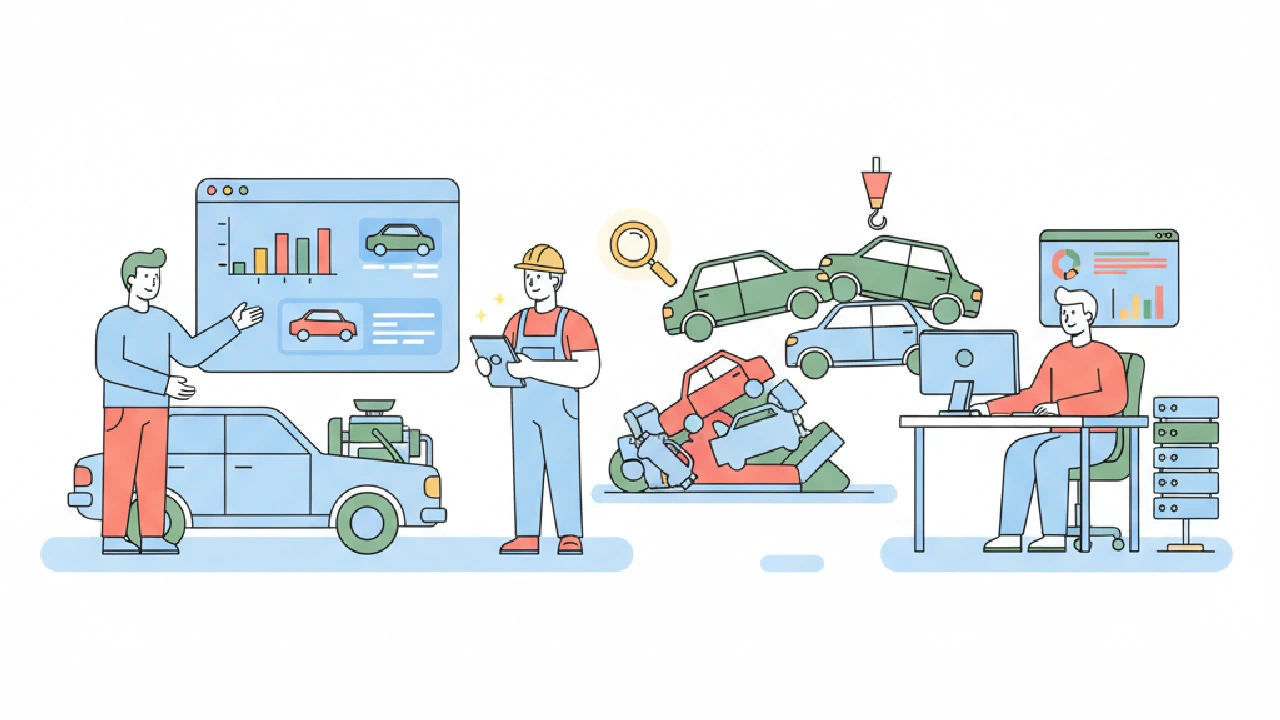
We're talking salvage, we're talking profit. Forget the fluff, forget the endless browsing. If you're serious about flipping cars from Copart and IAAI, you need to be surgical. That means having the right tools. We're not just talking about wrenches; we're talking about your brain and the software that backs it. This isn't about "maybe this one will make money." This is about hitting your numbers every single time. And that starts with solid salvage auction analysis software.
The Core Idea: Know Your Max Bid, Period
This whole game boils down to one thing: knowing your absolute max bid before you even click that button. Everything else is noise. You need to calculate your profit margin, transport costs, buyer fees, and, most importantly, honest repair estimates. If your software can't reliably give you a clear picture of all those variables, it's costing you money, not saving you. Bad bids eat profits faster than a bad engine swap eats time. Without knowing your max bid down to the dollar, you're gambling, not investing. For more on calculating this crucial number, explore real max-bid rules for flippers.
Decoding the Damage: AI vs. Manual Estimates
Damage assessment is where the rubber meets the road. Pictures lie. Descriptions are vague. This is why good software is a game-changer. Some tools, like Codonca, use AI to detect damage and estimate parts costs. This can kick out an ROI estimate in about 90 seconds. That's fast for initial screening. But never forget, AI is a starting point. It's probabilistic. You still need to validate against real repair shop quotes. Other tools, like AuctionCalc, integrate directly with Car-Part and eBay for live parts pricing. That's crucial. Knowing what that quarter panel or headlight assembly actually costs to replace is leaps and bounds better than guessing. A hidden bumper bracket or a tweaked frame rail can kill your spread. Your software should help you spot these landmines, or at least give you the data to dig deeper yourself. Understanding salvage repair cost surprises is vital.
Real Comps, Real Money: What Actually Sold For
Another critical piece is knowing what comparable vehicles *actually sold for*, not just what they're listed for. Anyone can list a car high. What did a similar year, make, model, damage type, and title status vehicle *close at* in auction? Both Codonca and AuctionCalc excel here, providing real market comps. This isn't about NADA clean retail. This is about what a salvage title, moderate front-end damage 2018 Camry actually brought last week within your target radius. Without this data, your ARV (After Repair Value) is just a wish. Your software needs to cut through aspiration and give you reality. This helps you define your "spread" – the difference between your all-in cost and your realistic sale price. A healthy spread is your safety net against unforeseen repair creep. Learn to bid like a pro by using salvage car comps.
Beyond the Hammer: Fees, Transport, and Title Traps
It's not just the auction price. Every nickel adds up. Buyer fees, transport, and title costs can eat a profit alive. While you can find simple calculators online for just buyer fees, a true analysis tool bakes everything in. For example, the intelligent Max Bid Calculator within AutoFlip Pro integrates repair costs, exit value, and target profit margin directly into its workflow. You need that all-in number. Then there's title risk. Some titles are fine (clean, clear), others are headaches (salvage, flood, junk). Before you bid, you need to understand the implications of a vehicle's title. AutoFlip Pro's Risk Level Calculation goes beyond just title type, factoring in sales history, whether the engine starts, and if it runs and drives, giving you a comprehensive risk score to avoid those traps that turn a quick flip into a long-term holding cost. Understanding salvage title history red flags can prevent costly mistakes.
High Volume vs. One-Off: Your Tool Selection
Your choice of salvage auction analysis software heavily depends on your volume. If you're doing a few cars a month, free tools or a lighter subscription might cut it for one-off lookups. But if you're serious, running 10+ cars a month, you need a different beast. AutoFlip Pro provides a comprehensive dashboard with auction tracking and a Watchlist to manage all your saved analyses, making it easier to track numerous vehicles. It also offers a Portfolio feature to track your flip pipeline and repair progress for each vehicle, crucial for high-volume operations. Don't bring a butter knife to a gunfight. For more on managing your operations, consider insights on when spreadsheets break for auction analysis.
Key Takeaways
- Always know your maximum bid before auction, factoring in all costs.
- Use software for AI-driven damage estimates and live parts pricing integrations, but validate with physical inspection or repair quotes.
- Demand real, recent auction comparables for accurate ARV and spread calculations.
- Account for all hidden costs: buyer fees, transport, and potential title headaches.
- Match your software capabilities to your operational volume; don't under-tool for high volume.
FAQ
What is the most critical feature of salvage auction analysis software?
The most critical feature is its ability to accurately calculate your maximum profitable bid, incorporating repair costs, buyer fees, transport, and a realistic After Repair Value (ARV). AutoFlip Pro's intelligent Max Bid Calculator is designed for this exact purpose.
Can I rely solely on AI damage detection?
No, AI damage detection (like Codonca's) is excellent for rapid initial screening and ROI estimation, but it's probabilistic. Always validate major repair estimates with physical inspection or a trusted repair shop's quote.
How do I account for hidden costs like buyer fees and transport?
A comprehensive salvage auction analysis tool like AutoFlip Pro's Max Bid Calculator integrates these costs directly into your bid ceiling calculation, ensuring you have an all-in cost perspective before you bid.
Why are actual sold comps more important than listed prices?
Actual sold comparables show what buyers genuinely paid for similar vehicles, providing a more realistic After Repair Value (ARV) for your flipped vehicle compared to potentially inflated listed prices. AutoFlip Pro uses market value estimation based on comparable listings to provide this crucial data.
Is free salvage analysis software good enough for high-volume flippers?
Generally, no. Free tools are fine for occasional lookups but lack the comprehensive features like portfolio tracking, integrated repair estimates, and bulk data analysis that high-volume operators need to consistently profit. For serious flippers, platforms like AutoFlip Pro offer a comprehensive dashboard and Watchlist to manage numerous vehicles and optimize profitability.
Beyond the Bid: Managing Your Flip Pipeline and Parts
Winning the auction is just the beginning. The real work—and profit—comes from efficiently managing the repair and sales process. If you're juggling multiple vehicles, keeping track of their transport status, repair stages, parts orders, and who is doing what can quickly become a chaotic mess of spreadsheets and sticky notes. That's where a robust pipeline management system shines. AutoFlip Pro provides a Portfolio feature that tracks your flip pipeline through eight stages, from "In Transport" to "Sold."
Equally critical is managing your parts. Misplaced orders, forgotten purchases, or simply not knowing what you have on hand can derail a repair timeline. AutoFlip Pro addresses this with a dedicated Parts Inventory system, allowing you to manage reusable parts across vehicles and track parts orders through various statuses like "Not Ordered," "Ordered," "Shipped," and "Delivered." This helps you avoid reordering parts you already have and keeps your repair processes streamlined.