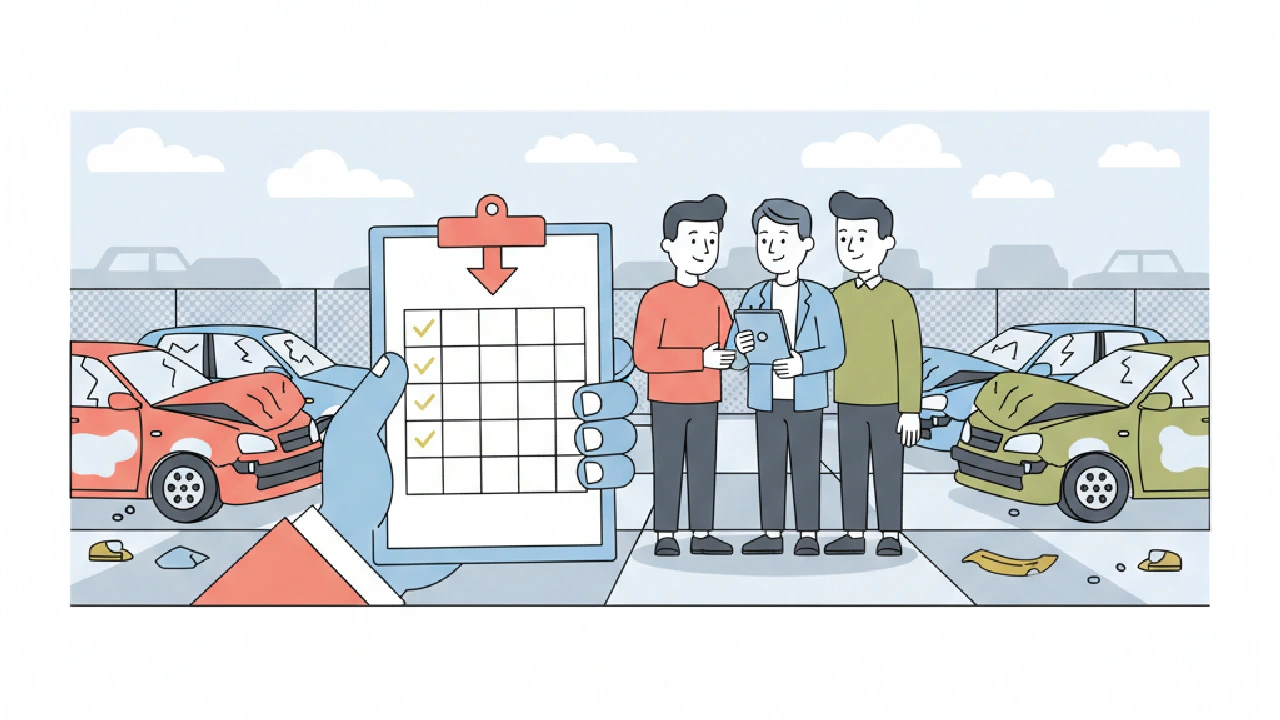
Salvage repair cost surprises kill margins fast. If you walk into auction day thinking the listed estimate is the bill, you will lose runs. The primary rule: expect disassembly to change the math. This post shows how to set a hard max bid, score title risk, build the right buffers, and spot repair types that blow spreads.
Core idea, plain
Budget from the worst reasonable outcome. Use the known surprise ranges and firm thresholds to decide if a lot is worth chasing. Don’t chase eyeballed spreads or assume photos tell the full story. Treat every photo-based estimate as a placeholder, not a plan. If you want a step-by-step checklist for pre-bid lot analysis, see How to Analyze a Salvage Auction Lot Like a Pro Before You Bid.
1) Max-bid math — work backward, hard stop
Do the math before you enter a lot number. Your formula needs four parts: expected resale value (ARV), buyer fees, repairs with surprise buffers, and transport/storage/title costs. Keep the math simple and conservative. For pre-bid repair math and example worksheets, see Salvage auction repair estimate: Pre-bid repair math.
Rules to bake into the formula:
- Use the 70% rule as your top-line: total investment should not exceed 70% of ARV.
- If repairs will be over 50% of a vehicle’s market value, drop the lot. For guidance on when to walk, review When to Walk Away Salvage Auction — Max Bid Math & Title Traps.
- Build a surprise buffer: final bills commonly land 20–73% above initial estimates.
How to apply that without a calculator full of guesses: set ARV, multiply by 0.70 to get your maximum total investment. Subtract buyer fees and transport. The remainder is your repair plus purchase cap. If the leftover means repairs will be above 50% of market value or require a structural/water buffer, walk. Use salvage car comps to set accurate ARV when you build your numbers.
Mini-case (use these supplied surprise ranges)
Don’t need a made-up ARV to learn. Work in relative terms. If your shop’s line estimate is E, plan that final repair cost may land between E × 1.2 and E × 1.73. Add known hidden-damage expectations: hidden damage typically adds between £800–£3,500 (US: $4,667 avg). Structural or water issues demand an extra 20–25% contingency. Flood or fire claims often blow estimates by 40–60%.
Use those multipliers to stress-test any purchase. If E × 1.73 plus £3,500 and a 25% structural buffer breaks the 70% cap, do not bid.
2) Title risk and repair-to-value — don’t gamble on paperwork
Titles are not just paperwork. Salvage and rebuilt rules vary. Title problems add days and costs. They also shrink buyer pools at resale, which kills ARV assumptions.
Checklist items I check before a bid:
- Title brand on the listing — salvage, flood, fire, theft recovery. Flood and fire line items are red flags because they routinely exceed estimates by 40–60%.
- State salvage rules where the car will be registered. Some states require inspections and fees that push costs up. Budget inspection/MOT prep at £400–£1,200 on top of repairs.
- VIN history flags. If the VIN is incomplete, expect delays and possible paperwork rejection.
If title risk turns ARV into a niche market (rebuilder-only buyers), your spread evaporates. Walk unless you have a plan to absorb slower resale or parts liquidation. AutoFlip Pro’s Risk Level Calculation uses sales history and title type to highlight high-risk lots (multiple prior "sold" entries, title brand flags, runs & drives) so you can spot paperwork and sales-history red flags before you bid and build the right paperwork buffer.
3) Hidden damage and where the real bills come from
Most auctions list photos and a handler estimate. Those photos miss assembly-level damage. That’s where the £800–£3,500 surprise lives. That’s also why many purchases exceed estimates by a wide margin.
Common high-cost surprises:
- Hidden structural damage. When the chassis or crumple zones are hit, repair bills spike. Structural fixes can run from £2,000–£5,000, and replacing crumple zones can exceed £8,000.
- Water ingress. If the floor pans, wiring harnesses, or modules soaked, add 20–25% to quoted costs at minimum.
- Electrical gremlins uncovered after disassembly. Photo-based estimates miss these. Labor multiplies the surprise because jobs that look like two hours become full-day rebuilds. Expect labor rates in the ranges provided and plan accordingly.
Bottom line: any lot with likely assembly-level damage needs a larger hard buffer. If that buffer kills your spread, don’t bid.
4) Fees, transport, storage — the invisible eroders
Fees matter. They are a predictable leak you must subtract before you decide your max bid.
Include these preset items in your math:
- Buyer’s premium and auction fees. Typical ranges are 5–10% on top of the hammer.
- Recovery and transport. Expect recovery agent fees around £100–£250 and storage fees in the range £15–£40 per day while you sort repairs.
- Other auction-side costs can push the net impact into £300–£2,000 extra on top of the winning bid.
Don’t assume you’ll haul the car same day. Storage adds up and eats the spread. Tally those costs in your max-bid formula before you click.
5) Sourcing parts, labor realities, and rebuild choices
Parts sourcing is where operators win or lose. OEM parts cost more. Salvage parts save money, but they take time and risk compatibility. The research context shows aftermarket vs. OEM gaps and typical door prices as examples of where you can save—but only if you have the supply chain.
Labor behaves like a wildcard. Shops quote hours. Disassembly reveals the true scope. Remember the rule: jobs that look like two hours often become a full day. Use the labor-rate ranges quoted when you negotiate with your shop. If you can’t secure labor at those rates reliably, your contingency must rise.
When to choose parts vs. replace vs. parting out:
- Choose OEM only when ARV supports it. Rebuilt-title buyers rarely pay OEM premiums.
- If hidden damage or structural work is likely, plan for the higher end of the repair ranges and prefer replacement over patching where safety items are involved.
- If the math shows repairs exceeding the 50% repair-to-value threshold, pivot to parts or straight resale for salvage units.
Where a salvage flip tool helps
Use a Max Bid Calculator that combines clean market value, title discounts, transport cost, auction fees, repair estimates, and a target profit margin to turn your rules into a hard max bid. That removes guesswork and shows when hidden-damage buffers or title discounts make a lot unaffordable. If you want to test the approach, analyze a lot free before you bid.
Key takeaways
- Build surprise buffers into every estimate: expect final bills 20–73% above the initial estimate and add the typical hidden-damage range (£800–£3,500 or US: $4,667 avg).
- Use the 70% total-investment cap and walk if repairs will be over 50% of market value.
- Flag flood/fire and structural items early — those are the damage types that most often blow the spread by 40–60% or require 20–25% structural buffers.
- Subtract buyer fees, recovery, and storage (these can add £300–£2,000) before you set your max bid.
- If disassembly math breaks your cap, do not chase a rebuild hoping to flip the work; pivot to parts or skip the lot.
FAQ
How much should I pad a shop estimate?
Use the supplied surprise multipliers. Assume final bills will be between 20% and 73% above the initial estimate. Add the typical hidden-damage band of £800–£3,500 (US: $4,667 avg). For structural or water damage, add another 20–25% contingency. For flood/fire, plan 40–60% overestimate risk.
When is a salvage car only good for parts?
If repairs push you past the repair-to-value threshold—repairs above 50% of market value—or if structural/flood/fire issues point to extended repair risk, move to parts. These damage types often make rebuilt resale too small a market to justify the work.
Do auction fees really change my max bid that much?
Yes. Buyer’s premiums, recovery, and storage can add up. Expect buyer fees of 5–10% and additional auction-side costs that can total £300–£2,000. Always subtract those before setting your bid cap.
How do I price in labor uncertainty?
Negotiate a shop rate you trust. Use the labor-rate ranges and the 20–73% final-bill multiplier to test worst-case scenarios. If your shop regularly sees two-hour jobs become full-day jobs, increase your contingency or don’t buy the lot.
What paperwork costs should I expect?
Budget inspection/MOT prep fees in the range £400–£1,200 on top of repair costs. Title work and state-specific inspections can add time and cost that reduce your ARV window. If you can’t absorb those fees, pass.
Short checklist to bring to auction day:
- ARV and 70% max total investment clearly written.
- Buyer fees, recovery, storage, and inspection fees subtracted first.
- Repair estimate E stress-tested to E × 1.2–1.73 plus hidden-damage band (£800–£3,500) and structural/water buffers where relevant.
- Title flags reviewed: flood, fire, structural — walk if more than one appears.
- Exit plan: rebuild, parts, or salvage sale decided before you bid.
Be disciplined. Auctions reward confident, unemotional math. Treat surprises as the rule, not the exception, and you’ll protect your spread.