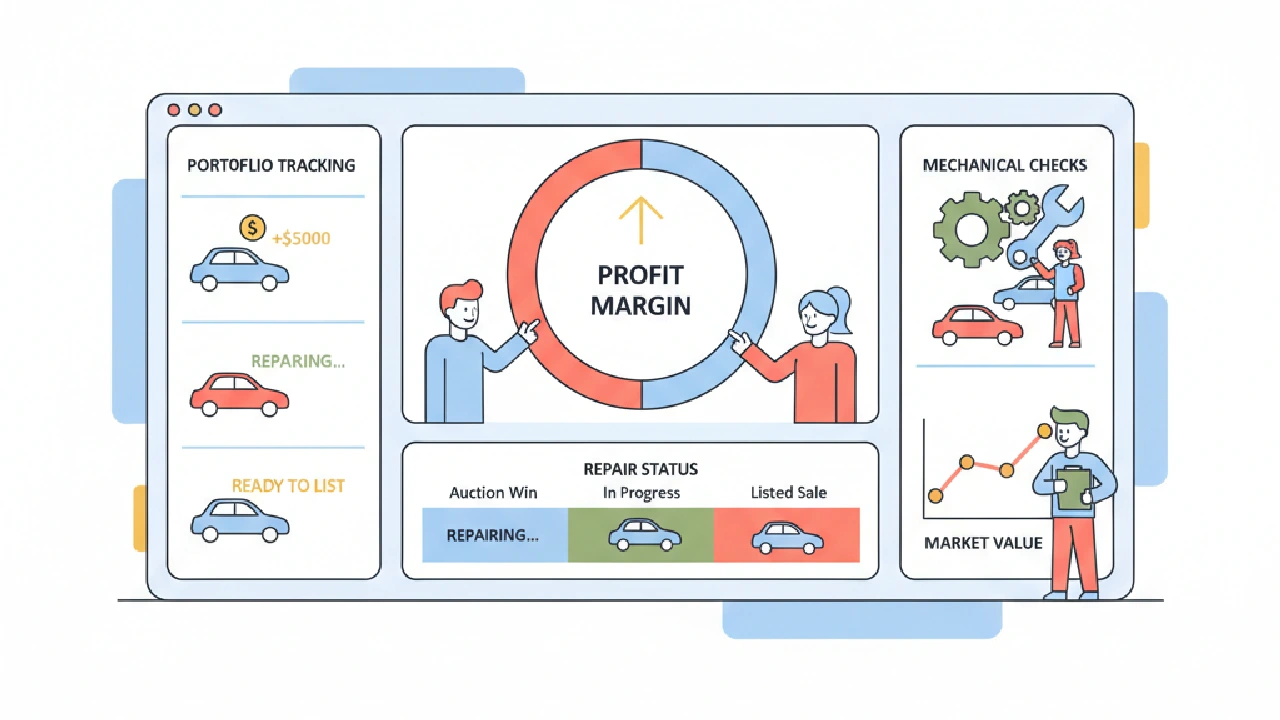
Running a profitable auto-flipping operation demands precision. It's not just about buying low and selling high; it's about rigorous tracking and tight management from the moment the gavel falls to the day the car leaves your lot. Every vehicle in your pipeline needs clear visibility, from acquisition costs to repair status and final sales figures. This isn't a hobby; it's a business, and managing your autoflip portfolio is key to scaling it.
The True Cost of Acquisition: Beyond the Bid
Your "win price" at Copart or IAAI is just the starting point. Too many flippers forget the immediate overhead that hits before the car even moves. Factor in buyer fees — these can add hundreds to your cost. Then there's the transport, whether you're hauling it yourself or paying a third party. Don't overlook storage fees if you can't pick it up immediately.
Here’s a quick example:
- Vehicle: 2015 Honda Civic (Run & Drive)
- Winning Bid: $3,500
- Buyer Fee (example): $350
- Gate/Loading Fee: $50
- Transport (50 miles): $150
- Total Acquisition Cost: $4,050
That $3,500 car just became a $4,050 investment before it ever saw a wrench. Tracking this initial outlay precisely is non-negotiable. It forms the bedrock of your profit calculation.
Title Traps and Turnaround Times
The title is often the biggest bottleneck. Different auction types and vehicle histories mean wildly different title processing times. A clean title from a dealer consignment might be ready in days. A salvage title requiring a rebuild inspection and new VIN plate can take weeks, sometimes months.
Understand the title status before you bid. If it's a "pending title," know that means delay. If it's a "junk" or "salvage" title, you need to know your state's inspection and branding requirements cold. Every day a car sits waiting for a title is a day it's not generating revenue. Your tracking system must flag title status and estimated completion dates. Unforeseen title delays can crush your carrying costs and tie up capital.
For instance, a low-cost vehicle might seem like a great deal, but if it has a severe title delay, your per-day carrying cost (insurance, opportunity cost of capital) quickly erodes any potential profit. Avoid speculative bids on vehicles with unclear title histories unless your margin is massive enough to absorb significant delays.
Repair Budgeting: Estimate vs. Reality
This is where most flippers bleed cash. “Minor damage” can hide structural issues. “Starts & Runs” can mean a dying transmission. Always budget for more than you expect. A good rule of thumb is to add 20-30% to your initial repair estimate for unexpected issues.
Detailed tracking of repair costs is critical. Break down expenses by parts and labor. Are you paying retail for parts? Are you getting good rates from your mechanic? If you do your own repairs, assign a realistic hourly rate to your time. Don&t just lump it all into one number. Understanding exactly what each repair costs helps you refine your bidding strategy for future similar vehicles.
Mini-case: You bought a truck for $6,000. Your initial estimate for a fender and headlight replacement was $1,200. After disassembly, you discover a bent core support and a damaged intercooler. Now you're looking at an additional $800 in parts and labor. Your tracking needs to reflect that shift immediately, showing your updated total investment.
Calculating Your True Spread and ARV
Your spread is your profit. It's not simply ARV (After Repair Value) minus your winning bid. It's ARV minus your total investment (acquisition + repairs + title fees + selling costs). Selling costs include listing fees, detailing, and potential buyer incentives. If you're selling retail, add advertising. If wholesale, factor in the hit for a quick sale.
To determine ARV, use a narrow comp radius. Look at vehicles of the same year, make, model, trim, and mileage sold within 100-200 miles, preferably within the last 30-60 days. Tools like KBB, NADA, or even advanced dealer auction reports can help. Be realistic. If your vehicle has a salvage title, it will always sell for less than a clean title equivalent, often 20-40% less depending on the state and vehicle type.
Your autoflip portfolio tracking should clearly display your projected ARV against your current total investment for each vehicle. This provides a real-time profitability snapshot. If the gap narrows too much, you need to make quick decisions — cut losses, adjust repairs, or pivot your sales strategy.
Listing and Sales Optimization
Once a vehicle is ready, it needs to move. Stale inventory is dead capital. Your tracking system should indicate how long each vehicle has been in inventory and whether it's actively listed. Use high-quality photos, detailed descriptions, and transparent disclosure of damage and title status.
Monitor your leads and adjust your price if necessary. Every week a car sits, its value depreciates, and your carrying costs accumulate. Be prepared to lower your price to move it. A smaller profit on a quick sale is often better than a larger potential profit on a car that sits for months.
Your portfolio view should show sales velocity. Which vehicles are selling fast? Which are lingering? This data informs future bidding. If you consistently struggle to sell a certain make or model in your market, adjust your strategy or avoid bidding on them altogether.
Streamlining Your Entire Flip Workflow with AutoFlip Pro
Managing multiple vehicles, tracking every expense, and staying on top of repair tasks and parts orders can quickly become overwhelming. This is where a dedicated platform designed for auto-flippers becomes invaluable. AutoFlip Pro offers an 8-stage flip pipeline within its Portfolio feature, allowing you to track each vehicle from "In Transport" to "Sold." You can manage repair tasks, link them to parts orders, and even monitor shipment tracking, ensuring you have complete visibility and control over your entire operation. Its Parts Inventory helps you manage reusable stock, and the Vendors List keeps all your supplier contacts organized. These integrated tools mean you're not juggling spreadsheets or losing track of critical details, ultimately leading to more profitable and efficient flips. To see how it can streamline your process, explore the platform and take control of your flips at autoflip.pro.
Key Takeaways
- Always calculate total acquisition cost, not just the bid price.
- Understand and account for title processing times and associated risks.
- Budget for repair overruns — add 20-30% to initial estimates.
- Determine true spread using ARV minus total investment, including all selling costs.
- Prioritize sales velocity to avoid capital stagnation and depreciation.
FAQ
What is ARV in the context of auto flipping?
ARV stands for After Repair Value. It's the estimated market value of a vehicle once all necessary repairs and reconditioning have been completed. This is the price you aim to sell it for.
How do I account for buyer fees in my autoflip portfolio tracking?
Buyer fees are part of your initial acquisition cost. They are added to your winning bid, along with transport, gate fees, and any other immediate charges, to give you the true upfront investment for the vehicle.
Why is title status so important to track?
Title status dictates when and how you can legally sell the vehicle. Delays in title processing, especially for salvage or rebuilt titles, can significantly prolong the time a vehicle is in your inventory, increasing carrying costs and delaying your return on investment.
Should I always try to get the highest possible price for a flipped car?
Not always. While maximizing profit is the goal, balancing that with sales velocity is crucial. A slightly lower price that leads to a quick sale often results in better overall profitability due to reduced carrying costs and faster capital turnover.
What tools can help me track my autoflip portfolio?
While specific autoflip inventory tools exist, general multi-asset tracking tools can be adapted. For example, industry sources suggest tools like Yorlio for multi-asset tracking with automatic price updates, PortfolioPilot for free net worth and investment tracking, Strum for tracking holdings and trades, and LiteFolio for manual record-keeping without brokerage connections. Some flippers use custom spreadsheets or basic inventory software.