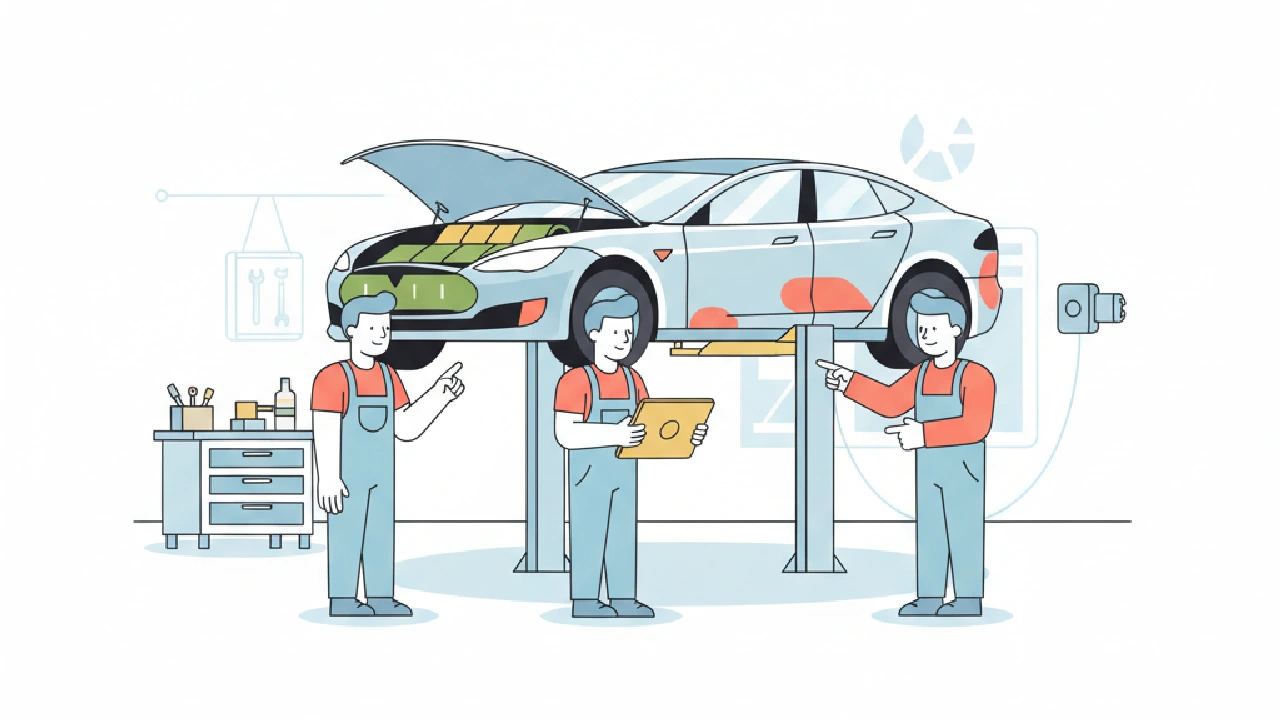
Short answer up front: can salvage tesla use supercharger? No — not immediately. Tesla flags vehicles with a salvage title and disables Supercharging on that VIN. Access can be restored, but only after a Tesla Service inspection that clears the high-voltage battery and DC fast-charging safety.
Core idea, plain
Buying a salvage Tesla can work if you understand the reactivation path. There are two separate risks to treat independently: title risk (the car carries a salvage/brand) and charging risk (Supercharger access is disabled until Tesla inspects and re-enables it). You can fix body, glass, lights, and interior without restoring Supercharging — but you can’t put the car back on the Supercharger network until Tesla signs off on the high-voltage system.
1) What Tesla actually does and why that matters at auction
Tesla’s internal systems block Supercharging for cars flagged as salvage. That’s an admin-level disable tied to the VIN. Tesla offers a path to re-enable Supercharging, but it’s conditional on a safety inspection at a Tesla Service Center that focuses on the high-voltage battery and DC fast-charging components.
Practical takeaway for auction day: assume no Supercharging until you have written confirmation from Tesla. Don’t rely on a forum anecdote or a successful Level 2 charge at home as proof that Supercharging will work. If the listing or title check shows a salvage brand, build the disabled Supercharging into your max-bid math; if you need step-by-step lot checks for Copart or IAAI listings, see analyze a Copart or IAAI lot before you bid.
2) The high-voltage inspection — what happens and the decision point
Here’s the workflow you’ll face after you win a salvage Tesla and bring it to Tesla Service:
- Tow the vehicle in — do not drive it if the battery looks compromised.
- Tesla performs a high-voltage safety inspection and a DC fast-charging inspection.
- If the inspection finds no battery damage, Tesla will reactivate Supercharging in their system.
- If Tesla finds battery damage, Supercharging stays disabled.
That inspection is the real gate. It’s not about bumper alignment or paint. It’s about the pack, modules, connectors, and wiring. If the HV pack was crushed, punctured, or waterlogged, Tesla will not re-enable Supercharging. If the damage is cosmetic or limited to non-HV components, you can usually get the network back.
3) Max-bid math and the spread — how to price in the reactivation path
Flip math still applies: you’re buying a car at auction to sell for more. With a salvage Tesla, add two specific contingencies to your baseline costs: inspection & reactivation uncertainty, and the risk of permanent Supercharging loss.
How to think about it in the lane:
- Base comps: look at comparable repaired Teslas that have clean titles and no Supercharger restriction. Those comps set your ARV (after-repair value) ceiling — and use salvage car comps to bid like a pro when assembling those comparables.
- Discount for salvage title: apply your usual salvage spread. If you can’t reliably price that spread from past deals, walk — be especially mindful of salvage title brands that kill your flip spread.
- Inspection uncertainty: add a contingency for the Tesla inspection outcome. If a salvage flag turns out to be battery-related, you may lose Supercharging permanently — price that into your bid as a downside scenario.
Don't gamble on the network. Bid assuming Supercharging is disabled; if it’s re-enabled, you get upside. That prevents bidding too high hoping Tesla will bless the car later. If you need help setting conservative auction limits, review how to set your Copart max bid without overpaying.
Mini-case: one small-number concrete example
Example decision you can run at the auction lane: if you want to confirm title before you bid, use an NMVTIS check from a provider. That verification can cost in the range of $20–$45. Paying that fee before you bid can reveal a salvage brand so you don’t overpay for a car that will be blocked from Supercharging without inspection.
Do the math on that fee versus the cost of a bad buy: a $20–$45 check is small compared with a car you’d struggle to resell because it can’t access the Supercharger network and buyers document that risk.
4) Repair sequencing and what to spend on first
Work in order: make the car safe first, then chase reactivation. That sequence keeps you from throwing good money at cosmetic work on a car that Tesla will keep off the network.
- Fix what makes the car legal and mobile — brakes, tires, lights, seatbelts, windshield.
- Repair suspension, body panels, and interior next if the HV system is intact.
- If you suspect battery or HV damage, stop and tow to Tesla for inspection before tearing into the interior or battery covers.
If Tesla finds battery damage during the inspection, Supercharging is off the table. Your goal when bidding is to avoid a deep battery failure case you can't economically repair. That means you must be willing to walk from cars with clear pack damage or heavy frame intrusion near the battery area.
5) Selling strategy and buyer disclosures
If you flip a salvaged Tesla, disclose the title brand and note Supercharger status. If Tesla has reactivated Supercharging, get that confirmation in writing from the Service Center and offer it as a selling point. If Tesla won’t re-enable it, price the car accordingly and expect a narrower buyer pool.
A few selling angles that still work even if Supercharging is disabled: buyers who only charge at home on Level 2, local buyers who don’t travel long distances, or customers who want a parts donor. Those buyers expect a lower price and quick transparency. For a deeper view on whether a salvage Tesla can make financial sense for you, see the real cost breakdown for buying a salvage Tesla.
Where a salvage flip tool helps
One small way to reduce the auction day risk: use a flip tool that flags VIN-level risk before you bid. AutoFlip Pro’s Risk Level Calculation combines sales history, title type, runs & drives and engine-start signals (and flags verified insurance sellers) so you can see high-risk lots before you wire money. That stops you from relying on anecdotes and forces the inspection risk into your bid math.
- Outcome: spot multiple prior "sold" entries or a salvage brand in sales history before you place a max bid.
- Try it: analyze a lot free before you bid.
Key takeaways
- Assume no Supercharging at purchase — Tesla disables it for salvage titles until they inspect the HV system.
- Use a title check before you bid; an NMVTIS provider check costs about $20–$45 and can save you a bad buy.
- Pay Tesla for the high-voltage inspection only when you’re ready; don’t pour money into non-HV repairs first.
- Bid as if Supercharging will remain disabled. Any reactivation is upside, not the plan.
FAQ
Can Tesla permanently refuse to re-enable Supercharging?
Yes. If Tesla’s inspection finds battery or HV-system damage, they will not re-enable Supercharging. That’s a hard safety decision and effectively permanent for that vehicle.
Do I have to tow the car to Tesla for inspection?
Yes — don’t drive a car if the pack looks compromised. The recommended path is to tow the vehicle to a Tesla Service Center for the required high-voltage and DC fast-charge inspection.
Can I use third-party fast chargers if Tesla won’t re-enable Supercharging?
Possibly. Some third-party DC fast chargers might work depending on the car and the port, but Tesla Superchargers are controlled by Tesla and the VIN flag is separate. Don’t assume other networks will be available; always test after repairs or consult the third-party network’s compatibility guidance.
Should I still buy salvage Teslas at auction if I need Supercharging for resale value?
Only if you can absorb the inspection uncertainty and price the risk. If your resale buyer pool demands Supercharging, walk unless you have a repeatable track record of reactivations or a low enough buy price to cover worst-case outcomes.
What’s the fastest way to confirm a car is flagged before I bid?
Run a title check before you bid — NMVTIS providers can reveal a salvage brand and cost about $20–$45. That’s cheap insurance against bidding on a car that will need a Tesla inspection to restore Supercharging.
Final note: treat Supercharging access as a binary risk line on auction day. You either budget for the inspection path and potential loss, or you step away. Don’t bet your max bid on a Service Center miracle.