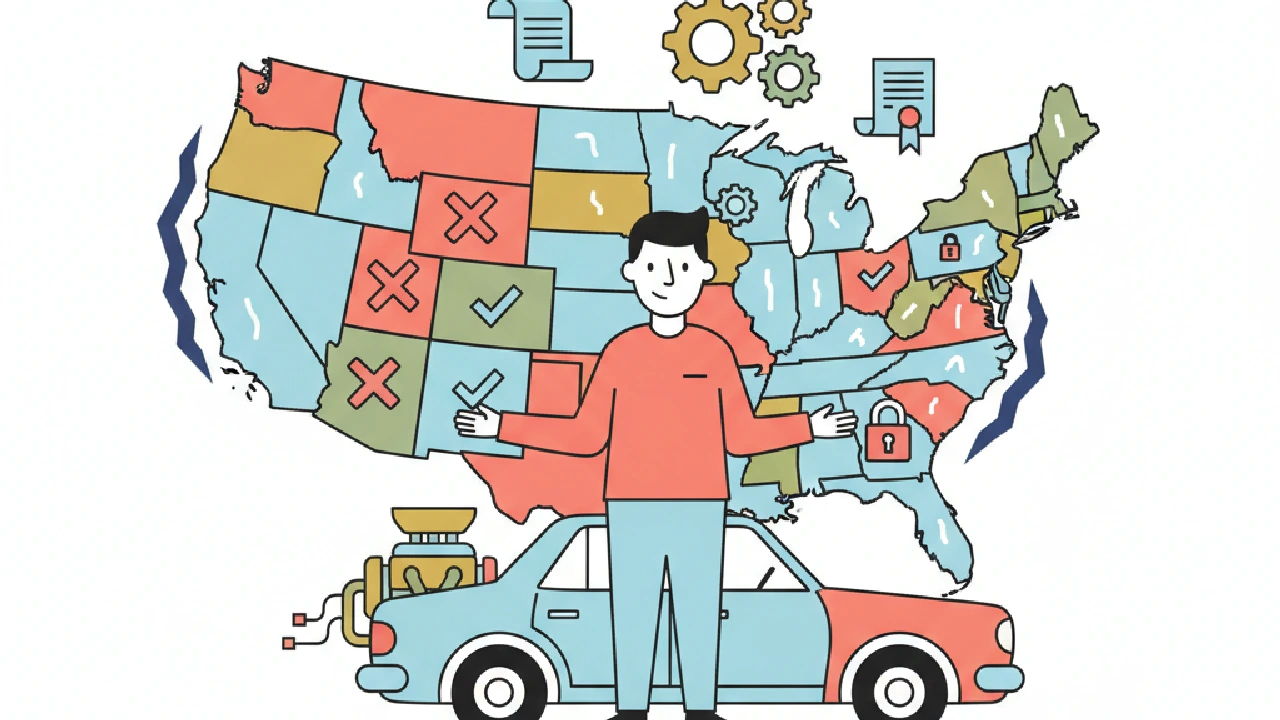
Short version up front: junk title registration is a hard block in many states. If a car has a junk/non-repairable/parts-only title it usually cannot be brought back to the road in the issuing state. What a salvage title means for registration. That changes your whole buy plan — don’t assume “I’ll rebuild and register” unless you’ve verified the state’s rules and NMVTIS history before you bid.
Core idea
Junk title registration is a legal roadblock, not a repair problem. A junk (non-repairable/parts-only/scrap) brand means the state that issued it will not issue a road title back to that vehicle. You can still make money on those cars, but your options are limited: parts, export, scrap, or selling for off-road use. Treat title brand risk like a deal-breaker when you do max-bid math (see why your max-bid spreadsheet fails).
1) Know which states block re-registration
Memorize the hard no’s. Some states explicitly disallow registering a junk-titled vehicle — period. From recent checks, California, Oregon, and Wisconsin are examples where a junk title prevents registration in that state. Vermont treats junk/non-repairable as a block unless the vehicle meets rebuilt title inspection process, and Mississippi won’t allow registration until a salvage vehicle is rebuilt and inspected. If the issuing state put the junk brand on the title, you can’t just fix the car and walk it onto the road there.
Why this matters at auction: you can win cheap, think you’ll rebuild, then find out the state will never issue a rebuilt title. That kills the ARV plan. Always check NMVTIS/title history and the issuing state’s DMV rules before your maximum bid.
2) What you can actually do with a junk-titled car
- Operate only on private property — legal, but limited market.
- Part it out — often the best immediate return, but labor and yard space matter.
- Export — possible in markets that don’t recognize the junk brand, but watch shipping, customs, and foreign rules.
- Sell to a scrap yard — fast and low margin, good if transport is expensive.
Don’t waste time listing a junk car for rebuilt registration in the issuing state. That’s a paperwork trap. If you think export or out-of-state rebuild is the plan, test it before bidding: call the receiving state or buyer and confirm they accept the brand or will title it.
3) Max-bid math with title blockers — a practical method
Keep your bid process short and repeatable. Use three clear lines: likely resale path, hard costs, and your required margin. If the title is junk, the resale path is not rebuilt retail (see how rebuilt vs salvage titles change resale). Run the parts/export/scrap scenario instead.
Steps:
- Identify the clear market: parts, export, or scrap. Don’t assume local retail.
- Estimate realistic gross from that path — use recent yard comps or buyer quotes, not imagined retail MSRP.
- Subtract buyer fees, auction fees, transport, and labor. If you don’t have exact figures, plug conservative estimates and walk the deal out until your net meets your minimum ROI.
Opinion: if you can’t prove a parts or export buyer at a price that covers fees and still gives you profit, walk. I see too many people “add 30% for repairs and hope” when the title itself kills the repair path.
4) Title traps and timeline risks
Title brands don’t always appear on the face of the title. NMVTIS and full history searches are non-negotiable. If a car shows clean on the auction sheet but NMVTIS has a junk/parts-only flag, most DMVs will refuse registration.
Watch the timeline language for insurers and DMVs. Some jurisdictions require insurers or owners to act within set windows after a loss. There are rules that say insurers must file or owners must apply for branded titles within a specific number of days. Those deadlines matter if you plan to recover paperwork or negotiate with an insurer. A missed window can lock a vehicle into a junk/non-repairable status.
Mini-case: How title brand killed an ARV plan
Scenario: You buy a late-model sedan at Copart. The auction sheet lists salvage, but NMVTIS shows a junk/parts-only brand from the issuing state. Your rebuild plan assumes you’ll register it in-state after repair. Before hitting bid, you phone the state DMV and confirm: junk titles can’t be registered in that state. That means your only realistic options are parts, export, or scrap.
Action taken: You call three local yards and an export buyer. The export buyer confirms they accept the brand but need clear photos and a bill of sale. The yards quote parts prices that, after labor and space, net far less than your target. You set your max bid to the export buyer’s offer minus auction fees and transport. If that net doesn’t meet your target margin, you skip the lot.
Timing note: if you were depending on the insurer or state to clear paperwork, be aware some jurisdictions require action within set calendar-day windows to change title status. For vehicles with insurer-held paperwork, those windows can determine whether you can recover a title cleanly.
5) Practical workflows to avoid getting stuck
- Pre-bid checklist: pre-bid checklist for salvage flips: NMVTIS history, issuing-state title rules, basic photos, and one confirmed buyer (parts yard or export).
- Call script: say you’re buying for parts/export, ask if they accept junk-brand paperwork, and get an approximate payment range.
- Transport plan: line up a tow or carrier quoted by mileage or job, and build that cost into your bid before you click.
- Paperwork guardrail: if title is missing and insurer holds it, don’t assume you can get it without a release — confirm the insurer’s process and timeframes.
Where a salvage flip tool helps
Use a tool that surfaces title-history red flags and adjusts deal math so you don’t accidentally bid on a junk-blocked lot. AutoFlip Pro’s Risk Level Calculation highlights sales-history and title-brand issues, and the Intelligent max bid calculator can fold title discounts and repair/transport costs into a single max-bid number — so you test parts/export/scrap exits before you click. If you want to try one free lot analysis, analyze a lot free before you bid.
Key takeaways
- Assume a junk title blocks registration in the issuing state unless you’ve verified otherwise.
- Use NMVTIS and the issuing state DMV rules before you bid — don’t rely on auction descriptions alone.
- Plan for parts/export/scrap, not rebuilt retail, when a title is junk or flagged in the history.
- Build buyer fees, transport, and a confirmed exit into your max bid. If you can’t, pass.
FAQ
Can a junk/non-repairable title ever be rebuilt and registered?
Answer: In general, no — a junk (non-repairable/parts-only) brand is meant to be permanent and block road registration in the issuing state. Some jurisdictions have a rebuilt or 'revived salvage' path for salvage brands, but junk/non-repairable is different and usually not eligible.
What if the auction lists the title as clean but NMVTIS shows junk?
Answer: Treat NMVTIS as the authority for title history. If NMVTIS contradicts the auction sheet, assume the DMV will rely on NMVTIS and refuse registration unless the title paperwork in-hand proves otherwise. Don’t bid without resolving that discrepancy first.
Are there states that allow rebuilt titles after junk branding?
Answer: Some states allow rebuilt titles for vehicles branded as salvage. But junk/non-repairable and parts-only brands are usually excluded from rebuilt programs. Always check the issuing state’s DMV policies on junk and salvage brands before assuming a rebuild route.
What’s the safest way to bid on a junk-branded car at auction?
Answer: Bid only if you have a concrete exit — a parts buyer, export buyer, or scrap yard with a firm or well-understood price. Include all fees and transport in your max bid. If you can’t lock an exit, don’t bid.
If I export a junk-titled car, will the buyer be able to register it where they are?
Answer: It depends on the destination country’s rules. Some foreign markets don’t recognize the junk brand and will accept the vehicle; others require clear title or impose import restrictions. Confirm with the buyer and factor shipping and customs rules into your net before you bid.
Actionable checklist
- Run NMVTIS/title history before you bid.
- Confirm the issuing state’s rules on junk/non-repairable branding.
- Line up a confirmed buyer (parts, export, or scrap) and a transport quote.
- Calculate max bid: buyer net minus buyer fees, auction fees, transport, and labor. If uncertain, pass.
- Document the decision in your buy log so you don’t chase a bad title twice.
Short, direct, and practical: treat junk title registration as a structural limit on a deal, not a repair line item. Get the history, confirm the exit, and only then press the bid button.