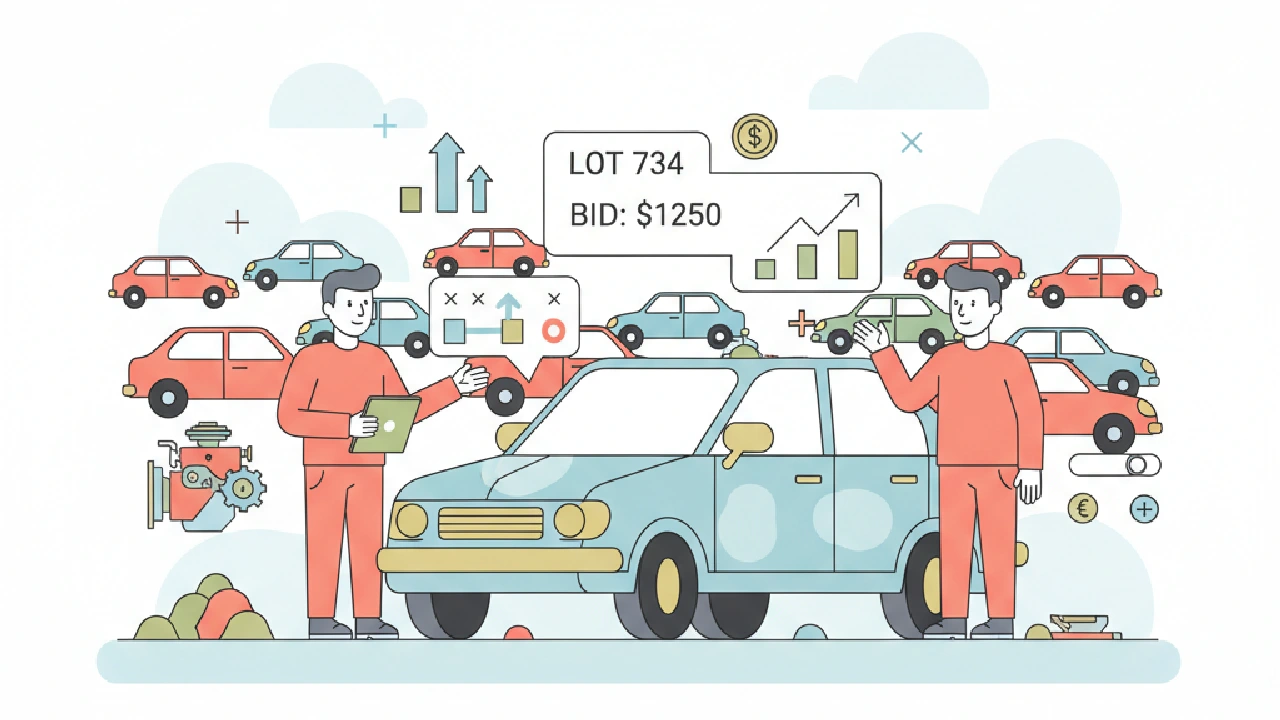
Profit in salvage auctions like Copart and IAAI isn't about luck; it's about rigorous math, precise risk assessment, and knowing your numbers cold. This isn't a game for the faint of heart or the poorly prepared. Every bid is a commitment, and every purchase is a potential goldmine or a money pit. Let's get into what matters for successful vehicle flippers.
The Core Idea: Profit from Damage, Not Dreams
The fundamental principle remains: buy low, sell high. But in the salvage world, "low" means accurately estimating hidden damage, and "high" means understanding your market's appetite for rebuilt titles or minor repairs. Your margin is built on the delta between your total acquisition cost plus repairs, and the market's Average Retail Value (ARV). Forget emotions; focus on the data.
Max Bid Math — Your Profit Firewall
Before you even think about hitting that bid button, your maximum bid must be locked down. This is your profit firewall, and it's non-negotiable. Here’s the breakdown:
ARV (Average Retail Value): Start here. For a clean title vehicle, what does it realistically sell for in your target market? This isn't NADA retail; it's what buyers actually pay. Check comparable sales within a 100-mile radius in the last 60 days.
Target Profit Margin: What's your minimum acceptable profit percentage? 20%, 30%, more? This is the cushion that makes the risk worthwhile. Don't compromise it.
Fixed Costs (Buyer Fees + Transport): These hit every time. Copart and IAAI fees vary by state and membership level but are always a factor. Transport from the yard to your shop adds up fast. Get quotes upfront. Example: A $5000 vehicle might have $600 in buyer fees and $250 in transport. That's $850 off the top.
Estimated Repair Costs: This is where the real skill comes in. You need to identify visible damage and anticipate hidden issues. A good flipper can eyeball a damaged quarter panel and know if it's a simple pull or a full section replacement. Factor in parts, paint, and labor. Always add a 15–20% buffer for surprises. A $3,000 visible damage estimate quickly becomes $3,600 with the buffer.
Title Branding Impact: Salvage or rebuilt titles always sell for less than clean titles. A common rule of thumb is a 20–40% reduction in ARV, depending on the severity of damage, vehicle age, and local regulations. A high-value vehicle might see less of a percentage drop, but the absolute dollar loss is still significant.
The Formula:
Max Bid = (Clean Market Value - Title Discount) - Repair Cost - Transport Cost - Auction Fees - Target Profit - Risk Adjustment - Additional Expenses. This translates to:
Max Bid = (ARV * (1 - Title Branding Discount Percentage)) - Target Profit (as a dollar amount) - Fixed Costs - Estimated Repair Costs
If your calculation gives you a max bid of $2,500 and the car is already at $2,600, you walk away. No emotion. No "just one more bid." The numbers don't lie.
Title Traps and Registration Hurdles
The title is the lifeline of your flip. Mess it up, and you own an expensive paperweight. Ignore title types at your peril.
Salvage vs. Junk vs. Flood: Understand the distinctions. A "Junk" title often means it can never be legally registered again. "Flood" titles carry massive stigma and higher hidden risk (electrical, mold). States have different thresholds and processes for converting salvage to rebuilt. Know your state's rules inside out. Some states are lenient, others are a nightmare.
Bill of Sale Only (No Title): This is usually a hard pass unless you're dismantling for parts. Getting a title from a Bill of Sale is a bureaucratic swamp you don't want to navigate for a flip.
Abandoned Titles: These can be cheap, but the time and effort to legally obtain a clear title often eat up any potential profit. Avoid unless you have a dedicated, experienced legal team handling the process.
Lien Holders: Always check for active liens. If a lienholder hasn't properly released their interest, you could inherit their debt or face serious delays in getting a clear title. Don't assume the auction house has cleared everything.
Repair Realities — The Hidden Profit Killer
Looks can be deceiving. What seems like minor cosmetic damage can hide a cracked subframe or a deployed airbag module that costs more than the car is worth.
Undercarriage Inspection: Always check the suspension, frame rails, and exhaust. A bent control arm is one thing; a tweaked frame is usually a deal-breaker. Look for fresh undercoating covering damage.
Electronics and Airbags: Modern cars are computers on wheels. Water damage or a deployed airbag often means replacing expensive modules, sensors, and wiring harnesses. Airbag modules can be thousands. Don't ignore dashboard warning lights in the listing photos.
Engine/Transmission Codes: If the listing shows check engine lights or transmission warnings, assume the worst. A quick scan might reveal minor issues, but a major powertrain problem will wipe out your margins entirely. A no-start condition means you can't fully assess the powertrain, making it a much higher risk.
Parts Availability and Cost: Don't assume you can get cheap parts. Rare models, new body styles, or foreign brands can have expensive, hard-to-find components. Factor in shipping times and costs if you're ordering from overseas.
Market Dynamics and Comparable Radius
Your ARV is only as good as your market analysis. Don't compare apples to oranges.
Local vs. National Market: Know your sales radius. Are you selling primarily to local cash buyers, or shipping nationwide? This affects your ARV and target buyer profile.
Clean Title Comparables: When assessing ARV, use clean title vehicles. Then apply your title branding discount. Don't compare a salvage title vehicle to another salvage title sale unless you know the specifics of its history and repair costs.
Seasonal Trends: Convertibles sell better in spring/summer, AWD SUVs in winter. Factor seasonality into your holding costs and projected sale time.
Comparable Radius: For most vehicles, stay within a 100-200 mile radius for comps. Wider than that, and transport costs start to skew prices. Always look at vehicles with similar mileage and trim levels.
Example Mini-Case:
- Vehicle: 2018 Toyota Camry SE (Clean title ARV: $16,000)
- Damage: Front-end collision (fender, bumper, headlight, radiator support, minor core support bend)
- Target Profit Margin: $2,000
- Buyer Fees: $650
- Transport: $200
- Estimated Repair Costs: $2,800 (parts & labor) + $500 (18% buffer) = $3,300
- Title Branding Discount: 30% for salvage title (0.30 * $16,000 = $4,800 reduction)
- Calculated Max Bid:
($16,000 * (1 - 0.30)) - $2,000 - $650 - $200 - $3,300
($16,000 * 0.70) - $2,000 - $650 - $200 - $3,300
$11,200 - $2,000 - $650 - $200 - $3,300 = $5,050
If the auction price creeps above $5,050, it's a bad deal. Stick to your numbers.
Where a Salvage Flipper's Tool Helps
Accurate market value and transport cost calculations are essential for setting your max bid. AutoFlip Pro provides tools like a free public lot analyzer, which can fetch vehicle data, calculate risk, and estimate max bids for Copart and IAAI lots. It also offers free calculators for fees, salvage value, shipping, and repair estimates.
You can analyze a Copart lot free before you bid to ensure your numbers are aligned with real market data and precise fee calculations.
Key Takeaways
- Always calculate your maximum bid with a rigid formula before auction day.
- Understand specific title branding rules for your state and avoid "Bill of Sale Only" listings.
- Thoroughly inspect for hidden damage, especially undercarriage, electronics, and airbags.
- Base your Average Retail Value (ARV) on local clean-title comparables, then apply your title discount.
- Factor in a buffer for unexpected repair costs.
FAQ
How much do buyer fees typically add to the vehicle cost?
Buyer fees vary significantly based on the auction platform (Copart, IAAI), your membership level, and the state where the auction takes place. Expect anywhere from 10% to 20% of the hammer price, or a flat fee plus a percentage, often several hundred dollars on a mid-range vehicle. Always check the fee schedule for each specific auction.
What's the biggest risk when buying a flood-damaged vehicle?
The biggest risk with flood-damaged vehicles is unpredictable and extensive electrical system failure, corrosion, and mold. These issues can be incredibly difficult, time-consuming, and expensive to diagnose and repair, often leading to recurring problems that make the vehicle unsellable or unprofitable. It's often best to avoid them for flipping unless you're specializing in parts recovery.
Should I buy a non-running vehicle?
Buying a non-running vehicle is a high-risk, high-reward proposition. Only consider it if you can accurately diagnose the issue (e.g., through detailed inspection notes or a trusted mechanic on-site) and confidently estimate the repair cost, including potential major component replacement like an engine or transmission. Without a clear diagnosis, it becomes extremely difficult to project profitability, making it a gamble rather than a calculated flip.