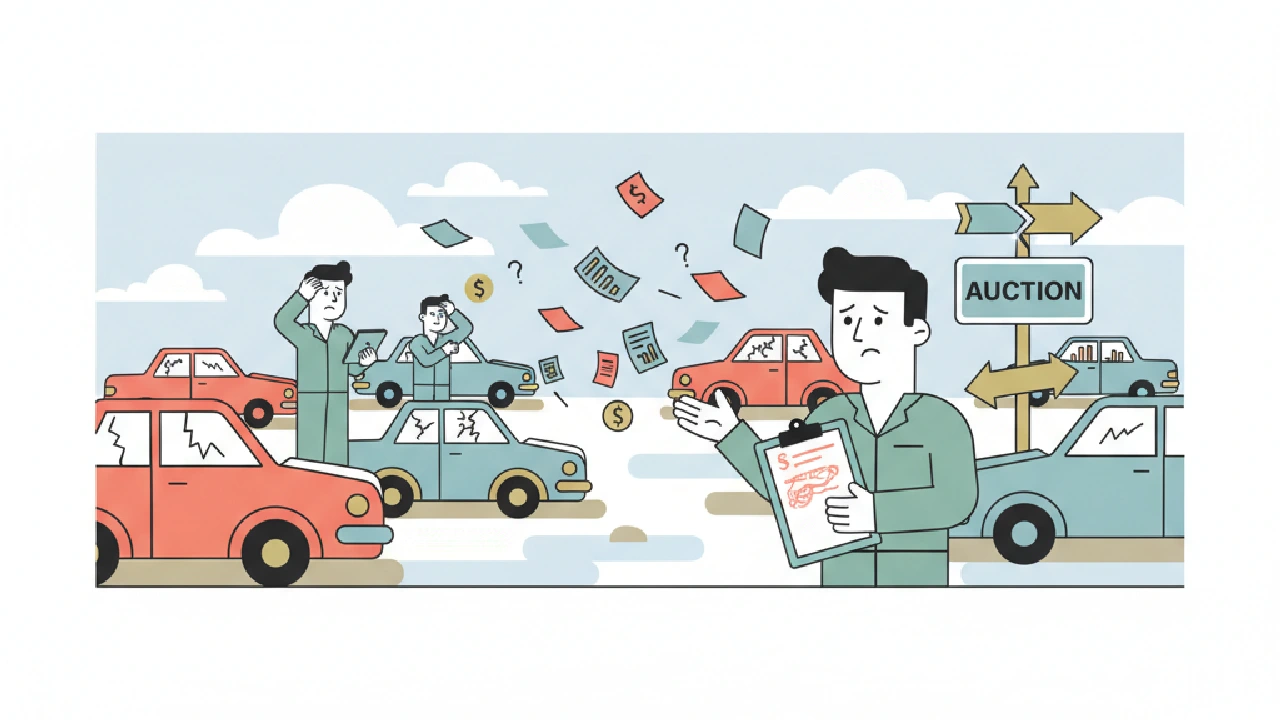
If your comps are scattered, wrong, or missing, you’ll lose money before you even win a car. Salvage comp research problems show up as bad bids, title traps, and repair surprises. I’ll lay out the core idea, the real ways comps fail, and exactly what to do at the auction desk.
Core idea — bad comps equal bad bids
Comps are your north star for ARV and spread. When comps are inconsistent or inaccurate you overpay, misjudge repairs, and run into title or regulatory surprises. Treat auction descriptions as starting points, not facts. Do the work that forces a predictable profit, not a prayer. Start by building reliable comps with Salvage Car Comps: Bid Like a Pro, Not a Rookie.
1) Data integrity: where most comps die
Problem: listings often have errors. Damage descriptions can be wrong. Categories get mixed. Mileage entries get transposed. Keys and service history are frequently misreported. I don’t trust an auction note until I verify it.
What that costs you:
- Time: wasted win-and-collect trips when keys or paperwork are missing.
- Money: you discover missing parts or drivetrain issues at collection.
- Market shock: a clean comp goes stale when the next comparable sells as "parts only."
What to do:
- How to Analyze a Salvage Auction Lot Like a Pro Before You Bid: Cross-check the lot against as many independent records as you can get before bidding.
- Use the listing as an input, not a decision. Physically verify keys, V5C, and obvious service history before final bids. See the First salvage flip checklist: 12 steps before you wire for what to confirm at collection.
- When a listing contradicts another source, downgrade that comp until you can confirm it.
2) Title risk and regulatory traps — read the rulebook
Title rules change value overnight. One useful, concrete rule from state regs: a vehicle is considered wrecked or salvaged when repair costs exceed 70 percent of its fair market value before the loss and when that pre-loss fair market value was $500 or more. That’s not trivia — it alters registration and resale options. For background on what a salvage title is and how it affects resale, see what a salvage title is.
How title risk costs you:
- If a car meets that threshold it may be barred from normal registration until rebuilt or inspected. That kills wholesale demand.
- Title status affects financing and dealer interest. Many buyers and lenders avoid salvage-titled vehicles.
What to do:
- Factor title triggers into your ARV and spread. If there’s a chance the car meets the salvage rule above, assume extra legal and reinspection steps.
- Ask for documentation showing pre-loss value or insurer decision when title status is ambiguous.
3) Hidden damage and repair estimation — plan for teardown surprises
The most common research mistake is underestimating hidden damage. Cosmetic damage and a bent panel hide structural, alignment, or electrical problems that only appear after strip-down. Repair estimates from photos or brief inspections are often optimistic.
How this costs you:
- Repair budgets blow out after teardown. That destroys spread.
- Rebuilds can be unsafe if the shop cuts corners to protect margin — and that creates liability and rework.
What to do:
- Build a teardown contingency into all repair estimates. If you can’t quantify it, use a fixed contingency line in your bid model.
- Prioritize comps that include documented teardown inspections or multiple private-shop notes. See salvage auction repair estimate: Pre-bid repair math for how to model teardown risk.
- Walk the yard if possible. Physical checks catch things photos miss.
4) Practical bid math that doesn’t make stuff up
Stop using wishful ARVs and made-up fee numbers. Use a clear max-bid formula and keep every input honest. The core formula is simple and repeatable:
Max bid = ARV − (Repair estimate + Buyer fees + Transport + Compliance/title cost + Desired profit)
Don’t eyeball any of those five line items. If you can’t get a reliable number for one of them, lower your ARV or walk.
How to get the inputs without guessing:
- ARV: pull recent, confirmed comps from the same radius and body style. Prefer finished, sold listings — not active ads. Consider using AutoFlip Pro’s market comparables analysis and Clean Market Value estimate to consolidate local sold comps and get a market-value confidence rating you can carry into your bid math. Set your zipcode in the settings so the comparables reflect your local market.
- Repair estimate: use a shop you trust. If you don’t have one, build a teardown contingency instead of a best-case estimate.
- Buyer fees and transport: list the actual lot fees and your usual transport quote. If you can’t confirm exact buyer fees, use the auction’s fee schedule as a floor.
- Compliance/title cost: include any inspections, registration holds, or part replacements needed to clear title rules.
- Desired profit: treat this as a negotiable floor. If the inputs leave you short, don’t bid. If you want to avoid common spreadsheet and bid errors, review Bad Max Bid Cost: The True Cost of Max Bid Math.
Note: I refuse to name dollar amounts here because auction fees and market values vary by market. Use your actual fee schedule. Build a spreadsheet and never skip the compliance/title line.
Mini-case: a title-rule example you must plan for
Use this concrete rule in every decision: if repair costs exceed 70 percent of the pre-loss fair market value and the pre-loss fair market value was $500 or more, the vehicle is considered salvage. That status changes who buys the car and what you must clear to register it. If a comp set doesn’t show how the pre-loss value was calculated, treat the comps as weak.
Why I like this mini-case: it’s a hard, documentable threshold you can apply to any candidate. If your repair estimate could push the car over that 70 percent line, price in the title consequences now — don’t fix it later when buyers vanish.
5) Comp radius, relevance, and freshness — sharpen your filters
Too many people grab comps from across the country and call them comparable. That’s lazy and costly. Filter by geography, trim level, drivetrain, and final sale status. A sold, local comp in the same trim is worth far more than a distant “as-is” ad.
How to set your filters:
- Comp radius: shrink until you have at least a few sold, local matches. If none exist, widen slowly and note adjustments.
- Trim and options: don't compare a base model to a loaded trim and pretend the numbers match.
- Sale status: prioritize completed sales and documented transactions over active listings.
How I spot bad comps fast
Short checklist I run before I bid on any lane:
- Do the comps show final sale prices? If not, downgrade them.
- Are the comps local and same-trim? If not, adjust ARV down.
- Does the lot note contradict another data source on keys, title, or damage? Assume the worst.
- Could the repair estimate make the car meet a salvage-title trigger? If yes, price that in.
Where a salvage flip tool helps
Use a tool that highlights title and sales-history red flags before you wire money. AutoFlip Pro’s Risk Level Calculation scores a lot using sales history, title type, runs/starts signals, and insurance-seller verification so you see high-risk lots at a glance instead of after collection. That makes the decision to walk or adjust a max bid factual, not emotional.
- Flags to watch: multiple prior "sold" entries, conflicting active/sold history, or a title type that changes resale options.
- Outcome: reduce surprise buys by pricing title and verification risk into your model, not after the hammer falls.
Analyze a Copart lot free before you bid
Key takeaways
- Treat auction listings as inputs, not facts — verify keys, title, and obvious documentation.
- Always include a teardown contingency in repair estimates to cover hidden damage.
- Apply title rules early: if repair costs could exceed 70 percent of pre-loss FMV and that FMV was $500 or more, treat the car as salvage for pricing and paperwork planning.
- Use a strict max-bid formula and don’t skip the compliance/title cost line.
FAQ
How do scattered comps actually make me lose money?
Scattered comps give you a false ARV. That pushes your max bid up. You win at the wrong price, then hit hidden repairs, title headaches, or low resale demand. The win becomes a loss.
Can I rely on auction damage descriptions?
No. Use them as a starting point. Cross-check against independent records and, when possible, do a physical check for keys, V5C, and obvious mechanical issues before you commit to a top bid.
What’s the single most important comp filter?
Sale status and geography. A sold, local comp in the same trim matters more than ten distant ads. If you don’t have local solds, be conservative and stretch your teardown contingency.
How should I handle a car that might meet the salvage-title threshold?
Assume the cost of inspections and the limited buyer pool. Price the vehicle as-if it’s salvage unless you have documentation proving otherwise. That prevents being stuck with an unruly title problem after you collect it.
What’s one habit that separates pro flippers from hobbyists?
They document every input. Comps, repair estimates, fee schedules, transport quotes, title notes — everything goes in a spreadsheet before a bid. No guesswork at the hammer.
Actionable checklist (for auction day):
- Print or open your ARV comps and highlight sold, local matches.
- Confirm keys and title status in the lot notes; downgrade comps that lack proof.
- Attach a teardown contingency to every repair estimate.
- Run the max-bid formula with your real buyer fees and transport quote; walk if the result is below your profit floor.
- If title rules could apply (see the 70 percent / $500 rule), price the car as salvage until proven otherwise.
Make comp work the hard way. It pays every time.