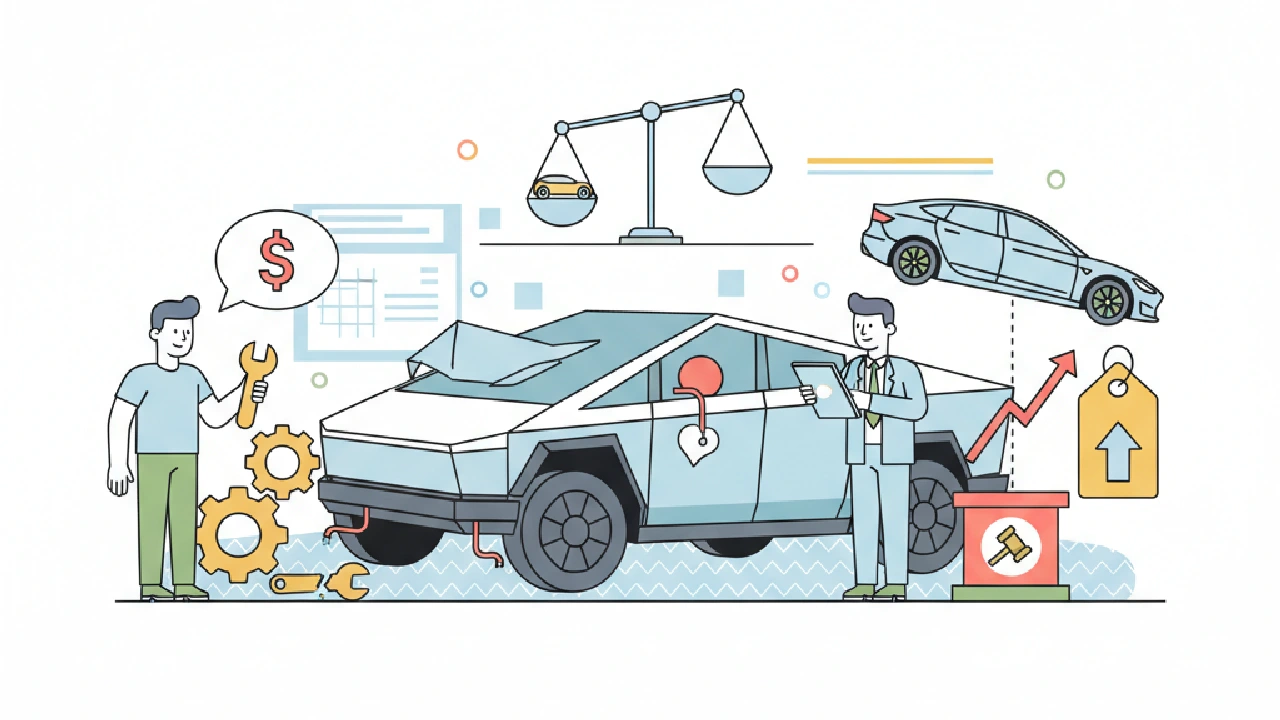
Short version: a totaled Tesla is a salvage gamble, not a quick flip. If the insurer calls it a total loss, you end up buying a salvage title and inheriting battery, frame, and software headaches. Before auction day, do the math, check title rules, and set a hard cap on your bid.
Core idea — one line to take into the yard
Your max bid = realistic ARV minus certified repairs, buyer fees, transport, and your target profit. Treat the battery and frame as the two biggest unknowns. If repair estimates creep toward the insurer's total-loss threshold (often 50% of market value in some states), re-run the math and walk if the spread evaporates.
1) Max-bid math you must memorize
Don't eyeball. Use a rigid formula and stick to it at the paddle. The formula is simple and usable without dollar numbers if you refuse to guess repairs on the spot.
Formula (work it on your phone before bidding):
- Max Bid = ARV - Repair Estimate - Auction Buyer Fees - Transport - Permits/Registration - Target Profit
How to use that formula in practice:
- ARV: find 3 clean comps in your resale radius. If comps are scarce, widen radius until you have usable sales. (See how to pull salvage car comps like a pro.)
- Repair Estimate: this must include structural checks and battery replacement or repair scenarios. If battery work is possible, include a battery-replacement scenario separately. For on-lot checks, consult what to check on a wrecked Tesla before you bid.
- Buyer Fees: factor the auction's fee structure. Put an upper-bound fee into the formula so surprise charges don't kill your margin. (See auction-day briefing for salvage title flipping for fee and auction considerations.)
- Transport & Title: get a local tow quote and add cost to your number. If you plan to do a dealer title transfer, factor any local registration taxes into the math.
- Target Profit: pick a firm minimum. If the final number is below that, don't bid. Simple.
If you prefer automating these steps, AutoFlip Pro can pull VIN or lot data, gather local comps, and run the Max Bid Calculator so you don't do the arithmetic under pressure.
Opinion: I see too many operators make emotional bids when a Tesla’s tech looks intact. Don’t. The Li-ion pack and unibody/frame alignment are the real risks, and they can blow a cheap-looking repair into a loss.
2) Title risk and salvage rules — know your state
Title rules matter more with Teslas than with old gas cars. A salvage title reduces buyer pool and resale value. In some states a vehicle is deemed a total loss when repair costs exceed 50% of market value. That 50% threshold will change how insurers price buybacks and how much you should be willing to chase at auction.
Practical checks before you bid:
- Confirm the title brand: salvage, rebuilt, or clean. Each has different buyer demand. (Review salvage title brands that kill your flip spread.)
- Ask if the car was a buyback or a straight salvage. Buybacks often carry better documentation; pure salvages can have murkier histories.
- Find out whether the auction is offering a salvage document or a rebuilt title path. That affects time-to-sale and rehab work needed to get a clearable title for resale.
Use a tool that flags sales-history and title red flags: AutoFlip Pro's Risk Level Calculation surfaces issues such as multiple "Sold" entries and title-brand penalties so you can triage lots before you spend hours on inspections.
Opinion: I won't touch a Tesla with ambiguous title paperwork. The ticket to legal resale and registration is paperwork as much as welding and battery work.
3) Hidden repair risks — battery, frame, and electronics
Tesla damage plays differently. Interiors and screens often survive. The underbody, battery, and structure hide catastrophic costs. Battery work is a different market — some rebuilds use donor packs or swapped packs, including high-capacity options in rare rebuild stories (for example, swapping a 100kWh pack in certain Model S rebuild projects). Those are feasible but complex and not cheap in time or risk.
Checklist for on-lot inspection:
- Look for evidence of frame or unibody repair: inconsistent panel gaps, aftermarket welding, or multiple repair stamps on the same seam.
- Ask for a battery health/readout if the auction or seller provides it. If unavailable, assume a worst-case battery scenario and price accordingly.
- Confirm airbags deployed? Airbag modules and sensors add cost and sometimes permanent ECU flags.
- Verify if proprietary parts were replaced with OEM or aftermarket. Tesla software can flag non-OEM parts and create headaches on later diagnostics or updates.
Also check charging compatibility and software flags (see whether salvage Teslas can use Superchargers), since software-locks or flagged parts can limit resale appeal.
Opinion: If the battery is suspect and there’s no clear donor path, walk. Or only buy at a price that assumes a full battery replacement scenario, not a patch job.
4) Resale strategy — comps, spread, and buyer pool
Resale value is the other half of the flip. A totaled Tesla with a rebuilt title sells to a smaller market: shops, private EV enthusiasts, and some dealers who specialize in rebuilt EVs. Your job is to estimate the spread — the difference between what a retail buyer will pay and what you pay at auction plus rebuild costs.
How to build comps and set your radius without pulling numbers speculatively:
- Comp radius: start local and expand until you have at least three clean sales of the same model/year. If you must go statewide or multi-state to find comps, plan for transport and listing logistics accordingly.
- Buyer pool: be honest about who will buy the car after you repair it. Private buyers pay more than used-car lots, but private sales take time and full disclosure on title and repairs will lower offers.
- Spread: treat the spread as the minimum cushion between your total-invested cost and the low-end retail you can actually get. If the spread is thin, don’t waste time.
Opinion: A tight spread is death in salvage flips. If you can’t secure a clear, recent comp inside your practical resale radius, don’t chase the lot.
Mini-case — rebuild decision using title threshold
This is a straight example using permitted facts rather than made-up dollar figures.
Situation: An insurer totaled a Tesla and offered a payout. In several states an insurer will declare a vehicle a total loss if repair costs exceed 50% of market value. That 50% rule flips the decision tree: if a repair estimate approaches that 50% threshold, the insurer may accelerate a total-loss designation rather than fund repairs. As a buyer at auction, you must assume the salvage title is in place and price around a rebuild that either fixes structural/frame issues or fully replaces the battery, if needed. Some rebuilders have chosen donor batteries for major pack work; a documented example in the field shows rebuilds that swapped larger-capacity packs in the past, which is technically possible but adds complexity and documentation requirements. Also note market timing: some new Model 3 Performance cars in certain reports were totaled within 45 days of purchase, showing how quickly losses can happen and how short the window can be for certain salvage flows.
Takeaway from the mini-case: use the 50% repair threshold as a trigger point in your max-bid math. If a conservative repair scenario reaches that threshold, pass.
If you want to tie the pieces together — automate comps, get a calculated max bid, and surface title or sales-history red flags while tracking active lots — use AutoFlip Pro's Analyze Vehicle, Max Bid Calculator, and Risk Level Calculation, and keep bids and saved analyses in the Auctions Watchlist; you can analyze a lot free before you bid.
Key takeaways
- Always run the max-bid formula and stick to the result — emotion kills margins.
- Assume battery and frame will be the largest unknowns; price them conservatively or don’t bid.
- Know your state’s title rules — the 50% total-loss trigger changes pricing and buyer demand.
- Build comps until you have reliable resale data inside your practical radius; if you can’t, widen your radius or walk.
FAQ
Can I flip a totaled Tesla quickly at auction?
Yes, but only if the math works and the repair scope is narrow. Quick flips happen when damage is cosmetic, the battery is healthy, and title paperwork is clean. If any of those are missing, expect a longer turnaround and more capital tied up.
How do I deal with battery uncertainty?
Price battery replacement into a worst-case scenario or demand a battery health report. If neither is available, reduce your max bid until the battery-replacement scenario produces acceptable profit.
Do rebuilt Teslas sell well?
They sell, but to a smaller, more specialized audience. Rebuilt title Teslas attract shops, EV hobbyists, and some buyers in markets where rebuilt titles are accepted. That narrows your buyer pool and usually compresses resale value compared with clean-title cars.
When should I walk away at auction?
Walk when the spread is gone or when repair estimates push the rebuild scenario past your target profit. Also walk on unclear title paperwork or missing repair history. There will be another lot tomorrow.
Any parting tips?
Bring the formula, a trustable tow estimate, and a written minimum profit. Don’t let an intact touchscreen or a glowing interior trick you into overpaying for hidden structural work.
That’s it. If you want, I can walk through a private lot with you and run the max-bid math on a live example — using real comps and repair quotes so we avoid guesswork.