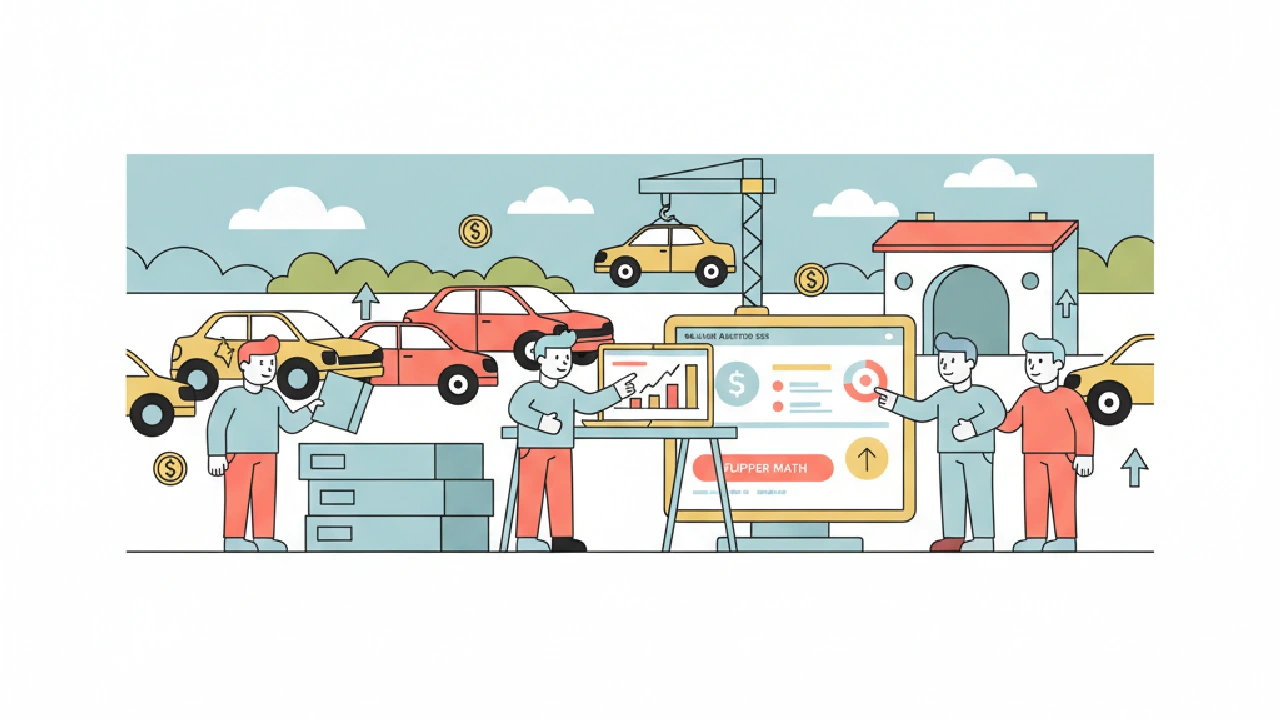
The salvage auction market 2026 shifted fast. If you're going to bid this year, you need a tighter max-bid process, clearer title checks, and a plan for narrower spreads. This is a straight, auction-day briefing — no fluff.
Core idea — one sentence
Higher online participation, more complex cars, and changing supply mean you must build max-bid math that protects margin, not ego.
1) Max-bid math: the only rule is protect the spread
How to set the bid before a sale: we set a hard max-bid before we click. No exceptions. The max-bid protects the spread between what we pay and what we expect to net after repairs, fees, transport, and resale.
Use this working formula every time (write your own numbers before you bid):
- Max bid = ARV − Expected repairs − Buyer fees − Transport & prep − Desired profit
Don't wing the parts or profit number. Decide your minimum net profit per car before the auction and stick to it. If you don't know local comp pricing for a trim, skip the lot. If you're unsure when to walk away because of title or math, review the checklist: how to know when to walk away because of max-bid math and title traps.
What to do at the lane:
- Set a comp radius (your market). I focus on the handful of zip codes where I actually sell parts or cars. Don’t widen comps just because the online market is national now.
- Fully allocate fees. Buyer fees and seller premiums vary by platform and lot type — add them into the formula before you bid.
- Use incremental bids to test interest. If you see fast jumps on a late-model SUV, back off — those usually push above repair economics quickly.
2) Title risk and hidden-damage traps — read the lot like a cop
Title issues are a bigger deal this cycle. Two quick facts from 2026 industry reporting that matter to flippers: the North America salvage auction market is projected to reach USD 750.4 billion in 2026, and the market shows continued digital-first participation and cross-country buyers. That scale and reach mean more distant buyers and more title complexity crowd the same lots. For deeper reading on how salvage title brands can kill your flip spread, see how salvage title brands kill your flip spread.
Red flags that make me walk away:
- Salvage descriptions that read like a transcript. If the lot notes are vague on flood history, assume worse.
- Multiple title brands or mixed-state titling. Clearing that can cost time and money — often more than advertised.
- Non-running cars with signs of long-term neglect (mold, heavy corrosion, electrical rodent damage). Those tend to explode on the repair side.
Flood-damaged vehicles remain difficult to price accurately because damage often hides until you start disassembly. Treat flood lots as special cases: either price them with a big buffer or avoid them entirely.
3) Repairs and spread — stop guessing, start vetting
Repair estimates are the biggest kill of flipper math. You must be specific and conservative. I build three buckets:
- Mechanical core (engine, transmission, suspension)
- Collision/structural (frame issues, major body panels, airbag work)
- Electrical/diagnostics (sensors, ADAS, battery systems on hybrids/EVs)
Opinion: ADAS and battery work are the new margin killers. If the car needs sensor replacement or battery rehab, reduce your bid or skip it. Don't assume a parts pull will fix complicated sensor calibration or battery module issues without shop quotes.
How I validate repairs pre-bid when I can't see the car in person:
- Study detailed photos and VIN notes. Look specifically for dents, bent suspension, missing wheels, and fluid stains.
- Call a shop for a quick scope quote on the VIN. Pay for that call if it saves you a bad buy.
- Plan your teardown order — start with the low-hanging cost items so you can re-evaluate quickly after pickup.
For a practical step-by-step salvage flip process that covers teardown priorities and shop engagement, see the guide: step-by-step salvage flip process.
4) Auction dynamics & fees — digital-first changes bidding behavior
Online, you face outside bidders who never pay your local transport. That pushes prices on repairable trucks and SUVs. In practice, that means two things for flippers:
- Set strict geography on comps. If you resell locally, national finishing prices don't help you.
- Expect faster late-session volatility. Online snipers and remote dealers will bid aggressively in the last minutes.
Watch the fee schedules. Some platforms reduced up-front registration friction but added higher buyer premiums. That changes your break-even. Confirm buyer fees, title fees, and per-lot admin charges before you bid. Never rely on the posted hammer price only. Also avoid common platform errors that push you past your max by reviewing common Copart bidding mistakes to avoid: common Copart bidding mistakes.
5) Mini-case: what the 2026 scale means for your plan
Use the market detail you can trust as context. The North America salvage auction market is projected to reach USD 750.4 billion in 2026 and was reported to be growing at a CAGR of 6.8% through 2033. What does that tell a flipper?
- Supply scale is larger — more cars, more niches, more specialized title oddities land in auctions.
- Digital-first bidding means distant buyers will keep competing on vehicles that used to be local plays.
- Higher inventory can depress prices, but only if local demand for finished cars or parts is weak. Know your market.
That’s the mini-case: use the market size to justify process changes, not to justify looser bids. Bigger market = more opportunity, but also more competition and more ways to be trapped on title and repairs. If you need a short briefing on whether flipping remains profitable this year, see the assessment: Is flipping cars profitable in 2026?
How I run an auction day (operational checklist)
Before the sale:
- Run VINs through title checkers and note any branding anomalies. For tips on lot checks and VIN review, see how to analyze a salvage auction lot before you bid.
- Pull comps inside your defined radius only.
- Set hard max bid with your partner and document it.
At the sale:
- Stick to the max. If the lot goes above it, move on.
- Watch platform timers — late pushes are where you get phone-call pressure to chase.
- If you win, schedule pickup and a teardown slot within 48–72 hours. The faster you see the damage, the faster you adjust your plan.
Where a salvage flip tool helps
AutoFlip Pro's Risk Level Calculation flags title and sales-history red flags before you wire money, which directly cuts the chance of buying a high‑risk lot unseen. It scores sales history, title type, runs & drives, and engine-start signals so you can fold that risk into your max‑bid math and decide whether a lot is worth the fight.
Analyze a Copart lot free before you bid.
Key takeaways
- Set and stick to a hard max bid. Your spreadsheet is the auction-day altar.
- Title complexity and hidden flood damage are the top 2026 risks — avoid or price them wide.
- Account for platform buyer fees and transport before you bid; hammer price is meaningless alone.
- Use the 2026 market scale (USD 750.4 billion; CAGR 6.8%) as reason to tighten process, not loosen bids.
FAQ
How should I pick my comp radius in 2026?
Pick the area where you actually sell cars or parts. National comps look nice online but don’t translate to local demand. Keep the radius tight and use realistic finished-price comps.
Are flood cars worth the risk now?
Not unless you have a reliable teardown partner and a strict buffer. Flood-damaged vehicles remain difficult to price accurately; treat them as special cases or avoid them.
How do I handle ADAS or hybrid battery uncertainty?
Get a shop quote before you bid if possible. If you can’t, reduce your bid or skip the lot. ADAS calibration and battery work can wipe out your margins fast.
Should I change my desired profit per car because of market growth?
No. Use market growth to refine sourcing and process, not to lower buy standards. Keep your target profit and only adjust by verified data from your own comps and shops.
What's the single biggest mistake I see at auctions now?
Chasing shiny late-model lots without checking title, fees, and realistic repair cost. The hammer price looks good until you add buyer fees, transport, and a surprise sensor or flood teardown.
Actionable checklist (print and tape to the laptop)
- Pre-sale: VIN title check, local comps only, shop scope for VINs with ADAS/battery risk.
- Set: Hard max bid and minimum net profit.
- On-lane: Track buyer fees and note transport ETA before bidding.
- Post-win: Schedule teardown within 72 hours and update ROI sheet.
Bring discipline to the lane. In 2026 the market is bigger and more digital. That’s good if you have process. It’s expensive if you don't.