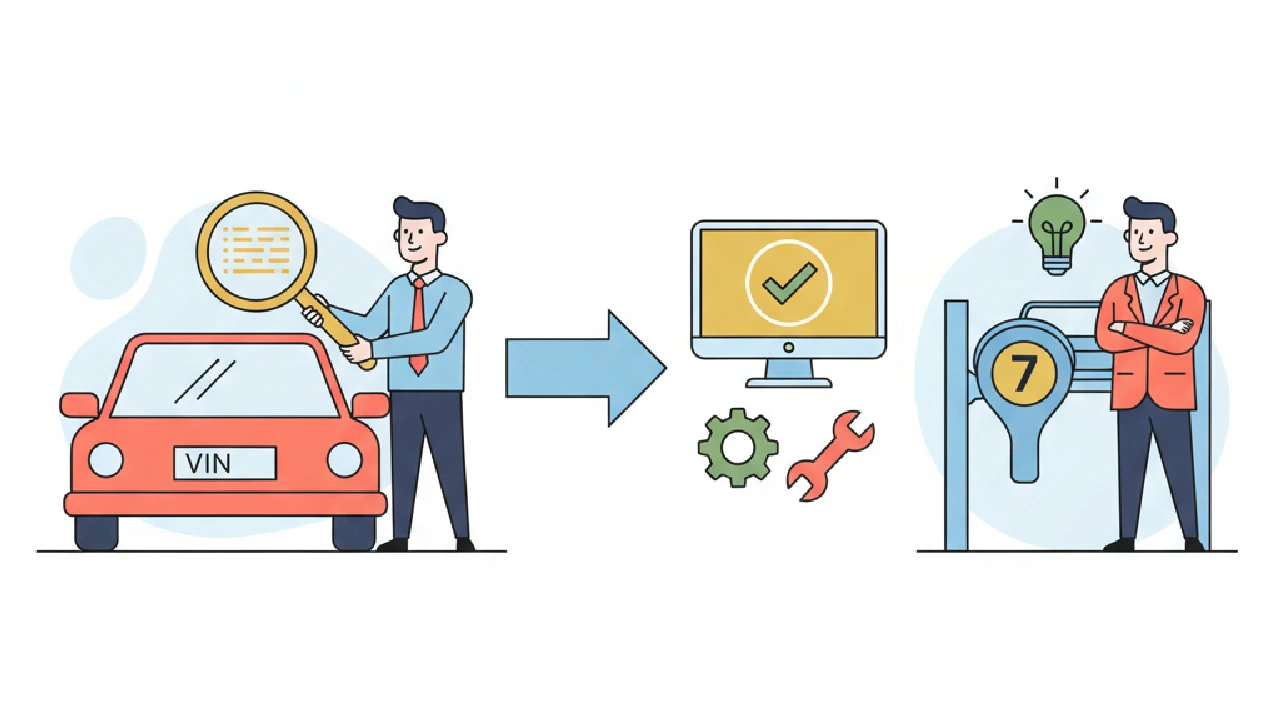
Copart says in its own member terms that no effort has been made to list open recalls on the cars it sells. IAA says the same thing in plainer words: the buyer assumes full responsibility to identify recalls. So a VIN recall check is a job you do yourself, and the best time to do it is before you bid, not after the car is in your driveway.
The check is free and takes about a minute per car. Below is how to run it on NHTSA, what the result does and does not prove, and what an open recall should change in your max bid at an auto auction.
Why Copart and IAAI Leave the VIN Recall Check to You
Copart's member terms and conditions put it in one line: "No effort has been made to list open recalls applicable to any vehicles." The next sentence says recalls are "the sole responsibility of the purchaser" and points buyers to nhtsa.gov.
IAA's Auction Rules carry a numbered Safety Recall Warning. It says cars "may be or may have been subject to one or more manufacturers recall for safety related items" and that "certain parts subject to those recalls may still be present." The buyer "assumes full responsibility to identify such recalls."
Neither auction is hiding anything here. They simply do not check, and both terms tell you not to rely on their listing data when you decide what to bid. Treat the recall line as missing from every listing and fill it in yourself.
How to Run a VIN Recall Check on an Auction Car in 4 Steps
You need the 17 character VIN and nothing else. Here is the order we use on every lot that makes our watch list.
Copy the full VIN from the lot page. If the listing hides part of it, sign in or read it off a photo of the dash plate or door sticker. Check it against a photo of the dash plate or door sticker if one is posted, since Copart's terms say it does not guarantee the VIN or that VIN plates are present.
Run it on NHTSA. Paste it into the search on NHTSA's recall lookup. A VIN search tells you whether that specific car still needs a recall repair. A clean result reads "0 unrepaired recalls associated with this VIN."
Scan the model's campaign list. Our free VIN recall check decodes the VIN and lists the NHTSA recall campaigns issued for that year, make and model. It does not tell you whether this car's repair is still open, so the NHTSA VIN search in step 2 is the one that answers that.
Write the result into your lot notes. Note the recall, the part involved and whether NHTSA shows it as unrepaired. Then go back to the photos and look at that part.
If you are checking a whole sale list, NHTSA says you can search up to 100 VINs at once. Run the batch the night before the sale and only dig into the cars that come back with an open recall.
What a Clean NHTSA Result Does and Does Not Tell You
A zero on NHTSA is good news, but it is not a clean bill of health. NHTSA lists what its VIN search will not show on the same recalls page.
| NHTSA VIN search | What it means for your bid |
|---|---|
| Shows an unrepaired recall for the VIN | The fix has not been recorded as done. Plan for the dealer visit and check the part in the photos. |
| Shows 0 unrepaired recalls | No open safety recall from manufacturers NHTSA covers. Still read the limits below. |
| Some recently announced recalls | NHTSA says not all VINs are identified yet and VINs are added continuously. Check again before resale. |
| Recalls more than 15 years old | Not shown unless the maker offers more coverage. Older auction cars need a check with a dealer of that brand. |
| Small manufacturers and some ultra-luxury or specialty brands | Not shown. Ask a franchise dealer or the maker directly. |
| Non-safety or customer service campaigns | Not shown. These are not safety recalls, so they rarely change a bid. |
| International vehicles | Not shown. Export market or imported cars need the maker's own lookup. |
NHTSA also says its VIN tool can show recall information from the manufacturer that may not be posted on NHTSA's site yet. So the VIN search is the better check than a year, make and model search, which only returns general results for the model. Use the model list to know what to look for and the VIN search to know what is still open.
Found an Open Recall? What to Do Before You Bid and After You Win
An open recall is not a reason to skip a car by itself. It is a repair you have not priced yet, plus a trip to a dealer, plus something your retail buyer will look up. Here is how we handle it on a real flip, step by step.
Before you bid
Find the recalled part in the photos. Some recalls involve parts a crash can also damage, such as air bags. If the damage sits right on the recalled part, you are pricing a crash repair, and the recall fix comes after.
Read the recall's advisory and remedy lines. The maker's recall report filed with NHTSA has a Consumer Advisories section with Do Not Drive and Park Outside options, as you can see on this Hyundai recall report. If the notice for your VIN tells owners not to drive or to park outside, plan a truck out of the yard and outdoor storage until it is fixed.
Check whether a fix exists yet. Some recalls are announced before the repair is ready. In that same Hyundai report, the maker says it is "currently developing a remedy." Until a fix ships, the recall stays open on your car and on your buyer's VIN search.
Call a franchise dealer service desk with the VIN. NHTSA tells owners to contact a local dealership to fix the recalled part for free. Ask whether they will do the recall on this car as it sits and whether parts are on hand.
Price your plan B. If parts are back ordered or the dealer wants the car repaired before they touch it, you are holding the car longer. Holding time costs you storage, insurance and your money sitting still, so put a number on it before you bid.
Keep it out of your resale price until it is fixed. A retail buyer can run the same free VIN search, so price the car as recall open until the dealer closes it. Our guide on how to analyze a Copart or IAAI lot before you bid shows where this fits in the full lot check.
After you win
Book the dealer as soon as you have the car. NHTSA says manufacturers are required to fix the problem by repairing it, replacing it, offering a refund or, in rare cases, buying the vehicle back. NHTSA says makers mail recall notices to registered owners, and you may not be the registered owner yet, so don't wait for a letter.
Follow interim safety guidance. NHTSA tells owners to follow any interim safety guidance the manufacturer gives. Read the recall notice for your VIN before you drive the car anywhere.
Do not resell recalled parts. IAA's rules say the buyer "will refrain from re-using or selling any part subject to such safety recalls." If you part out a car, pull recalled parts off your for sale list.
Run the VIN again before you list it. New VINs get added to recalls over time, and NHTSA suggests checking recalls twice a year. A fresh check takes a minute and saves an awkward call from a buyer.
Our post on what happens after you win at Copart or IAAI covers the title and pickup steps around that dealer visit. Get the dealer's answer before the sale and the recall stops being a surprise. It becomes one more line in your max bid.
Mini Case: How an Open Recall Changes a Max Bid
This is a hypothetical with round numbers, not a real lot. Say a front hit sedan has a planned max bid of $4,000 after fees, repairs and your margin. The NHTSA VIN search shows an unrepaired air bag recall.
Dealer says yes, free, parts on hand: the max bid stays at $4,000. You add a dealer visit to the schedule.
Dealer says yes, but parts are back ordered: you expect to hold the car longer. If you budget an extra $200 for storage and insurance while you wait, the max bid drops to $3,800.
Dealer will not take it until the crash damage is fixed: the recall waits until the end of the repair. Keep the $200 holding allowance and make sure your repair estimate covers the air bag area.
The numbers here are placeholders, and our max bid formula shows how the rest of that $4,000 is built. Use your own holding cost per week and the dealer's real answer, and the change in max bid will be specific to your car.
Where the Recall Check Fits in Your Pre-Bid Routine
A recall check is one item on the list, not the whole list. It says nothing about title brands, flood history, frame damage or whether the car runs.
Read the title type first, using our guide to salvage title types.
Check the run signals, using our post on what Run and Drive means at Copart, and don't read anything into labels like Copart Enhanced Vehicles.
Run the VIN on NHTSA for open recalls.
Price repairs, fees and transport, then set your max bid before the sale starts.
If you want the rest of that list done for you, AutoFlip's free lot analysis reads a Copart or IAAI lot and returns a market price and a max bid. Run the recall check alongside it, since the NHTSA VIN search is still the one that shows open repairs.
Key takeaways
Assume every Copart and IAAI listing has no recall information, because both auctions say they do not check.
Run the VIN on NHTSA before you bid, and treat "0 unrepaired recalls" as one check, not a clean bill of health.
Call a franchise dealer with the VIN before the sale to learn whether they will do the free recall repair and when.
Lower your max bid only by what the recall really costs you in holding time or repair order, never by a guess.
Run the VIN again before you list the car for resale.
FAQ
Is a VIN recall check free?
Yes. NHTSA's recall lookup is free, and our VIN recall check tool is free with no account needed.
Does Copart or IAAI tell you about open recalls?
No. Copart's terms say no effort has been made to list open recalls, and IAA's rules say the buyer assumes full responsibility to identify them.
Will a dealer fix a recall on a salvage title car?
NHTSA tells owners to contact a local dealership to fix the recalled part for free, but it does not address salvage titles. Call a dealer for that brand with the VIN before you bid and ask.
Why does NHTSA show no recalls on an older car?
NHTSA's VIN search does not show safety recalls more than 15 years old unless the maker offers more coverage. Ask a dealer for that brand to check the VIN.
How often should I check recalls on a car I own?
NHTSA suggests checking recalls twice a year. For a flip, check before you bid, after you win and again right before you list it.