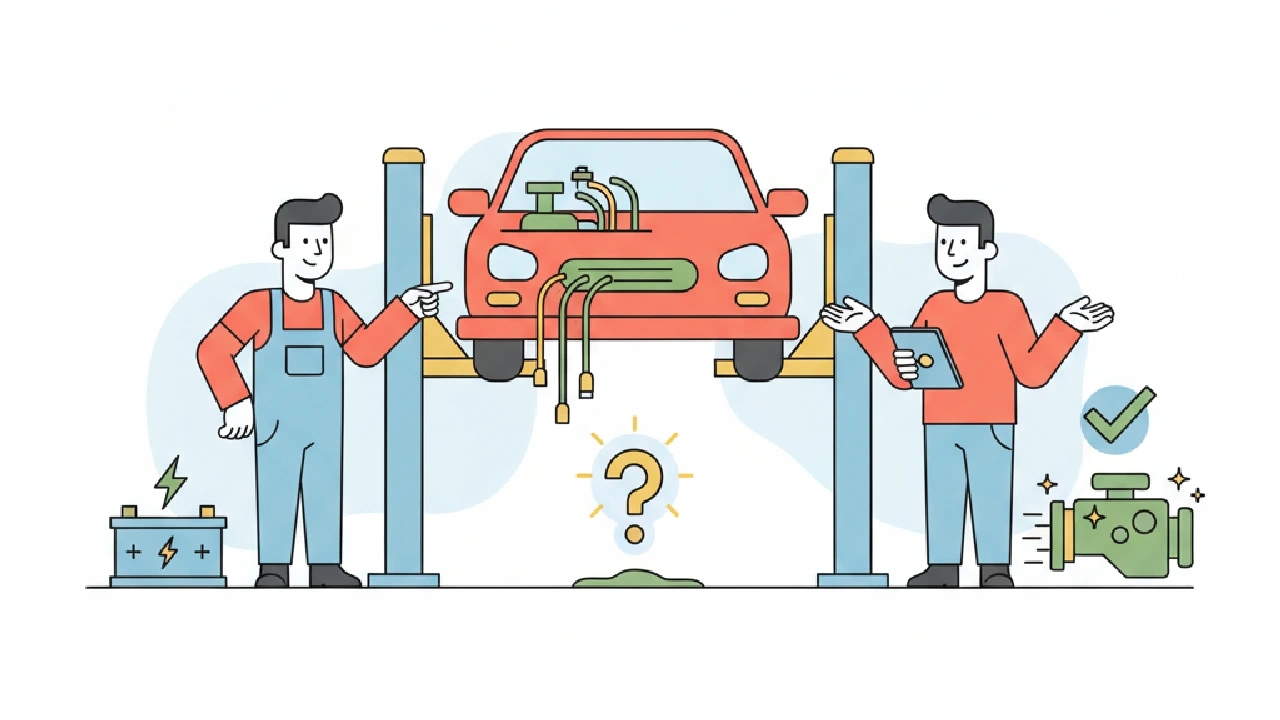
The Copart Enhanced Vehicles label is about a wash, a vacuum or a protective covering, not the engine. Copart's own definition never mentions starting, running or driving, and it says the label does not even guarantee the service was done. Bid an Enhanced lot like it runs and you may be paying runner money for a car wash that never happened.
Below is what Copart Enhanced Vehicles means in Copart's own words, how to tell whether an Enhanced car actually runs, and how to keep the label out of your max bid. Every rule cited here links to Copart's or NHTSA's own page, read on November 11, 2026, so you can check it before your next auto auction.
What Copart Enhanced Vehicles Means in Copart's Words
Copart defines the label on its Vehicle Icons help page. Here is the current wording in full:
"Vehicles listed as “Enhanced Vehicles” are those where (i) the Seller has authorized Copart to perform an enhancement service, such as a wash, vacuum, or protective covering, or (ii) the vehicle is under a program that gives Copart discretion to utilize enhancement services to increase the vehicle’s value. This designation does not guarantee that any enhancement service was completed but indicates that qualifying vehicles may be enhanced. It is the Member’s responsibility to inspect and verify the utilization of enhancement services, if any."
Strip out the legal phrasing and four points are left. Each one tells you how little the label should be worth in your numbers.
Only three services are named: a wash, a vacuum or a protective covering. Copart does not list repairs, detailing, key work or a run check.
Two ways onto the list: the seller authorized a service, or the car sits in a program that lets Copart decide to use enhancement services to raise its value.
No promise anything happened: Copart says the label "does not guarantee that any enhancement service was completed."
Checking is your job: Copart puts it on the member "to inspect and verify" whether any service was used.
You will see the label in two places. The Copart search page lists Enhanced Vehicles under Featured items in the left panel, and matching rows carry an Enhanced Vehicles icon. Copart's help also says its icons appear "in both search results and lot details pages."
Treat Enhanced as a note about presentation and add nothing to your max bid for it. The label is one line on a listing, and our guide on how to analyze a Copart or IAAI lot before you bid covers the rest of the page.
Does an Enhanced Copart Car Run? How to Check Before You Bid
Nothing in the Enhanced definition says the car starts, runs or drives. Copart signals running condition only through separate icons on the same Vehicle Icons page, and it hedges even those.
Run & Drive: at the time of inventory the car "Started under its own power or with the use of an external jump box, Was put into gear, and Moved forward." Copart adds that this is no guarantee it will do any of that "at the time of sale or pickup." Our guide to what Run and Drive means at Copart covers that icon in depth.
Engine Start Program: when the car arrived, Copart "verified that the vehicle (i) started and (ii) ran at idle." Again, there is no guarantee it will start or idle at sale or pickup.
When we pulled up the first page of Copart's Enhanced Vehicles filter on November 11, 2026, none of the rows also showed a Run and Drive or Engine Start Program icon, and some said keys were not available. That was one snapshot, not a rule, but it shows why you look for a run icon separately.
The order we work an Enhanced lot in
Start with the free checks on the listing and only spend money or a trip once the lot still looks worth it.
Icons row: Look for Run & Drive or Engine Start Program next to the Enhanced icon. No run icon means you bid it as a car that may not start.
Lot details fields: Copart's lot details help page says the page shows fields such as the VIN, title type, odometer, primary and secondary damage and whether keys are available, when that information exists. Read the Has key line, the Title code and the notes before you study a single photo.
Photos: A washed and vacuumed car photographs better, so look past the shine for a dash shot with the ignition on, the odometer reading and fluid under the car. Anything covered up is a part you have not seen, and our walkthrough on reading frame damage in Copart photos shows what else to zoom in on.
Engine audio: Some lots carry Copart's Listen to Engine feature, which Copart's glossary describes as "a recorded audio sample of the vehicle’s engine while running." If it is there, play it before you bid; if it is missing, that proves nothing either way.
Condition report: Copart sells a Vehicle Condition Report for $35 USD with additional photos and at least two videos, delivered within 24 business hours. It can't be ordered less than four hours before auction time, isn't offered for Night Cap sales, and only covers non-commercial vehicles at actual Copart locations, not sublots. Wholesale lots come with a free report that includes trouble codes, per Copart's Learn More About a Vehicle page.
Yard visit or inspector: The same Copart page says you can inspect a car yourself "Monday through Friday during normal business hours" where it is stored, or hire your own inspector. On site, confirm a key is actually with the car and look under the hood and under anything covered. Offsite lots list their own preview dates and location on the lot page.
Recall check: Copart's member terms say "No effort has been made to list open recalls" and make recalls the buyer's responsibility. Run the VIN through NHTSA's recall lookup or our free VIN recall check, and remember NHTSA says its search won't show some recently announced recalls or recalls more than 15 years old.
If there is no run icon, no engine audio and no report, price the car as a non-runner and bid that number or skip the lot. A clean interior is not evidence that the engine runs.
Enhanced vs Other Copart Labels at a Glance
Copart can stack several icons on one listing, and buyers mix them up. This table puts each label in Copart's words, from the Vehicle Icons page and the Copart glossary, next to what it tells you about running.
| Label | What Copart says it means | Does it tell you the car runs? |
|---|---|---|
| Enhanced Vehicles | Seller authorized a wash, vacuum or protective covering, or the car is in a program where Copart may use enhancement services. No guarantee any service was done. | No |
| Run & Drive | At inventory it started (on its own or with a jump box), went into gear and moved forward. Not a guarantee at sale or pickup. | Only as of check in |
| Engine Start Program | On arrival Copart verified it started and ran at idle. Not a guarantee at sale or pickup. | Only that it idled on arrival |
| Copart Wholesale | Green, Yellow or Red light from Copart's multi point inspection. Red light cars are sold as is. | Read the free condition report |
| Pure Sale | No minimum bid or reserve. Highest bidder wins at the close of bidding. | No, it is a sale status |
Pure Sale, On Approval and Minimum Bid are sale statuses, not condition labels, and our breakdown of Copart On Approval, Minimum Bid and Pure Sale explains how each affects whether your winning bid sticks. Damage labels are another layer again, covered in how to read Copart primary and secondary damage codes.
What a Clean Enhanced Car Can Still Hide
Enhanced lots can look like the best cars on the results page because the photos are cleaner, and that is exactly when buyers stretch their bids. These are the gaps a wash or a covering does not close, beyond the leaks and warning lights you already hunted for in the photos.
Covered areas are unknowns
Copart names protective covering as an enhancement service but does not describe what it is. Anything covered in the photos, whether a window opening or a damaged panel, is a part you have not seen. Budget for it as damaged or plan a yard visit.
Keys are not promised
Copart's member terms say it "does not guarantee that keys are available for any vehicle," even when keys appear in the photos. A clean Enhanced car with no key still costs you money and days, which we cover in how a missing key changes your Copart max bid.
The label says nothing about title
Copart's Enhanced definition never mentions title, so read the Title code on the lot page every time. A clean cabin on a branded title is still a branded title, and the title moves your resale price far more than presentation does.
Under Copart's member terms, every car is sold "AS-IS WHERE-IS," and members "shall not rely on Vehicle Information," which includes condition and drivability, when deciding what to bid. If a car shows up different from what you expected, our guide to what to do when a Copart car is not as described walks through your limited options.
Hypothetical: Pricing an Enhanced Lot Into Your Max Bid
This is a made up example with round numbers to show the math, not market data or Copart's fee schedule. Say a clean title sedan has an ARV of $12,000, and you estimate $3,000 in repairs, $1,500 for auction fees and transport, and want $2,500 profit.
If you could count on the car running, your max bid is $12,000 minus $3,000, $1,500 and $2,500, which is $5,000. Now suppose the listing shows the Enhanced icon but no Run & Drive or Engine Start icon, no engine audio and no condition report.
You have no evidence it runs, so you add a mechanical reserve, say $2,000 in this example, and the max bid drops to $3,000. The Enhanced label added nothing to that number. It only made the photos look better.
Cheap evidence can close the gap. A $35 Copart condition report, where the lot qualifies, or a yard visit may show the car runs, and then you can bid back toward $5,000 with facts behind it.
Before You Bid on a Copart Enhanced Lot, Check This
A Run & Drive or Engine Start Program icon, judged separately from the Enhanced icon
The Has key line, the Title code and the notes on the lot details page
Dash, odometer and underbody photos, plus anything covered up
Engine audio, if the lot has it
A $35 condition report or the free Wholesale report, if the lot qualifies
An open recall check on the full VIN
A max bid priced as a non-runner unless you have evidence it runs
AutoFlip Pro pulls much of that list onto one screen when you paste a Copart lot number, URL or VIN: prior auction sale history, a VIN decode, NHTSA recalls, engine-start clips and a risk score. Its max bid calculator then takes off tiered auction fees, transport, repairs and your target profit.
You can analyze a Copart lot free before you bid with no account and see the lot details, photos, VIN decode and a max bid you can edit.
Key takeaways
Add nothing to your max bid for the Enhanced icon, since Copart says it doesn't even guarantee a service was done.
Look for a Run & Drive or Engine Start Program icon before you assume a car starts, and treat both as check in snapshots.
Price an Enhanced lot without run evidence as a non-runner, then buy evidence with a condition report, engine audio or a yard visit.
Read the Has key and Title code fields yourself, because the Enhanced label promises nothing about keys or title.
Run every VIN through a recall check, because Copart says it makes no effort to list open recalls.
FAQ
Is a Copart Enhanced Vehicle sold with a warranty?
No. Copart's member terms sell every vehicle as is, where is, without any warranty, and the Enhanced label doesn't change that. Once the car leaves Copart's premises, you have accepted it as is.
Who decides a car is Enhanced?
Either the seller authorized an enhancement service, or the car is in a program that gives Copart discretion to use enhancement services to increase its value. Copart doesn't name that program or the sellers in it.
Does Copart charge buyers more for Enhanced Vehicles?
Copart's definition of the label mentions no buyer charge. Copart's member fee page sits behind sign in, so check the fees in your account and on your invoice rather than assuming either way.
Can I filter Copart search for Enhanced Vehicles?
Yes. On the Copart search results page, Enhanced Vehicles appears under Featured items in the left panel, next to options such as Run and Drive and Engine Start Program. Check each result for a separate run icon before you add it to your watchlist.